<?xml version="1.0" encoding="utf-8"?>
<feed xmlns="http://www.w3.org/2005/Atom">
  <generator uri="https://jekyllrb.com/" version="4.4.1">Jekyll</generator>
  <link href="https://larsmensel.com/feed.xml" rel="self" type="application/atom+xml" />
  <link href="https://larsmensel.com/" rel="alternate" type="text/html" />
  <updated>2026-10-28T15:43:05+01:00</updated>
  <id>https://larsmensel.com/feed.xml</id>
  <title type="html">Lars Mensel</title>
  
  <subtitle>Writer, photographer, brand design and content strategist. Partner at studio~humm.</subtitle>


  <entry>
    
    
    <title type="html">Somewhere Unique</title>
    <link href="https://larsmensel.com/entries/2026/somewhere-unique/" rel="alternate" type="text/html" title="Somewhere Unique" />
    <published>2026-08-22T00:00:00+02:00</published>
    <updated>2026-08-22T00:00:00+02:00</updated>
    
    <id>https://larsmensel.com/entries/2026/somewhere-unique/</id>
    
    <summary type="html"><![CDATA[I feel the magic draining from Berlin]]></summary>
    
    <content type="html" xml:base="https://larsmensel.com/entries/2026/somewhere-unique/"><![CDATA[<h2 id="i-feel-the-potential-draining-from-berlin">I feel the potential draining from Berlin.</h2>

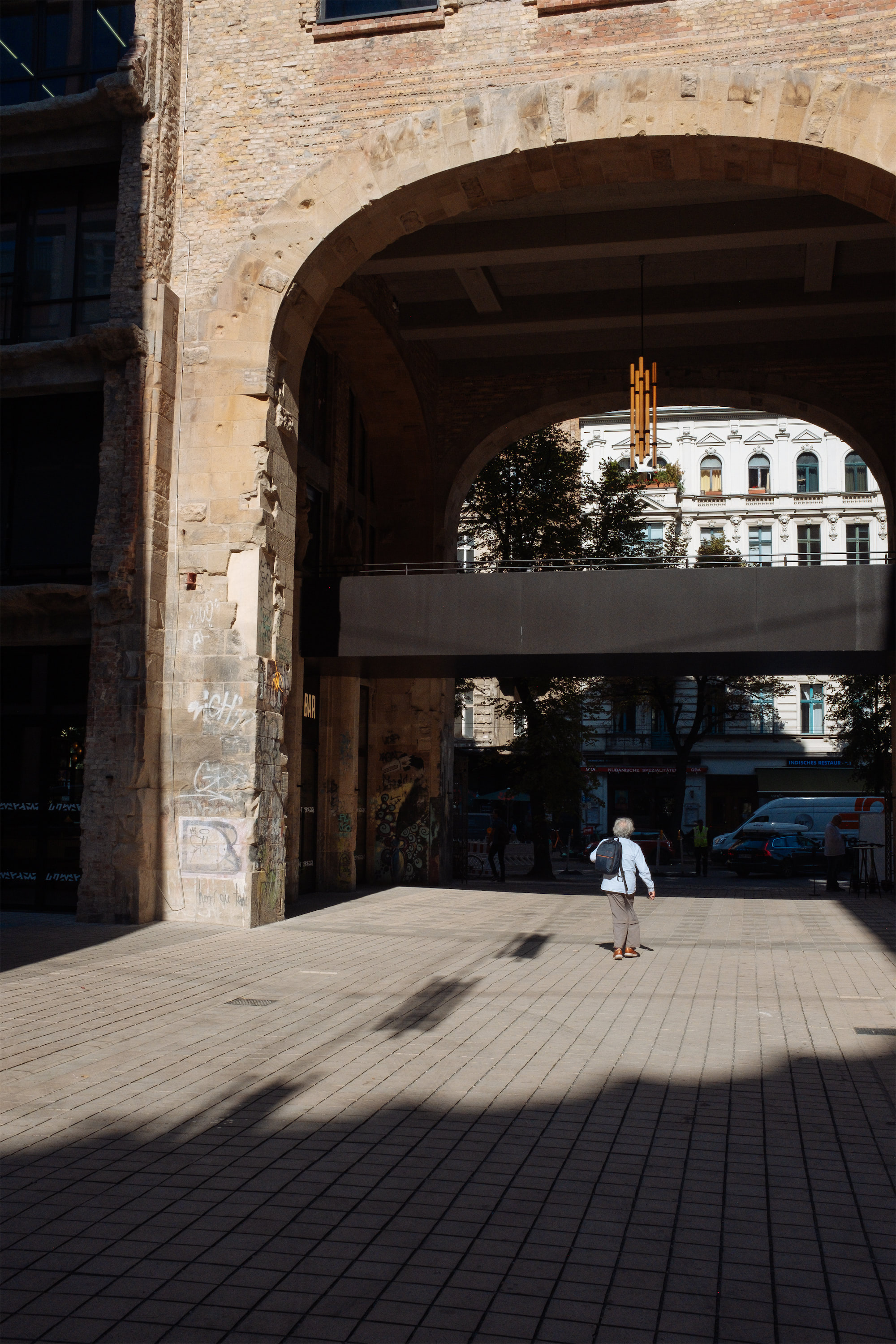
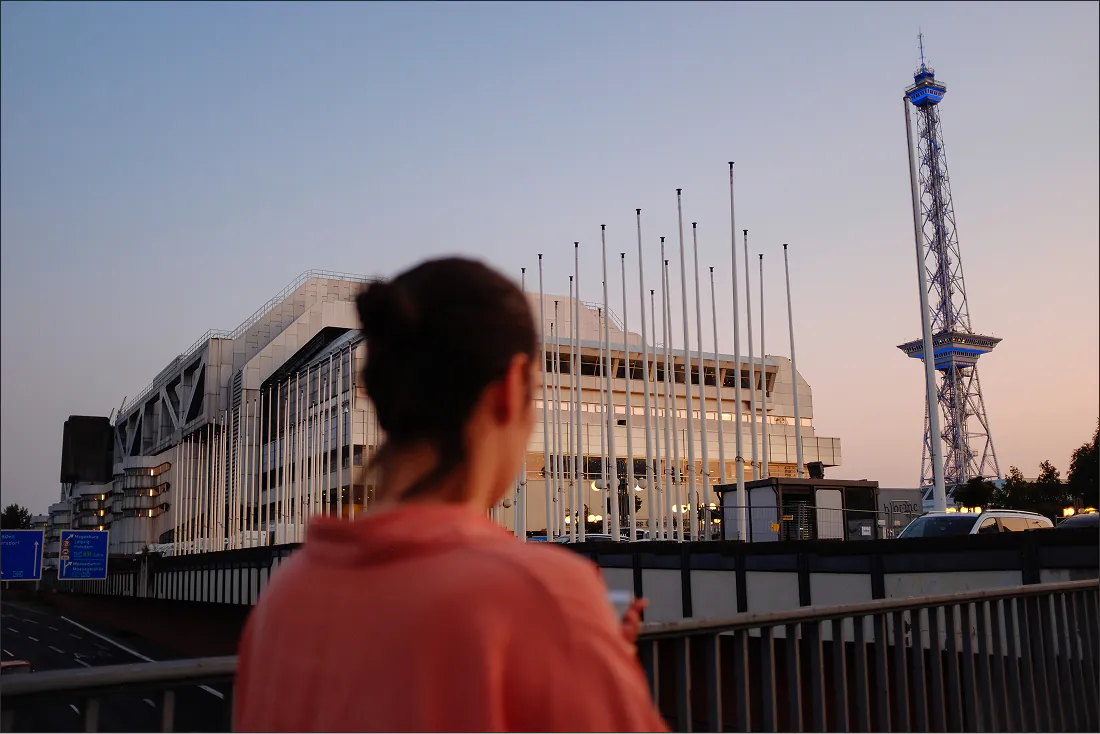
<figure><a href="https://larsmensel.com/assets/images/entries/2026/somewhere-unique/unique-optimized.webp"><img src="https://larsmensel.com/assets/images/entries/2026/somewhere-unique/unique-optimized.webp" alt="A moody photo of Berlin’s Messe" /></a><figcaption>Berlin’s weird but wonderful Messe/ICC.</figcaption></figure>

<p>Last summer, they felled the street lamp in front of my house. Sawed off the hollow stem like a dead tree and hauled it away on a flatbed truck.</p>

<p>The lamp was a remnant of East Germany. The GDR’s planned economy had lined every street in every one of its cities with identical, raw concrete street lamps. Today, they’re weathered and worn; certainly longer energy efficient. Their time had finally come.</p>


  <figure><a href="https://larsmensel.com/assets/images/entries/2026/somewhere-unique/lamp.webp"><img src="https://larsmensel.com/assets/images/entries/2026/somewhere-unique/lamp.webp" alt="Picture of an East Berlin street lamp with just one lightbulb turned on." /></a><figcaption>A remaining lamp on my street.</figcaption></figure>
  <p>In fact, the city has long used these lamps with just one active lightbulb to save energy, creating a uniquely glum, orange light characteristic of nighttime East Berlin.</p>


<p>Right next to where the concrete post stood, the city erected a slender new metal street lamp with lights so bright that I can only presume them to be LEDs. It was a sensible renovation, arguably an improvement, and yet I couldn’t help but feel that something was getting lost in the process. The old East German lamps might not have looked pretty, but the light they cast was certainly unique: A subtle reminder of the city’s history, visible every night.</p>


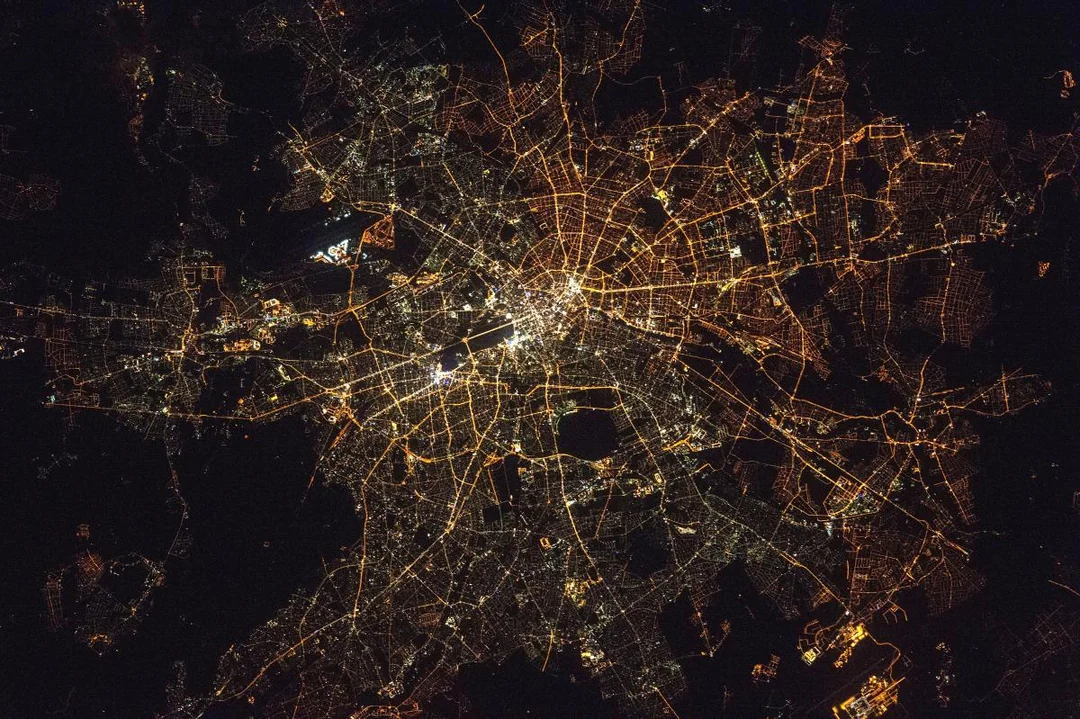
  <figure><a href="https://larsmensel.com/assets/images/entries/2026/somewhere-unique/berlin-aerial.webp"><img src="https://larsmensel.com/assets/images/entries/2026/somewhere-unique/berlin-aerial.webp" alt="Satellite image of Berlin at night, showing a clear difference in lighting between the West and the East of the city." /></a><figcaption>Satellite image of Berlin at night, 2013.</figcaption></figure>
  <p>The different light sources in Berlin used to show the exact division of the city on satellite images, long after the country and its capital had reunified.</p>


<hr />

<p>Berlin epitomizes change. This is a place that‘s never the same, never <em>done</em>, always metamorphosing and turning into something else.</p>

<p>Come here, and that change is exhilarating. But stay for long and you can start feeling uprooted.</p>

<p>Nothing ever stays the same. Neighborhoods transform. Entire districts go in and out of fashion. Buildings go up, places close down, entire train stations vanish and re-emerge.</p>

<p>The constant change isn’t limited to the built environment, it also sweeps up people: Most everyone is just passing through. Sometimes that means spending a decade in the city, sometimes even more, but eventually most people move somewhere else, often hastily because something else came up or simply because they stopped getting along with Berlin. Perhaps that’s why native Berliners joke that <em>you can’t become a Berliner</em>: most everybody who comes here eventually also leaves.</p>

<p>The effect is a sense of permanent transience. And as someone who moved here 16 years ago, I can’t help but wonder when my own time will come.</p>

<hr />

<p>Lately, I’ve been feeling my ties to Berlin loosening up. I’m not falling out of love with the city, but I find it different, the overall vibe no longer quite in alignment with my own. I’m certainly not the same person I was in 2010, so for weeks I questioned if the change I noticed came from the city or myself. The answer is both: I’m noticing a slow erosion in what always felt like potential.</p>

<p>I hesitate to even throw that term around: Potential is a slippery term. It describes a state of almost-being there, a promise rather than an finished state. Why would that feeling of on-the-cuspness be important to me?</p>

<p>What I’ve settled on is a simple calculus: If I truly get to choose where to live, then I want it to be a place that excites and perhaps even mystifies me.</p>

<p>That’s exactly what potential achieves: In a city that’s forever changing, you’re in for a lot of surprises. And you can even get swept up by the momentum. You might not know what’s coming, might remain forever mystified. But you can’t deny the excitement.</p>

<hr />

<p>It felt different than the (West) Germany I grew up in; a place full of tangible history. I remember first discovering the empty Tempelhof air field, my shock of being able to cycle across an airport runway next to one of Europe’s largest buildings. To learn about the Mauerweg, <a href="https://larsmensel.com/entries/2024/history-rhyming">St. Augustinus church</a>, Bären-Quell-Brauerei. Berlin was able to surprise me, over and over again.</p>

<p>It still happens every once in a while: turn a corner, go down an unknown street and run into a new place. A few days ago, I “found“ a new street just blocks from the apartment I’ve lived at for six years. Potential! Berlin seemingly always has a trick up its sleeve.</p>

<p>(a building being renovated had its front door open. I snuck in with my kid, looking at the unknown courtyard. Pristine East German mailboxes, time standing still in a hallway, surrounded by a city that pushes ever forward.)</p>

<p>A lot of that has to do with the city’s history. Having been largely destroyed in WWII and then divided and reunified, the city thrived on being an oddity: During the division, West Berlin was a weird exclave of West Germany while East Berlin turned into a socialist showcase.</p>

<p>This means I now live on the territory of a state that no longer exists, within the boundaries of another one. It means inhabiting the remnants of socialist capital with all the benefits of a Western democracy: Cracking concrete and mosaics in the East (they sure loved mosaics!), a strangely-preserved 1970s Germany in the West, all held together with post-reunion optimism, government cash injections, and a insistent optimism. A city that feels forgotten but also trying to be a capital. Sprinkle in som speculative 21st century tech culture (companies and services arriving and departing at breakneck speed), and you have yourself somewhere unique.</p>

<hr />

<p>Any place that thrives on uniqueness necessarily comes with pros and cons.</p>

<p>There‘s an entire genre of opinion pieces complaining about Berlin, its difference from the rest of the county (a feature, not a bug). I don’t want to fall into that trap, and I don’t think that’s what’s happening to me either.</p>


  <p>Like in England or France, people loathe their capital, consider its difference to the rest of the country not an asset but a liability. Don’t see how it’s a pressure valve for other-ness but rather consider it a fault to be corrected. But unlike England and France, the German capital isn’t posh; it’s rather more poor than the rest of the country. This isn’t loathing of a perceived elite but a combination of looking down, feeling that Berliners aren’t applying themselves, or simply <em>doing it wrong</em>.</p>


<p>Berlin can certainly be an acquired taste: It isn’t conventionally pretty. It’s chaotic, many things don’t work. It’s an easy target. But: the people writing the opinion pieces usually don’t understand that despite of its shortcomings, Berlin has that potential to it; they fail to see the sense of possibility.</p>

<hr />

<p>Exhilarating like sth new could happen there, like the spawning ground for sth else, and yet it turned out to be just more of the same.</p>

<p>My fear is that the potential is draining away, one paved-over lot at a time. What I’m starting to miss is the very uniqueness that made Berlin Berlin. The signs are there: The slow-but-gradual alignment with vanilla Germany, hell, vanilla everything. The people, now different.</p>

<hr />

<p>Do I feel this way because the potential hasn’t been fulfilled?</p>

<p>But something has been feeling different: Like that symbolic street lamp, the uniqueness is giving out. Potential is draining. Normalcy is settling in. The rough edges that characterize this city (for better or for worse) are disappearing.</p>

<p>It is disappearing, closing, cleared for more of the same.</p>

<p>Not just with buildings and tangible history, but also with people and <em>potential</em>, some which was and some that wasn’t ever fulfilled.</p>

<p>I also think there‘s been a realization brewing in me that the city is its people, the ones I know and interact with, not just some independent thing that exists independent from my own life. When people started moving away, the city shrank and changed face.</p>]]></content>
  </entry>
  
  <entry>
    
    
    <title type="html">Mass-Delusion</title>
    <link href="https://larsmensel.com/entries/2026/mass-delusion/" rel="alternate" type="text/html" title="Mass-Delusion" />
    <published>2026-07-26T00:00:00+02:00</published>
    <updated>2026-07-26T00:00:00+02:00</updated>
    
    <id>https://larsmensel.com/entries/2026/mass-delusion/</id>
    
    <summary type="html"><![CDATA[When good enough isn’t actually enough.]]></summary>
    
    <content type="html" xml:base="https://larsmensel.com/entries/2026/mass-delusion/"><![CDATA[<figure><a href="https://larsmensel.com/assets/images/entries/2026/mass-delusion/clouds.webp"><img src="https://larsmensel.com/assets/images/entries/2026/mass-delusion/clouds.webp" alt="" /></a></figure>


<p>Last summer, Charlie Warzel wrote a piece for The Atlantic that’s been bumping around in my head ever since. In <a href="https://www.theatlantic.com/technology/archive/2025/08/ai-mass-delusion-event/683909/">“AI is a mass-delusion event”</a>, he not only criticizes the hype about generative AI, but wonders aloud what’ll happen if it never fulfills its champions’ expectations:</p>

<blockquote>
  <p>Lately, I’ve been preoccupied with a different question: <strong>What if generative AI isn’t God in the machine <em>or</em> vaporware? What if it’s just good enough, useful to many without being revolutionary?</strong> Right now, the models don’t think—they predict and arrange tokens of language to provide plausible responses to queries. There is little compelling evidence that they will evolve without some kind of quantum research leap. What if they never stop hallucinating and never develop the kind of creative ingenuity that powers actual human intelligence?</p>
</blockquote>

<p>Good enough is the never-quite-here-nor-there scenario, the one where the many downsides never add up to any tangible benefit.</p>

<blockquote>
  <p>[…] What if the real doomer scenario is that we pollute the internet and the planet, reorient our economy and leverage ourselves, outsource big chunks of our minds, realign our geopolitics and culture, and fight endlessly over a technology that never comes close to delivering on its grandest promises? What if we spend so much time waiting and arguing that we fail to marshal our energy toward addressing the problems that exist here and now? […]</p>
</blockquote>

<hr />

<p>Over the winter, I attended an event about occupational safety<sup id="fnref:fn1"><a href="#fn:fn1" class="footnote" rel="footnote" role="doc-noteref">1</a></sup>. What jumped out at me was the palpable sense among people (working for established, mid- to large-sized German companies) that some profound, AI-induced change was on the horizon. AI was being cast as an opportunity for sure, but overwhelmingly as some kind of inevitable force that had to be adopted unless you wanted to be left behind.</p>

<p>I understand that there are many different views on AI, but one thing is certain: Everyone is talking about it, all the time. The cultural shift is profound, the topic occupies a huge part of the public imagination, but that prominence is unmatched (at least in my experience) by any real, positive change.</p>

<p>I’ll hear stories about job loss and uncertainly, fear of missing out, an almost religious believe that “it will get better” and more capable. I hear about the job market becoming a competition between AI-written resumés and AI-powered resumé-scanners, coders having to babysit AI tools instead of writing code themselves. There are some short-term convenience gains, but the overall experience is miserable.</p>

<p>That’s where I disagree with Charlie Warzel: I don’t think the majority of people are delusional themselves. They aren’t having the kind of experience that makes them believe AI is a force for good, but they are noticing the effects the delusion is having on their work lives. To <a href="https://pluralistic.net/2026/07/24/supplemental-income/">paraphrase Cory Doctorow</a>: A whole lot of people don’t believe in AI, but believe that other people will believe in AI.</p>

<p><a href="https://ludic.mataroa.blog/blog/ai-mania-is-eviscerating-global-decision-making/">John Gruber has a apt take on this</a>:</p>

<blockquote>
  <p>Per Clarke’s third law, “Any sufficiently advanced technology is indistinguishable from magic”. Generative AI feels a bit magical to all of us, even those of us with mid-to-high levels of understanding how computers work and how to make them work.  But it feels like the first time ever that computers have been tools for their own creation for a lot of rather dimwitted but confident corporate manager/executive types. This moment feels like the Big Bang to them. <strong>The religiosity of this is such that there is no way to convince them that AI, as it stands today, is impressive and useful and innovative, yes, but <em>several orders of magnitude less</em> so than they’re imagining that it is.</strong></p>
</blockquote>

<hr />

<p>I haven’t finished Karen Hao’s <em>Empire of AI</em> yet, but what’s already clear from her retelling of technology’s history is how much of where we are has been been a deliberate choice, not an inevitability. Hao likens the development of AI to Moore’s Law. The delusion? Accepting AI as an inevitability.</p>

<blockquote>
  <p>In the end, Moore’s Law was not based on some principle of physics. It was an economic and political observation that Moore made about the rate of progress that he could drive his company to achieve, and an economic and political choice that he made to follow it. When he did, Moore took the rest of the computer chip industry with him, as other companies realized it was the most competitive business strategy. OpenAI’s Law, or what the company would later replace with an even more fevered pursuit of so-called scaling laws, is exactly the same. <strong>It is not a natural phenomenon. It’s a self-fulfilling prophecy.</strong></p>
</blockquote>

<div class="footnotes" role="doc-endnotes">
  <ol>
    <li id="fn:fn1">
      <p>Even half a year later, I’m as surprised to be writing this as you probably are to read it. <a href="#fnref:fn1" class="reversefootnote" role="doc-backlink">&#8617;</a></p>
    </li>
  </ol>
</div>]]></content>
  </entry>
  
  <entry>
    
    
    <title type="html">Dispensing Vibes</title>
    <link href="https://larsmensel.com/entries/2026/dispensing-vibes/" rel="alternate" type="text/html" title="Dispensing Vibes" />
    <published>2026-07-26T00:00:00+02:00</published>
    <updated>2026-07-26T00:00:00+02:00</updated>
    
    <id>https://larsmensel.com/entries/2026/dispensing-vibes/</id>
    
    <summary type="html"><![CDATA[You can’t beat the far-right with more of the same.]]></summary>
    
    <content type="html" xml:base="https://larsmensel.com/entries/2026/dispensing-vibes/"><![CDATA[<figure><a href="https://larsmensel.com/assets/images/entries/2026/dispensing-vibes/burnham.webp"><img src="https://larsmensel.com/assets/images/entries/2026/dispensing-vibes/burnham.webp" alt="" /></a></figure>


<p>After his election as new Labour leader, British Prime Minister-in-waiting Andy Burnham gave a speech to his fellow party members. It covered what you would expect: An appeal to depart from the previous politics, to unite the party and to deliver for its base.</p>

<p>But Burnham also made some bigger declarations, saying that he wants to bring back some sense of hope, to rein in inflation, and to “beat Britain’s new right”. He’s fuzzy on the details, but it seemed frank, fresh, and yes, different.</p>

<p>On <a href="https://www.theguardian.com/politics/live/2026/jul/17/andy-burnham-labour-leader-speech-latest-news-updates?CMP=share_btn_url&amp;page=with%3Ablock-6a5a18888f085bcdc0081c71#block-6a5a18888f085bcdc0081c71">The Guardian</a>, Andrew Sparrow wrote a “snap verdict” of the speech that caught my eye.</p>

<blockquote>
  <p><strong>It has become fashionable this week to say that all Andy Burnham has been offering recently has been “vibes”.</strong> And, if “vibes” means emotional connection, optimism and generalities rather than specifics, then that’s fair. This speech was a vibes masterclass.</p>

  <p>But it’s a ghastly term because it’s pejorative and sneery, and it misses what politics is about. <strong>When Winston Churchill delivered his brilliant speeches during the second world war, and promised to “fight them on the beaches”, that was just vibes too.</strong> You could say the same about Martin Luther King, or Bill Clinton or Barack Obama – or almost anyone else. There was not much policy detail in “I have a dream”.</p>
</blockquote>

<p>I like how that analysis cuts through the cynicism. Clearly, Burnham isn’t Churchill, and vibes aren’t sufficient in the long-term. But to get started, it’s already <em>something</em>: A sense of <a href="https://larsmensel.com/entries/2026/forward-momentum">forward momentum</a>, a willingness to make a change.</p>

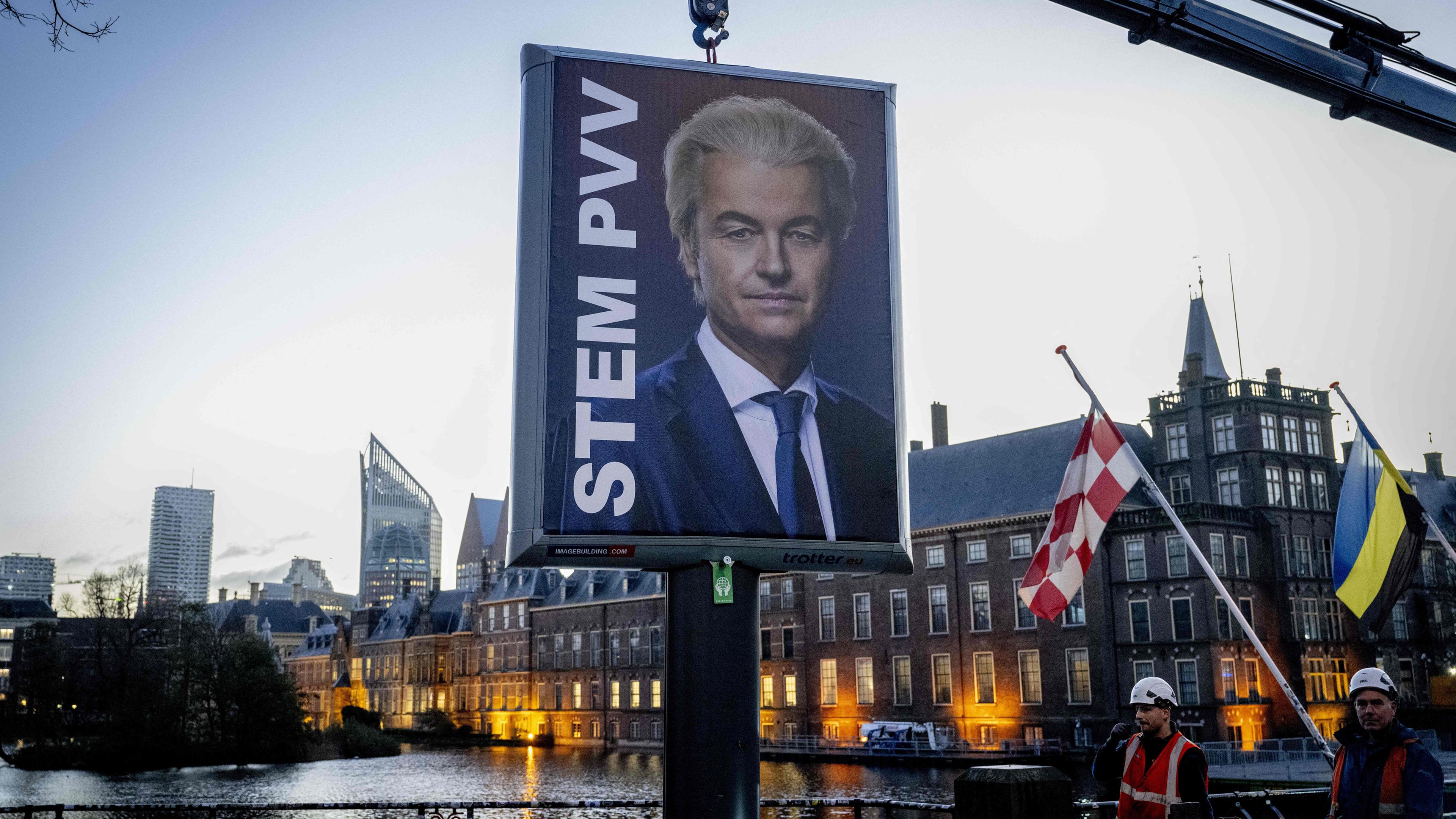
<p>What I find missing from much of present-day politics, from centrist and democratic politicians, is that they rarely sketch out a vision. That’s never more obvious than on election posters showing just the politician’s face and party name, or in empty slogans like “Devoted to Berlin”.</p>

<p>Crucially, the lack of declared ambition has opened up a vacuum that the far-right is all too eager to fill. They thrive on offering <a href="https://www.theguardian.com/world/2020/oct/22/spanish-peoples-party-lashes-out-revenge-politics-far-right-vox">“easy – and usually fake – solutions to complex problems”</a>. And it’s hard to beat them if all you’re offering is more of the same.</p>

<p>In an <a href="https://www.nytimes.com/2026/07/18/magazine/zohran-mamdani-interview.html">interview with New York City mayor</a>, Zohran Mamdami made a similar point:</p>

<blockquote>
  <p>For too long, it has felt like our party, the Democratic Party, the only answer we have is to say that we are not the Republican Party. The only answer we have is a response to the cruelty of the federal administration. But we also <strong>have to have a vision of what comes after this administration</strong>.</p>
</blockquote>

<p>Part of Mamdami’s success is that he made his vision clear during the campaign, and that he framed it in constructive — not regressive — terms. It was vibes plus details, and it helped him win.<sup id="fnref:fn1"><a href="#fn:fn1" class="footnote" rel="footnote" role="doc-noteref">1</a></sup></p>

<div class="footnotes" role="doc-endnotes">
  <ol>
    <li id="fn:fn1">
      <p>I realize that making any kind of election promise, however vague, also opens the possibility of measurable failure. If you don’t deliver on the very thing you said you would do, your tenure can’t be deemed a success. Perhaps that’s why so many people keep expectations deliberately low. <a href="#fnref:fn1" class="reversefootnote" role="doc-backlink">&#8617;</a></p>
    </li>
  </ol>
</div>]]></content>
  </entry>
  
  <entry>
    
    
    <title type="html">Living in Generated Reality</title>
    <link href="https://larsmensel.com/entries/2026/generated-reality/" rel="alternate" type="text/html" title="Living in Generated Reality" />
    <published>2026-02-26T00:00:00+01:00</published>
    <updated>2026-02-26T00:00:00+01:00</updated>
    
    <id>https://larsmensel.com/2026/living-in-generated-reality</id>
    
    <summary type="html"><![CDATA[Honing focus in the eye of the information storm.]]></summary>
    
    <content type="html" xml:base="https://larsmensel.com/entries/2026/generated-reality/"><![CDATA[<blockquote>
  <p>“If we want things to stay as they are, everything will have to change.”
— The Leopard, by Giuseppe Tomasi di Lampedusa, 1958</p>
</blockquote>

<p>Last Sunday, the Mexican government sent a team of elite forces to capture one of the country‘s most famous cartel bosses. „El Mencho“, head of the <em>Cartél de Jalisco Nueva Generación</em> was wounded during the operation and subsequently died while being airlifted to a Mexico City hospital. As a reaction, the cartel unleashed a wave of violence across the country, erecting roadblocks and setting fire to gas stations and convenience stores.</p>

<p>At the time, I was having lunch with my family in the suburbs of Mexico City, and the news spread quickly. Everyone took out their phones and pieced together what had happened. With events this fresh, nobody knows exactly what‘s really going on. Rumors swirl, conclusions are drawn. But there were a few things we knew: The man was dead, there was some very serious rioting, and the cartel had attacked the airport in Guadalajara, causing widespread panic.</p>


  <figure><a href="https://larsmensel.com/assets/images/entries/2026/generated-reality/_YT-THUMBNAIL-3.jpg"><img src="https://larsmensel.com/assets/images/entries/2026/generated-reality/_YT-THUMBNAIL-3.jpg" alt="" /></a><figcaption>This AI generated image of a plane burning on the tarmac of Guadalajara airport quickly went viral.</figcaption></figure>


<p>As it quickly turned out, that was only halfway true. In the wake of the rioting, the internet was <a href="https://www.politico.com/news/2026/02/25/online-disinformation-fueled-panic-after-killing-of-mexican-drug-lord-00799837">flooded with misinformation</a> and half-truths about the events, among them this AI-generated image of a plane on fire.</p>

<hr />

<p>Even a few days later, as the situation has calmed down and foreign embassies no longer tell their citizens to shelter in place, the picture of the burning plane looks entirely believable. There’s no benefit of hindsight here, only another confirmation that we need to be <a href="https://larsmensel.com/entries/2024/free-for-all-fakery">careful with everything we see online</a>, particularly when it’s shared on social media during an ongoing news event.</p>

<p>Just last week, I spoke to the head of a PR agency, who told me about the shifting nature of his business. “People no longer get their news from newspapers”, he said. “They get their news from social media.”</p>

<p>This may not be a particularly new insight, but something about hearing it from a PR professional made it sink in: Our mediated reality now comes from real-time networks, and the advent of credible AI fakes means that it’s easier than ever for anyone with a smartphone to construct an entirely false version of what’s going on.</p>

<hr />

<p>I can’t help but feel some anger, even indignation about all of this. I wonder why this technology exist and who asked for it, I’m annoyed about having AI shoved down our throats as a supposed productivity tool when in reality it’s become easier to create images that make people more fearful, paranoid, or prone to manipulation.<sup id="fnref:fn1"><a href="#fn:fn1" class="footnote" rel="footnote" role="doc-noteref">1</a></sup></p>

<p>When Jason Koebler <a href="https://www.404media.co/openais-sora-2-copyright-infringement-machine-features-nazi-spongebobs-and-criminal-pikachus/">wrote about Sora in 2025</a>, he used even more drastic words:</p>

<blockquote>
  <p>As a reward (…) OpenAI gets a $500 billion valuation. And we get a tool that makes it even easier to flood the internet with slightly better looking bullshit at the <strong>low, low cost of nearly all of the intellectual property ever created by our species, the general concept of the nature of truth, the devaluation of art through an endless flooding of the zone, and the knock-on environmental, energy, and negative labor costs of this entire endeavor</strong>.</p>
</blockquote>

<hr />

<p>How does one deal with the new reality? AI is not something we can <a href="https://larsmensel.com/entries/2025/critical-ignoring">critically ignore</a>, and I don’t think media literacy or inherent skepticism about anything we encounter lets us outsmart the tools in the long run. As the plane in Guadalajara illustrates, the technology has reached a level of believability that makes it impossible to tell fake from real.</p>

<p>The only way forward that I can see is radically changing how we approach news events, by cultivating a sense of calm in the eye of the information storm. To wait until the waves of misinformation have died down and a clear reality emerges, until we can verify what’s fake and what isn’t. To resist the temptation of anger and indignation and to remain clear-headed.</p>

<p>The technology is here to stay, and all we got is our attention and focus.</p>

<div class="footnotes" role="doc-endnotes">
  <ol>
    <li id="fn:fn1">
      <p>I’ve previously grappled with the question of how different AI generated images are from photo manipulations of the past, and I’m convinced it’s the speed, ease, credibility, and accessibility of fakery that makes them a different beast. You couldn’t easily post through a news event when you had to painstakingly piece together a fake in Photoshop. <a href="#fnref:fn1" class="reversefootnote" role="doc-backlink">&#8617;</a></p>
    </li>
  </ol>
</div>]]></content>
  </entry>
  
  <entry>
    
    
    <title type="html">The Clankers’ Paradox</title>
    <link href="https://larsmensel.com/entries/2026/clankers-paradox/" rel="alternate" type="text/html" title="The Clankers’ Paradox" />
    <published>2026-02-24T00:00:00+01:00</published>
    <updated>2026-02-24T00:00:00+01:00</updated>
    
    <id>https://larsmensel.com/2026/the-clankers-paradox</id>
    
    <summary type="html"><![CDATA[You can’t prompt-engineer your way out of a panic.]]></summary>
    
    <content type="html" xml:base="https://larsmensel.com/entries/2026/clankers-paradox/"><![CDATA[<figure><a href="https://larsmensel.com/assets/images/entries/2026/clankers-paradox/_IMG-1189-optimized.webp"><img src="https://larsmensel.com/assets/images/entries/2026/clankers-paradox/_IMG-1189-optimized.webp" alt="" /></a><figcaption>An abacus at the Museo Anahuacalli in Mexico City.</figcaption></figure>


<p>I have become—perhaps unhealthily—obsessed with the rapid cultural adoption of AI.</p>

<p>By that I don’t mean the technology’s capabilities, but rather the wider societal impact: In my living memory, I can’t remember something being adopted this quickly, nor do I recall it affecting such a profound behavioral change: From the flood of AI-generated messages I receive in my working life to the normalization of slop and the utter mainstreaming of the phrase “Let’s ask ChatGPT” by the people using generative AI as a search engine.</p>

<p>Something doesn’t smell right about the speed of adoption, the way AI gets heralded as inevitable progress, even though its results—often impressive at first sight—are riddled with errors, hallucinations, or stereotypes.<sup id="fnref:fn1"><a href="#fn:fn1" class="footnote" rel="footnote" role="doc-noteref">1</a></sup></p>

<p>My dad sends me regular tweets from various attention farmers warning of huge, impending job losses. The most popular of the bunch was an X post by Matt Shumer called <a href="https://x.com/mattshumer_/status/2021256989876109403"><em>Something Big is Happening</em></a>, which likened the disruption of AI to that of the Covid pandemic and once more projected the loss of vast swaths of white-collar jobs.</p>

<h2 id="becoming-yet-another-middleman-isnt-it">Becoming yet another middleman isn’t it</h2>

<p>Everyone is of course free to make predictions, and it’s a winning formula for online content to predict a dark future. What irks me about this type of posts is the conclusion, since the authors’ advice tends to be largely the same: Familiarize yourself with AI tools to weather the (projected) oncoming storm.<sup id="fnref:fn2"><a href="#fn:fn2" class="footnote" rel="footnote" role="doc-noteref">2</a></sup></p>

<p>The implication is that by learning how to use AI and automating your own tasks, you’ll somehow escape the job cuttings—for your skills and superlative productivity will make you too important to fire. On LinkedIn I saw that mindset expressed as follows: “It’s not AI that will take your job, it’s people using AI that will”.</p>

<p>I think that conclusion is fundamentally misguided: If AI becomes as good as champions of the technology predict, if the savings of using AI are high enough to justify universal job cuts, there simply won’t be a market for people doing the prompting—because the very use of the technology is to enable anyone to prompt.</p>

<p>AI cuts out the middlemen: Writers, artists, coders, and increasingly knowledge workers of all stripes. I don’t think that making a career move to become just another type of middleman has a better future.</p>


  <iframe src="https://bsky.app/profile/reckless.bsky.social/post/3meyt4nwv3c2j/embed" width="100%" height="400" style="border:none; border-radius:0;" loading="lazy"></iframe>


<p>It’s the clanker’s paradox, if you will: A belief that the challenge posed by AI can only be solved with more AI. It’s a paradox born out of a accelerationist mindset that considers the technology’s worst effects an inevitability instead of realizing that we have a choice.</p>

<p>On a <a href="https://podcasts.apple.com/de/podcast/something-big-is-happening-a-i-rocks-the-romance/id1528594034?i=1000749587690&amp;l=en-GB">recent episode of HardFork</a>, Casey Newton argued for a political solution to the projected AI crisis:</p>

<blockquote>
  <p>I just think that this needs to be part of our political conversation, right? Like, I think this needs to be a conversation that constituents are having with lawmakers. They need to be telling them, hey, my boss is telling me that I need to start using AI every day and that there’s a high risk that I’m about to lose my job and that maybe there’s going to be permanent unemployment in some job categories. What’s your plan for that?</p>
</blockquote>

<h2 id="lets-make-a-prediction">Let’s make a prediction</h2>

<p>I think that’s a correct instinct, but I’m also not sure that politicians will be able to find a solution for this problem, or that they’ll be fast enough. Instead, the only way out of the delusion that AI can replace all of us is to demonstrate that human work matters: By doing good meaningful work, and by appreciating good work when we see it. What humans produce isn’t probabilistically generated, it’s the product of real skill, experience, and <a href="https://larsmensel.com/entries/2023/algorithmic-intuition">intuition</a>.</p>

<p>When everything turns into slop, into half-baked, good-enough AI outputs, real craft and care will start to matter again, they’ll become more valuable than ever. That’s my prediction, for what it’s worth—and it’s a hopeful one.</p>

<div class="footnotes" role="doc-endnotes">
  <ol>
    <li id="fn:fn1">
      <p>A measure I like to use for AI tools is asking them about a topic I happen to know a lot about, say a hobby or a personal fascination. I’ll inevitably find factual errors, which leads me to believe that many of the answers in fields I’m not familiar with will have the same problem. <a href="#fnref:fn1" class="reversefootnote" role="doc-backlink">&#8617;</a></p>
    </li>
    <li id="fn:fn2">
      <p>In fairness, Matt Shumer also instructs people to get their finances in order and not to take on additional debt, which I consider good advice in its own right. <a href="#fnref:fn2" class="reversefootnote" role="doc-backlink">&#8617;</a></p>
    </li>
  </ol>
</div>]]></content>
  </entry>
  
  <entry>
    
    
    <title type="html">Forward Momentum</title>
    <link href="https://larsmensel.com/entries/2026/forward-momentum/" rel="alternate" type="text/html" title="Forward Momentum" />
    <published>2026-01-10T00:00:00+01:00</published>
    <updated>2026-01-10T00:00:00+01:00</updated>
    
    <id>https://larsmensel.com/2026/forward-momentum</id>
    
    <summary type="html"><![CDATA[It’s much harder to sketch out something new than to go back to the past.]]></summary>
    
    <content type="html" xml:base="https://larsmensel.com/entries/2026/forward-momentum/"><![CDATA[<figure><a href="https://larsmensel.com/assets/images/entries/2026/forward-momentum/_original-d684712407b9ad7e7610cc325fd6b157.jpg"><img src="https://larsmensel.com/assets/images/entries/2026/forward-momentum/_original-d684712407b9ad7e7610cc325fd6b157.jpg" alt="" /></a><figcaption>Rosa Rolanda, “Autorretrato”, 1952.</figcaption></figure>


<p><a href="https://podcasts.apple.com/de/podcast/venezuela-renee-good-and-trumps-assault-on-hope/id1548604447?i=1000744586005&amp;l=en-GB&amp;r=2119">On his show</a>, Ezra Klein talks to Masha Gessen about the paradox that authoritarian and right-wing governments usually pay more attention to the aesthetic of their policy than left-wing governments do.</p>

<p>Riffing on Pete Hegseth’s denouncement of “fat troops” and calls to have a fitter military, Gessen talks about a not-so-new component of the neofascist aesthetic:</p>

<blockquote>
  <p>What we’re seeing is white, cis men who are in excellent physical shape. That’s what the ideal of this administration looks like.
And of course, like every fascist administration, it’s not actually led by men who look like that, but they want to look like that, and they want to be surrounded by men who look like that.</p>
</blockquote>

<p>Perhaps, they suggest, this is because pointing back to an <a href="https://larsmensel.com/entries/2024/history-rhyming">imaginary past</a> of marble columns, “free speech” and supposedly more “masculine” men is, in fact, easier than sketching out a totally new vision.</p>

<blockquote>
  <p>It’s actually a much more complicated task, which is to assert an entirely different aesthetic direction, which is oriented toward <strong>difference and variety and things that you haven’t seen before</strong>. And that is objectively much more difficult.
How do you create an ideal of beauty that includes all sorts of things and all kinds of people and a kind of architecture that no one has seen before? I don’t know.</p>
</blockquote>

<p>Early last year, German paper <em>Die Zeit</em> ran an <a href="https://www.zeit.de/politik/ausland/2024-12/zukunft-demokratie-parteien-regierung">excellent op-ed</a> by Ulrich Machold about the broader society’s need for some kind of progress narrative:</p>

<blockquote>
  <p>Without a narrative of progress, things become difficult. If there is nothing for a society to work toward, no better tomorrow, then many people become disoriented. They lose faith in the present or seek out substitute narratives that offer them alternative paths as a way out, <strong>even if it means retreating to an idealized past</strong>. People seem to need a sense of forward momentum to keep them from losing their minds.</p>
</blockquote>

<p>If there’s no vision being presented, no declared idea of progress, then a retreat to an idealized past will always win out.</p>

<blockquote>
  <p>In other words, a narrative of progress is the overarching theme of change; it makes change understandable, tolerable, and acceptable. Without direction, there is no orientation, and people become confused.</p>
</blockquote>]]></content>
  </entry>
  
  <entry>
    
    
    <title type="html">At the Hermitage</title>
    <link href="https://larsmensel.com/entries/2025/at-the-hermitage/" rel="alternate" type="text/html" title="At the Hermitage" />
    <published>2025-07-05T00:00:00+02:00</published>
    <updated>2025-07-05T00:00:00+02:00</updated>
    
    <id>https://larsmensel.com/2025/at-the-hermitage</id>
    
    <summary type="html"><![CDATA[Finding a larger-than-life statue in St. Petersburg.]]></summary>
    
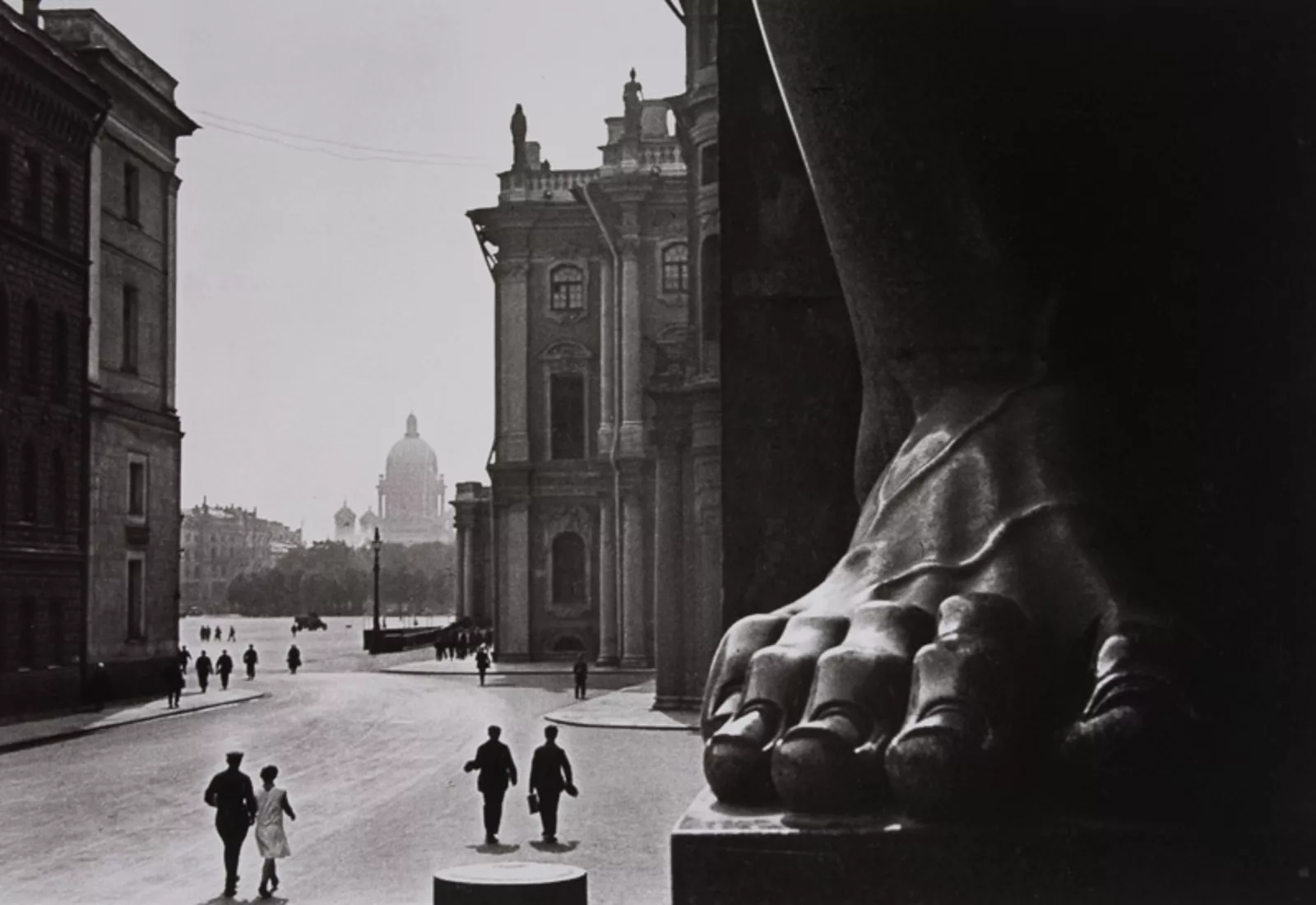
    <content type="html" xml:base="https://larsmensel.com/entries/2025/at-the-hermitage/"><![CDATA[<figure><a href="https://larsmensel.com/assets/images/entries/2025/at-the-hermitage/_at-the-hermitage.webp"><img src="https://larsmensel.com/assets/images/entries/2025/at-the-hermitage/_at-the-hermitage.webp" alt="" /></a><figcaption>Boris Ignatovich, At the Hermitage, 1930</figcaption></figure>


<p>I’ve seen this photo several times before, without ever knowing who took it, where they took it, and what it was about. What always struck me about it was how strange it looked: Though clearly from the past, it had the retro-futuristic qualities of a <em>Blade Runner</em> still—thanks to its contrast between the wide expanse in the distance and what looks like the foot of an enormous statue in the foreground.</p>

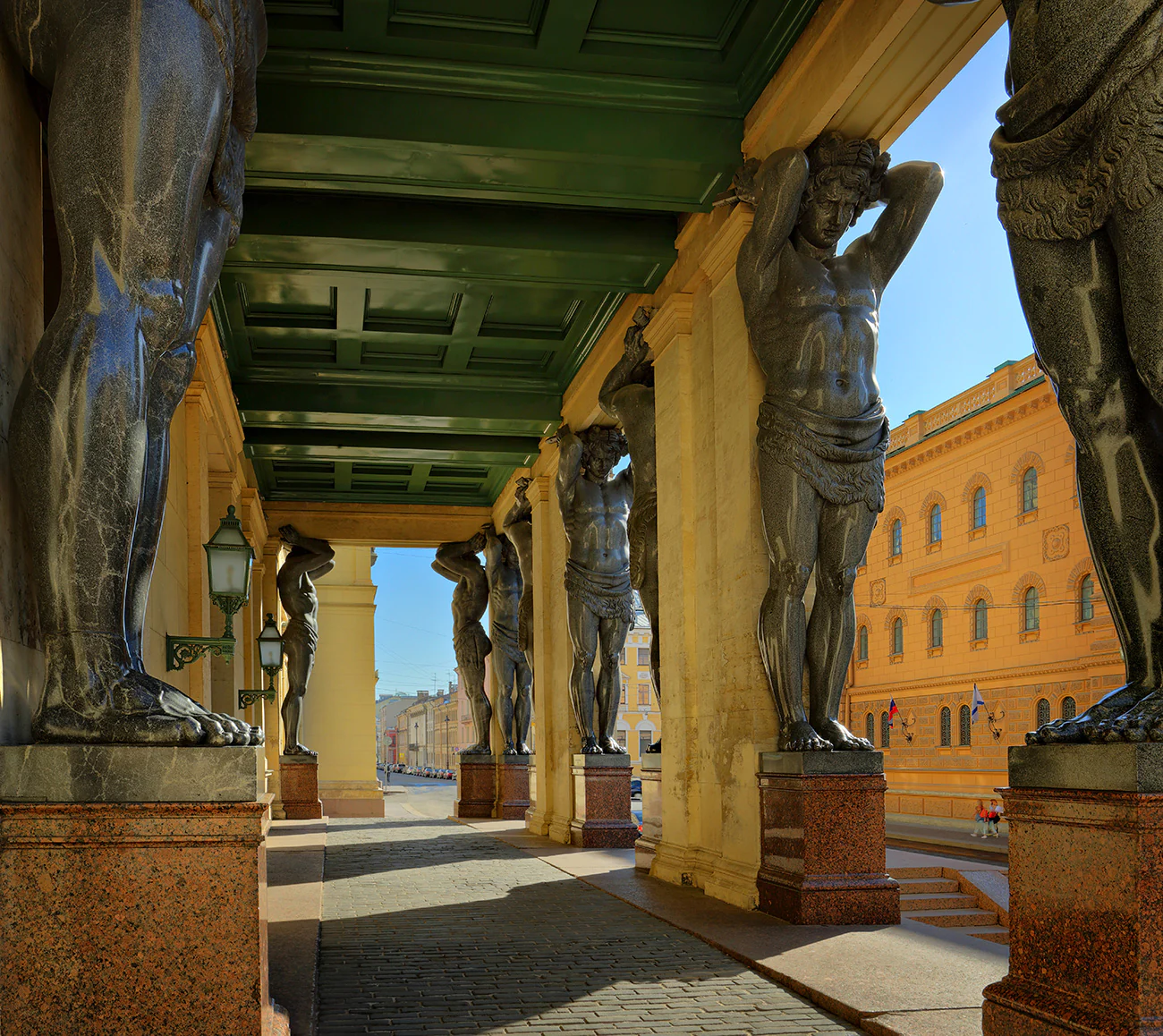
<p>By pure chance I found the photo again and learned that it’s a photo taken in 1930 by the Russian photographer Boris Ignatovich. It shows the entrance of the Hermitage museum in St. Petersburg, and sadly there is no sky-high statue there: Instead, there are several atlas statues lining the front door of the museum, owning to an ancient tradition of <a href="https://www.gw2ru.com/travel/232259-mysteries-behind-atlases-petersburg">“decorating palaces and profitable houses”</a>.</p>

<figure><a href="https://larsmensel.com/assets/images/entries/2025/at-the-hermitage/_67d2ea58dc76de2282c643be-optimized.webp"><img src="https://larsmensel.com/assets/images/entries/2025/at-the-hermitage/_67d2ea58dc76de2282c643be-optimized.webp" alt="" /></a></figure>

<p>The statues are certainly big, but not as huge as they seem on the photo—Ignatovich must have composed the image by standing close to one of the feet and using a high aperture to merge foreground and background. <a href="https://www.alamy.com/atlas-statues-at-the-portico-entrance-of-the-hermitage-museum-st-petersburg-russia-image466659745.html">Alamy even has a stock photo that looks like it shows the exact location</a>.</p>

<p>An <a href="https://www.anothermag.com/art-photography/7689/from-russia-with-love">article from AnOther magazine</a> from 2015 provides some more details:</p>

<blockquote>
  <p>With its surreal composition, Ignatovich’s photo foregrounds the foot of one of the immense statues of Atlas, who holds the Hermitage on his shoulders, with a view out onto the museum’s plaza. This style of photography was typical of Ignatovich’s work; <strong>he was part of October, the left-wing collective of artists, architects, film directors and photographers, whose motto was “new times demand new forms.</strong>”</p>
</blockquote>

<blockquote>
  <p><strong>By the late 30s, Ignatovich and his fellow photographers moved further towards strict social realism, specifically photography that illustrated communist ideals.</strong> (…) The photographer would go on to photograph the front during the war, and continued to work on landscape and portraiture until his death in 1976, but it is his early shots of the new Soviet ideal that are now most associated with him.</p>
</blockquote>

<p>The paradox of Socialist realism, of course, is that it <em>isn’t</em> real but instead shows a prescribed view of reality.<sup id="fnref:fn1"><a href="#fn:fn1" class="footnote" rel="footnote" role="doc-noteref">1</a></sup> The subjects promote the political system and its supposedly unstoppable progress. All that meant turning a blind eye to the dark sides of Socialism, making it what I’ve previously called it an <a href="https://larsmensel.com/entries/2017/a-distant-overlooked-life">“ideological straightjacket”</a>.</p>

<p>But somehow the irony of even labeling it “realism” never occurred to me.</p>

<p>Perhaps that’s what makes <em>At the Hermitage</em> so extraordinary: It stems from a time before the aesthetic had truly been defined, when the artists got to be more experimental in style and almost grandiose in their ambitions. There’s an unreal quality to this image, and even if the photographer is tricking us through his use of perspective, it never feels fake—just clever.</p>

<div class="footnotes" role="doc-endnotes">
  <ol>
    <li id="fn:fn1">
      <p>Writes <a href="https://cphmag.com/everybody-dance/">Jörg Colberg</a>: “One of the defining features of totalitarian or authoritarian regimes is that they know that they cannot possibly live up to the seemingly lofty ideals they aspire to reach. The Soviet Union’s communist paradise was as unrealistic and unreachable as the fascist glorified past that now is talked about so much. But any regime needs visuals: images that convey its inherent goodness, its power, and the nobility of its aspirations.” <a href="#fnref:fn1" class="reversefootnote" role="doc-backlink">&#8617;</a></p>
    </li>
  </ol>
</div>]]></content>
  </entry>
  
  <entry>
    
    
    <title type="html">This is Slopaganda</title>
    <link href="https://larsmensel.com/entries/2025/this-is-slopaganda/" rel="alternate" type="text/html" title="This is Slopaganda" />
    <published>2025-07-04T00:00:00+02:00</published>
    <updated>2025-07-04T00:00:00+02:00</updated>
    
    <id>https://larsmensel.com/2025/this-is-slopaganda</id>
    
    <summary type="html"><![CDATA[Every movement has its visual style. Today’s autocrats are generating it with AI.]]></summary>
    
    <content type="html" xml:base="https://larsmensel.com/entries/2025/this-is-slopaganda/"><![CDATA[<p>In February, Donald Trump reposted a now infamous video that imagines a future for the Gaza Strip. Set to an AI-generated song, the video shows the Strip full of gleaming skyscrapers and golden Trump statues, the streets filled with Teslas, and dollars raining from the sky.</p>

<p>In the clip, the Speedo-clad Trump and Netanyahu tan on sunbeds, a youthful Elon Musk eats hummus, children frolic through the streets.</p>

<p>Viewed before the backdrop of an ongoing humanitarian crisis in Gaza, the clip is certainly tasteless. But it also isn’t real: This video is an AI-generated fever-dream, a vision (a nightmare!) set in the unreal cinematic universe of Trump 2.0, replete with all its main characters. “Trump Gaza”, as the background song goes, is nothing but a cruel fantasy where Trump is king and reality bends to his will.</p>

<figure><a href="https://larsmensel.com/assets/images/entries/2025/this-is-slopaganda/_trump-gaza-optimized.webp"><img src="https://larsmensel.com/assets/images/entries/2025/this-is-slopaganda/_trump-gaza-optimized.webp" alt="" /></a></figure>

<hr />

<p>A few weeks after the clip came out, OpenAI released an update to their AI image generator, empowering it to create more credible images in the style of existing artworks.</p>

<p>For a day or two, the internet became awash with pictures of everyday situations or famous images in the style of the Japanese animator Hayao Miyazaki’s <em>Studio Ghibli</em><sup id="fnref:fn1"><a href="#fn:fn1" class="footnote" rel="footnote" role="doc-noteref">1</a></sup>; all anime eyes, pastel colors, and surreal scenes.</p>


  <figure><a href="https://larsmensel.com/assets/images/entries/2025/this-is-slopaganda/_281a6b3ed231b3e159a039416f71e75a.jpeg"><img src="https://larsmensel.com/assets/images/entries/2025/this-is-slopaganda/_281a6b3ed231b3e159a039416f71e75a.jpeg" alt="" /></a><figcaption>The image shared by the US government</figcaption></figure>


<p>People would <a href="https://maxread.substack.com/p/studio-ghibli-in-the-age-of-ai-reproduction">“Ghiblify” their images with ChatGPT</a>, and the new American government was all too happy to participate, sharing a Ghiblified image of a crying deportee in handcuffs.</p>

<hr />

<figure><a href="https://larsmensel.com/assets/images/entries/2025/this-is-slopaganda/_c-2025-03-26t210231z-1344989716-rc28ldadwkxq-rtrmadp-3-usa-trump-migration-optimized.webp"><img src="https://larsmensel.com/assets/images/entries/2025/this-is-slopaganda/_c-2025-03-26t210231z-1344989716-rc28ldadwkxq-rtrmadp-3-usa-trump-migration-optimized.webp" alt="" /></a></figure>

<p>“We will find you and we will deport you”, <a href="https://www.theguardian.com/us-news/2025/mar/27/kristi-noem-el-salvador-prison-visit-trump-admin">Homeland Security Secretary Kristi Noem had declared just a few days earlier</a>, speaking as she stood before the half-naked inmates in a Salvadoran supermax prison<sup id="fnref:fn2"><a href="#fn:fn2" class="footnote" rel="footnote" role="doc-noteref">2</a></sup> where her government deports people (<a href="https://www.nytimes.com/2025/05/02/us/abrego-garcia-mistakenly-deported.html">sometimes by mistake</a>).</p>

<p>Noem’s press stunt was cruel, a hyper-realistic and ultra-violent statement of intent.</p>

<p>Pair it with the Ghiblified picture of a deportation, and it all looks even more sinister: Someone fed a photo into an AI and applied a trendy prompt, as though the administration wanted to remind people that it wasn’t just ruthless but also embraced meme culture.</p>

<hr />

<p>This <a href="https://www.thedriftmag.com/agit-slop/">“naked cruelty”</a>, as Mitch Theireau on Drift Mag has called it<sup id="fnref:fn3"><a href="#fn:fn3" class="footnote" rel="footnote" role="doc-noteref">3</a></sup>, this “lust for violence” <a href="https://www.volksverpetzer.de/analyse/trumps-faschismus-nennen/">as Annika Brockschmidt describes it</a> is one of the hallmarks of fascist regimes. And shockingly, <a href="https://www.theguardian.com/books/2023/mar/30/jeff-sharlet-undertow-fascism-far-right-religion-trump">more</a> and <a href="https://decorrespondent.nl/16177/this-is-fascism/0d604cd4-7b7f-0f8b-3d68-9540540803d3">more</a> <a href="https://www.newyorker.com/magazine/dispatches/what-does-it-mean-that-donald-trump-is-a-fascist">researchers</a> have come out and said it: We’re witnessing the United States slide into fascism.</p>


  <iframe src="https://www.youtube-nocookie.com/embed/IXR9PByA9SY" frameborder="0" allowfullscreen="" loading="lazy"></iframe>


<p>Annika Brockschmidt has written and talked at length about this issue, including the ill-fated notion that <a href="https://www.instagram.com/p/DHlHQ8nMNot/">“it can only be fascism if it’s the 1930s in Germany”</a>. Of course fascism emerged in Italy before the nazis, <a href="https://larsmensel.com/entries/2023/abuses-of-memory">in Spain it survived the fall of the nazis</a>, and it never quite disappeared.</p>

<hr />

<p>In the most recent iteration, today’s digitally-tinged fascism, we’re seeing a wide embrace of AI imagery by the new right. They are becoming the dominant style of the global fascist ascent.</p>

<p>Aside from Trump, Argentina’s Milei <a href="https://archive.ph/jTw9y">has posted AI-images</a>, the German AfD had AI-generated images on their election posters—and we’re seeing more examples every day.</p>

<p>The first time I saw all this tied together was in The <em>New Socialist</em> magazine, which called AI <a href="https://newsocialist.org.uk/transmissions/ai-the-new-aesthetics-of-fascism/">“The New Aesthetics of Fascism”</a>:</p>

<blockquote>
  <p>The right loves AI-generated imagery. In a short time, a full half of the political spectrum has collectively fallen for the glossy, disturbing visuals created by generative AI.</p>
</blockquote>

<p>Though I find talking about AI in terms of the working and capitalist classes surprisingly retrograde, there are some important points in the article—particularly about the cruelty on display:</p>

<blockquote>
  <p>No matter how deeply avant-garde art has engaged in shock and putative nihilism, no artist, to my knowledge, has ever made <strong>art with the sole aim of harming the already vulnerable</strong>. (…) Andy Warhol’s mass-produced art did not create enjoyment by enabling its viewers to imagine their class enemies being made unemployed. <strong>Those are the goals of AI art, and that is why it resonates with the right</strong>.</p>
</blockquote>

<p>Trump’s AI aesthetic also sets out to provoke his opponents, <a href="https://www.404media.co/the-ai-slop-presidency/">argues Matthew Gault on 404 Media</a>:</p>

<blockquote>
  <p>All political movements are accompanied by artists who translate the politics into pictures, writing, and music. Adolf Ziegler captured the Nazi ideal in paintings. Stalin’s Soviet Union churned out mass produced and striking propaganda posters that wanted citizens about how to live. <strong>The MAGA movement’s artistic aesthetic is AI slop and Donald Trump is its king.</strong> It is not concerned with convincing anyone or using art to inform people about its movement. <strong>It seeks only to upset people who aren’t on board and excite the faithful because it upsets people.</strong></p>
</blockquote>

<hr />

<p>As I’ve written before, regimes of all stripes love to replace whatever aesthetic exists in a quest to appear progressive<sup id="fnref:fn4"><a href="#fn:fn4" class="footnote" rel="footnote" role="doc-noteref">4</a></sup>. They love forging their own visual style to differentiate themselves from whatever came before.</p>

<p>Looking at the past, an artistic style like socialist realism seems inevitable, or even inextricably linked to the political movement, yet it was anything but.</p>


  <figure><a href="https://larsmensel.com/assets/images/entries/2025/this-is-slopaganda/_Bundesarchiv-Bild-146-1985-064-24A-Berlin-Neue-Reichskanzlei-Gartenfront.jpg"><img src="https://larsmensel.com/assets/images/entries/2025/this-is-slopaganda/_Bundesarchiv-Bild-146-1985-064-24A-Berlin-Neue-Reichskanzlei-Gartenfront.jpg" alt="" /></a><figcaption>Hitler’s new reich chancellory, with a horse statue by Josef Thorak: Giving shape to fascism.</figcaption></figure>


<p>Each look was specifically chosen to break with the past and to appear new: The Soviets had  <a href="https://larsmensel.com/entries/2022/tatlins-tower">Tatlin’s Tower</a>, the Italian Fascists had <a href="http://exhibitions.guggenheim.org/futurism/">Futurism</a>, and the nazis their faux <a href="https://larsmensel.com/entries/2024/history-rhyming">neo-classical look</a>. The nazis also employed propaganda artists like <a href="https://en.wikipedia.org/wiki/Josef_Thorak">Josef Thorak</a> to give shape and a visual style to their regime.</p>

<hr />

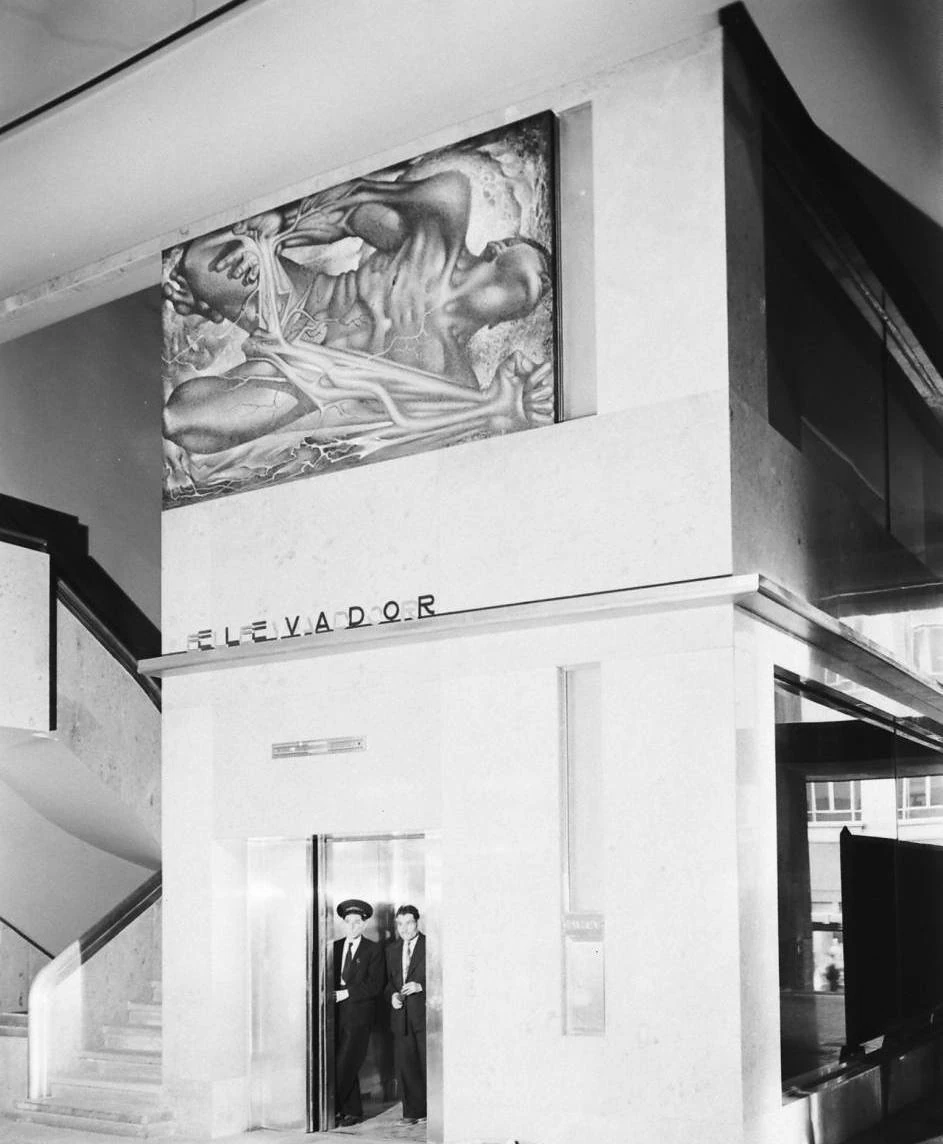
<p>In Germany, most Nazi art and architecture is rightfully gone. I haven’t been able to experience its desired effect.</p>

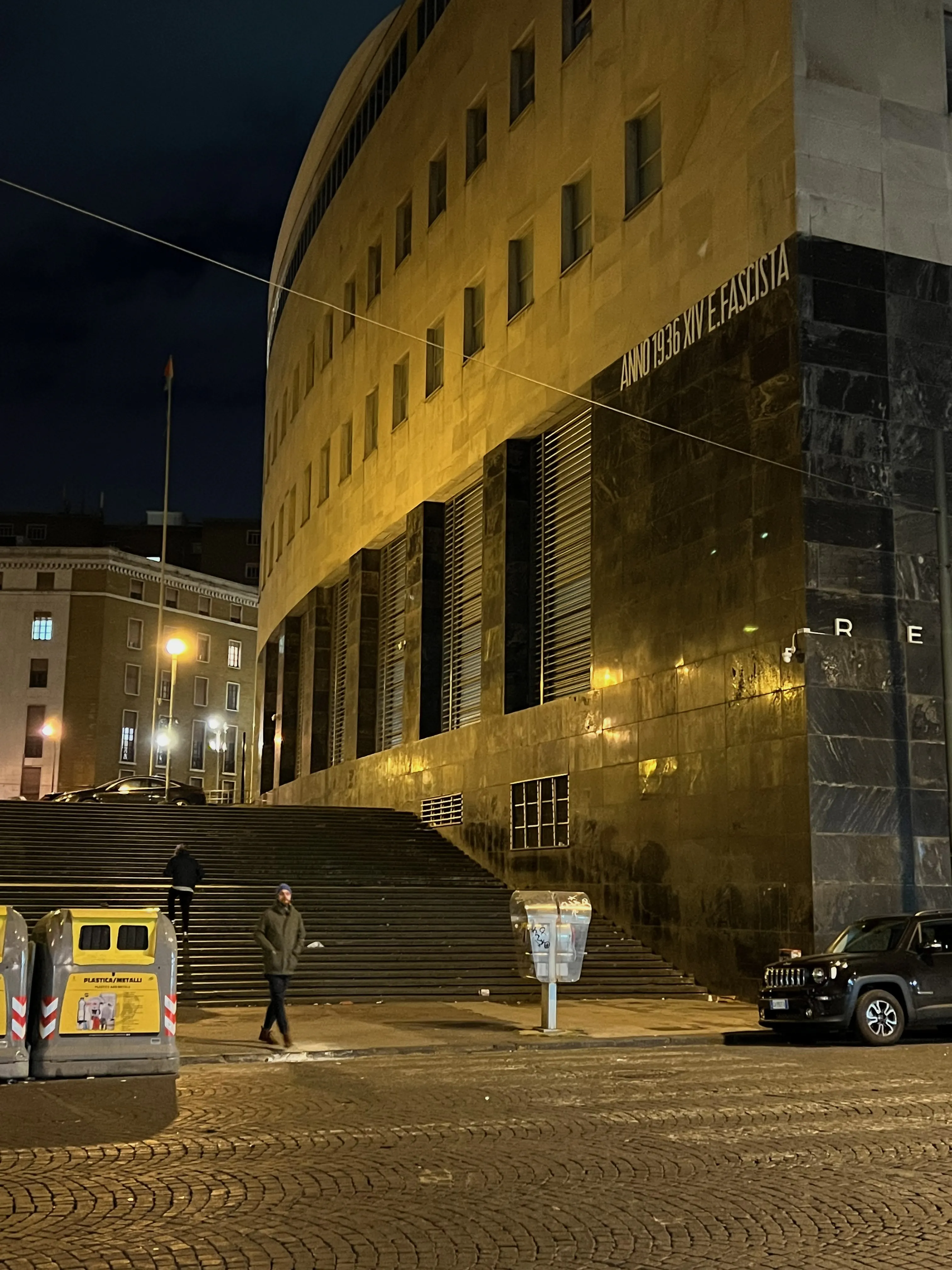
<p>But then, visiting Naples a few years ago, I stepped out of a restaurant one night and into a street lined by the <em>Palazzo delle Poste</em>. The building had been commissioned by the fascists and has remained standing until the present day. There was something undeniably notable about it, about how the post office clashed with the rest of the built environment.</p>

<p>Looking it up now, I see that it is because of an architectural style that Wikipedia describes as “severe and monumental”—both austerely modern and strangely reminiscent of the Roman Empire.</p>


  <figure><a href="https://larsmensel.com/assets/images/entries/2025/this-is-slopaganda/_palazzo-optimized.webp"><img src="https://larsmensel.com/assets/images/entries/2025/this-is-slopaganda/_palazzo-optimized.webp" alt="" /></a><figcaption>Here’s me standing in front of Naples’ post office.</figcaption></figure>


<p>“Severe” is a fitting term, as it squares with the AI images we’re now seeing everywhere: The AI propaganda is indeed severe, it’s a kind of merciless and unforgiving “art” that provokes, agitates, and <a href="https://www.garbageday.email/p/trump-s-big-beautiful-gulag-eceef93f0f861d7b">desensitizes</a>. It’s an “aesthetic justification of the right of the strongest”<sup id="fnref:fn5"><a href="#fn:fn5" class="footnote" rel="footnote" role="doc-noteref">5</a></sup>—and it <a href="https://bsky.app/profile/bildoperationen.bsky.social/post/3lquesqotf22h">calls into question reality itself</a>.</p>

<hr />


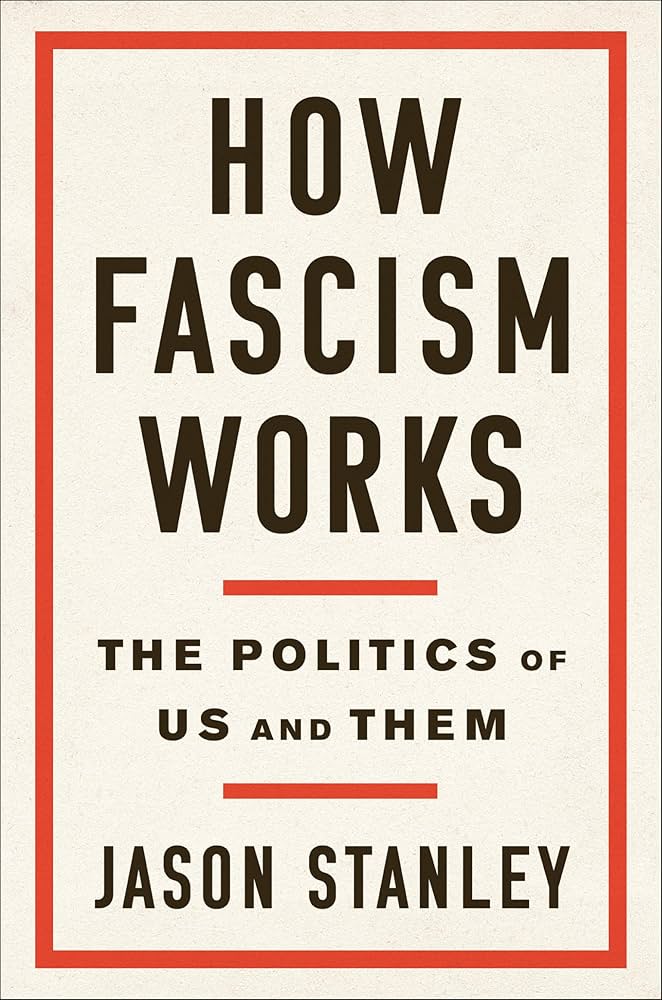
  <figure><a href="https://larsmensel.com/assets/images/entries/2025/this-is-slopaganda/_81Bfk5AbetL-UF894-1000-QL80.jpg"><img src="https://larsmensel.com/assets/images/entries/2025/this-is-slopaganda/_81Bfk5AbetL-UF894-1000-QL80.jpg" alt="" /></a><figcaption>How Fascism Works</figcaption></figure>


<p>In <em>How Fascism Works</em>, the researcher Jason Stanley describes “Unreality” as one of the core tenets of fascism. Stanley refers mainly to conspiracy theories and how the powers that be leverage them to call into question a society‘s shared sense of reality to divide it.</p>

<p>But when he wrote his book in 2018, there was no AI to reckon with, no “large-scale degradation of the information environment”, as Elizabeth Lopatto <a href="https://www.theverge.com/2024/12/5/24313222/chatgpt-pardon-biden-bush-esquire">has called it</a>. Stanley couldn’t have known that future fascists would be able to leverage the same unreality as socialist realist art, the same severity of Futurism. And that they could do so without hiring propaganda artists, all at a fraction of the cost, enhanced by the sharing power of global social networks.</p>

<p>The unreality is only set to become greater.</p>

<div class="footnotes" role="doc-endnotes">
  <ol>
    <li id="fn:fn1">
      <p>Miyazaki had famously said that he considered AI art “an insult to life itself” <a href="#fnref:fn1" class="reversefootnote" role="doc-backlink">&#8617;</a></p>
    </li>
    <li id="fn:fn2">
      <p>That image, actually, had all the hallmarks of being fake—starting with the <a href="https://larsmensel.com/entries/2022/context-collapse">context collapse</a> of the Secretary in front of the prisoners—but the stark disconnect was surely engineered to shock. When so much is becoming fake, realizing that something is real can cut deeply. <a href="#fnref:fn2" class="reversefootnote" role="doc-backlink">&#8617;</a></p>
    </li>
    <li id="fn:fn3">
      <p>Theireau writes: “The message is twofold: to the believers and the concerned, There is a threat and we will deal with it; to the outraged and the terrorized, Deal with it. These images say all this not through the functionary slog of a PowerPoint, as with the nonexistent WMDs, but with a battery of filters, edits, and references. You might call it agit-slop.” <a href="#fnref:fn3" class="reversefootnote" role="doc-backlink">&#8617;</a></p>
    </li>
    <li id="fn:fn4">
      <p>Resulting in such ironies as the nazis abolishing the deeply progressive Bauhaus, <a href="https://www.theguardian.com/commentisfree/2024/oct/29/germany-nazis-bauhaus-afd-design">something Germany’s AfD has copied</a>. <a href="#fnref:fn4" class="reversefootnote" role="doc-backlink">&#8617;</a></p>
    </li>
    <li id="fn:fn5">
      <p>I translated this term from a <a href="https://zeitung.faz.net/fas/feuilleton-kunst-und-verbrechen/2025-04-27/aeee96080430bd250a4fef8931fe5957/?GEPC=s5">German article</a> quoting Wolfgang Ullrich. Here’s the passage if you read German: Als „ästhetische Rechtfertigung des Rechts des Stärkeren“ hat der Kulturwissenschaftler Wolfgang Ullrich kürzlich die neuen autoritären Bildwelten charakterisiert. Die Formel bringt auf den Punkt, was die reaktionären Visionen der Network-States mit den hypermaskulinen Antikenphantasien von Musk und Zuckerberg, Altmans kulleräugigem Profilbild und der „ghiblifizierten“ Meme-Propaganda des Weißen Hauses verbindet: Es sind Bildwelten der Rücksichtslosigkeit, in denen neokoloniale Expansionsträume, pseudohistorisch bemäntelte Machtphantasien, ein entfesselter Datenextraktivismus und die zynische Glorifizierung staatlicher Gewalt ihren gemeinsamen Ausdruck finden. <a href="#fnref:fn5" class="reversefootnote" role="doc-backlink">&#8617;</a></p>
    </li>
  </ol>
</div>]]></content>
  </entry>
  
  <entry>
    
    
    <title type="html">Obra destruida</title>
    <link href="https://larsmensel.com/entries/2025/obra-destruida/" rel="alternate" type="text/html" title="Obra destruida" />
    <published>2025-07-03T00:00:00+02:00</published>
    <updated>2025-07-03T00:00:00+02:00</updated>
    
    <id>https://larsmensel.com/2025/obra-destruida</id>
    
    <summary type="html"><![CDATA[The inherent problem of muralism: A mural’s got nowhere to run.]]></summary>
    
    <content type="html" xml:base="https://larsmensel.com/entries/2025/obra-destruida/"><![CDATA[<figure><a href="https://larsmensel.com/assets/images/entries/2025/obra-destruida/_Diptico-de-la-vida-3.webp"><img src="https://larsmensel.com/assets/images/entries/2025/obra-destruida/_Diptico-de-la-vida-3.webp" alt="" /></a><figcaption>A surviving photograph of Díptico de la vida</figcaption></figure>

<p>Mexican muralism is a defining art movement of the country, but it has a severe disadvantage: In a country prone to earthquakes, the buildings hosting the walls, which in turn host the murals, can crumble and the artworks themselves can be lost. Unlike a canvas, they also can’t be moved—so when the winds of time change, the only way to move a mural out of sight is to destroy it.</p>

<p>This famously happened to Diego Rivera’s <em>Man at the Crossroads</em>, which was supposed to be installed at the Rockefeller Center in New York but plastered over when Rockefeller himself considered it “anti-capitalist propaganda”.</p>

<p>Mexico City’s <em>Palacio de la Bellas Artes</em> not only shows a replica of Rivera’s mural, it also has an exhibit about the much less known Mexican artist Jorge González Camarena.</p>

<figure><a href="https://larsmensel.com/assets/images/entries/2025/obra-destruida/_diptico.jpg"><img src="https://larsmensel.com/assets/images/entries/2025/obra-destruida/_diptico.jpg" alt="" /></a><figcaption>Camarena’s <em>Díptico de la vida</em></figcaption></figure>

<p>The exhibit shows sketches for a mural called <em>Díptico de la vida</em> that González Camarena painted in 1941 on the walls of the Guardiola building, an annex to the Bank of Mexico. The sketches are magnificent, the artwork both powerful and deeply weird, showing a naked woman and a naked man, each lying on their backs. It’s all utterly modern, very progressive and definitely a little horny.</p>

<p>Later considered obscene, the mural was first <a href="https://museopalaciodebellasartes.inba.gob.mx/exhibition/jorge-gonzalez-camarena-la-utopia-inacabada/#:~:text=Entre%20estos%20destaca%20la%20controversia,del%20Palacio%20de%20Bellas%20Artes">damaged by an earthquake in 1957 and then removed because it was considered immoral</a>. The accompanying explainer to the photos of the work state plainly “obra destruida” — “work destroyed”. A mural truly has nowhere to run.</p>]]></content>
  </entry>
  
  <entry>
    
    
    <title type="html">The Grammar in the Thought</title>
    <link href="https://larsmensel.com/entries/2025/grammar-in-the-thought/" rel="alternate" type="text/html" title="The Grammar in the Thought" />
    <published>2025-07-02T00:00:00+02:00</published>
    <updated>2025-07-02T00:00:00+02:00</updated>
    
    <id>https://larsmensel.com/2025/the-grammar-in-the-thought</id>
    
    <summary type="html"><![CDATA[Writing that rare sentence that feels exactly right.]]></summary>
    
    <content type="html" xml:base="https://larsmensel.com/entries/2025/grammar-in-the-thought/"><![CDATA[<p>Elisa Gabbert,<a href="https://www.theparisreview.org/blog/2022/07/06/why-write/"> at the end of a long article about why writers write</a>, briefly looks inward:</p>

<blockquote>
  <p>I think I write to think—not to find out what I think; surely I know what I already think—but to do better thinking. Staring at my laptop screen makes me better at thinking. Even thinking about writing makes me better at thinking. And when I’m thinking well, <strong>I can sometimes write that rare, rare sentence or paragraph that feels exactly right, only in the sense that I found the exact right sequence of words and punctuation to express my own thought—the grammar in the thought.</strong> 
That rightness feels so good, like sinking an unlikely shot in pool. The ball is away and apart from you, but you feel it in your body, the knowledge of causation. <strong>Never mind luck or skill or free will, you caused that effect—you’re alive!</strong></p>
</blockquote>]]></content>
  </entry>
  
  <entry>
    
    
    <title type="html">Critical Ignoring</title>
    <link href="https://larsmensel.com/entries/2025/critical-ignoring/" rel="alternate" type="text/html" title="Critical Ignoring" />
    <published>2025-01-24T00:00:00+01:00</published>
    <updated>2025-01-24T00:00:00+01:00</updated>
    
    <id>https://larsmensel.com/2025/critical-ignoring</id>
    
    <summary type="html"><![CDATA[I can’t do this four more years.]]></summary>
    
    <content type="html" xml:base="https://larsmensel.com/entries/2025/critical-ignoring/"><![CDATA[<figure><a href="https://larsmensel.com/assets/images/entries/2025/critical-ignoring/_ignoring-optimized.webp"><img src="https://larsmensel.com/assets/images/entries/2025/critical-ignoring/_ignoring-optimized.webp" alt="" /></a></figure>

<p>I watched the Trump inauguration while cleaning my kitchen. Before the usually bellicose speech, it made for great ambient television; the shuffling of the audience, the strange music, and the strange feeling of something being not-quite-right, only underlined by all the people in attendance who had repeatedly been threatened or belittled by the man, sitting through the ceremony as though it was normal.</p>

<p>Then came the speech, the airing of grievances and the insistence on a divine mission. I started having regrets for tuning in. There was no benefit to watching any this, I realized, it was all empty calories, a show of vintage Trumpian <a href="https://larsmensel.com/entries/2021/spectacles">spectacle</a>. I felt neither more informed nor in any way enlightened.</p>

<p>I’m no political analyst, and starting with my <a href="https://larsmensel.com/entries/2017/donald-trumps-horror-picture-show">first piece</a> about Trump here, I have been writing as a coping mechanism. My posts grappled with what I was seeing: One man‘s reality-bending ability to normalize the abnormal, to say what was previously unsayable, and to move the political discourse, America, and with it (seemingly) the entire world to the hard right.</p>

<p>I’m under no illusion that my posts changed anybody’s mind—that’s not what I’m doing here, and my readership is too arbitrary to make such an impact. But writing about Trump and the forces at play felt like the little thing I could do against the <a href="https://www.newyorker.com/culture/culture-desk/adam-curtiss-essential-counterhistories">hyper-normalization</a>; it felt good—if only for my own sanity—to point to what should have been clear for everyone to see. And yet <a href="https://larsmensel.com/entries/2024/facts-dont-matter">facts didn’t matter</a>: He was duly reelected.</p>

<hr />

<p>The first days after the inauguration were a flurry of activity. So many executive orders, a barrage of stunts: Renaming the Gulf of Mexico to “Gulf of America”. Talks about annexing Greenland and retaking the Panama Canal). Then the truly dark stuff, the dehumanization of migrants and Musk’s Hitler salute. It was as shocking as it was hard to look away.</p>


  <iframe src="https://bsky.app/profile/nataschastrobl.bsky.social/post/3lgaavsnwzs2l/embed" width="100%" height="400" style="border:none; border-radius:0;" loading="lazy"></iframe>


<p>On Bluesky I read an appeal from the political scientist Natascha Strobl, who recommended being careful when it comes to spending your anger and desperation. “It’ll grind you down (…) and that’s the point.”</p>

<p>It made me wonder: Is there a way to opt out of the barrage of Trump-related information? Is it possible to retreat from the news cycle and close this particular pandora’s box? To keep myself from succumbing to cynicism and despondency?</p>

<hr />

<p><a href="https://podcasts.apple.com/de/podcast/so-thats-what-make-america-great-again-means/id1548604447?i=1000684990756&amp;l=en-GB">On his podcast</a> this week, Ezra Klein talked about how we got here. For him, Trump’s remarkable sticking power has to do, first and foremost, with attention.</p>

<blockquote>
  <p>I do think that Donald Trump <strong>understands that attention is the new money; attention is the fundamental substance of power</strong>—in America and as he conceives of American politics.</p>
</blockquote>

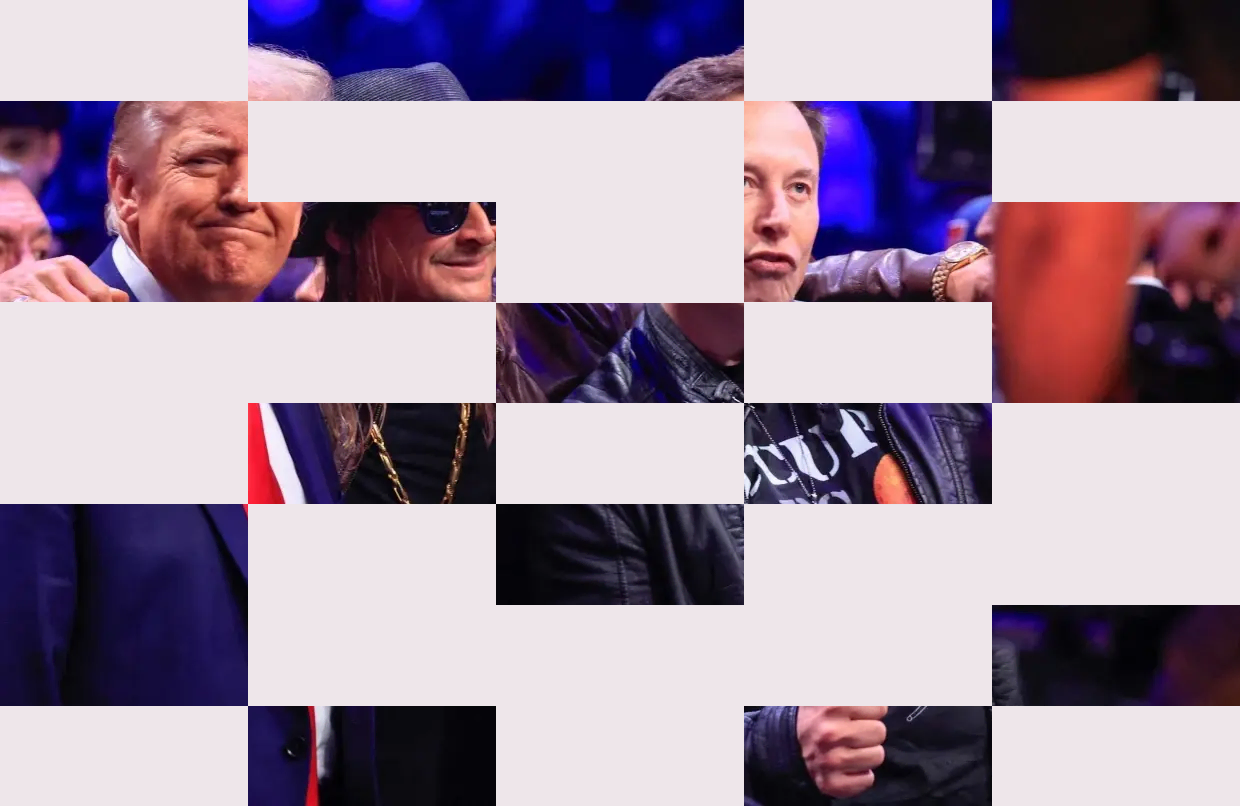
<p>He also pointed out that the most prominent places in the audience were reserved not for members of his own party, not for the governors of the states which <em>make up the U.S.</em>; but instead for the “Attentional oligarchs”—the CEOs of companies that hold much of our attention and that mediate how we see the world: Elon Musk of X, Mark Zuckerberg of Meta, Shou Zi Chew of TikTok (and too a lesser extend Sundar Pichai of Google).</p>

<hr />

<p>I believe that the wider culture wars, the constant mechanisms to keep large swaths of the population both mad and upset is, for the most part, a business. Keeping our attention locked in is how platforms make money: Making people mad to keep them glued to their screens increases ad impressions and earning. It’s a relatively simple business proposition—with the side-effect of replacing all discourse with indignation.</p>

<p>This isn’t a particularly new insight: I have known this mechanism for years, especially after reading the books on news by <a href="https://www.debezigebij.nl/boek/de-nieuwsfabriek/?srsltid=AfmBOorzXKaLZCAV1fYJr_Fxd0KCCqXyPmINYvKjR_s1Ndx2C4bMmJcr">Rob Wijnberg</a> and <a href="https://www.alaindebotton.com/news-users-manual/">Alain de Botton</a>. Both works have held up remarkably well: The authors criticized that news are a constant drumbeat of shallow information. That they don’t replace deep analysis. And ironically, that they keep us hooked by hurting our feelings in <a href="https://larsmensel.com/entries/2024/breaking-up-with-x">specific and predictable ways</a>.</p>

<hr />

<p>Craig Mod has previously <a href="https://craigmod.com/essays/how_i_got_my_attention_back/">written a lot about attention</a>; about why it matters to consciously maintain and nurture it; about keeping it in check in the face of the many distractions that exist in the world. His insights aren’t about politics per se, but rather about the mechanics of attention, which includes apps and news publications.</p>

<p>All the way back in 2019 <a href="https://craigmod.com/essays/media_accounting/#attention-monsters-things-that-eat-attention">he wrote about “Attention monsters”</a>:</p>

<blockquote>
  <p>These suboptimal contracts are at their most exaggeratedly worst in what I call “attention monsters.” That is, <strong>any app / service / publication whose business is predicated on keeping a consumer engaged and re-engaged for the benefit of the organization</strong> (often to the detriment of the mental and physical health of the user), dozens if not hundreds or thousands of times a day.</p>
</blockquote>

<p>Later in the article, he describe the same thing as “Something — anything — to increase engagement time in service to ad revenue.”</p>

<p>I understand that politics aren’t apps, that outrage isn’t the same end point as ad revenue. But these things become connected when outrage feeds engagement, ad revenue, and polarization alike. When keeping people mad and grievances high leads not only to making money but also serves to push them to the right and often vote against their own best interest. Attention is, indeed the key to it all.</p>

<hr />

<p>Just as I was writing this, I found a link to a paper titled <a href="https://journals.sagepub.com/doi/10.1177/09637214221121570">“Critical Ignoring as a Core Competence for Digital Citizens”</a><sup id="fnref:fn1"><a href="#fn:fn1" class="footnote" rel="footnote" role="doc-noteref">1</a></sup>. It’s a relatively short piece, and argues that the “overabundant and attention-grabbing” can “lead people to doubt the very existed of ‘truth’ or a shared reality.”</p>

<p>The authors write how negative and outrage-bating messages get shared more often; and how the attention oligarchs, as Ezra Klein would call them, can exploit this bias to their advantage. They propose looking away:</p>

<blockquote>
  <p>Critical ignoring (Wineburg, 2021) is a type of deliberate ignorance that <strong>entails selectively filtering and blocking out information in order to control one’s information environment and reduce one’s exposure to false and low-quality information</strong>. This competence complements conventional critical-thinking and information-literacy skills, such as finding reliable information online, by specifying how to avoid information that is misleading, distractive, and potentially harmful.</p>
</blockquote>

<p>I think it’s important not to think of critical ignoring as a way to close ones eyes from reality, but instead as a way of redirecting attention to where it matters.</p>

<hr />

<p>I keep coming back to Jenny Odell’s <em>How to do Nothing</em> from 2019, where the somewhat provocative title really translated into an appeal to do something else instead of wasting our attention on social media and the news cycle. Critical ignoring isn’t even so much about wanting to look away from the unfolding horrors of a second Trump presidency. Like quitting X, it’s about directing my attention elsewhere, towards things I <em>can</em> change and that have a measurable impact on my own life. It’s much more worthwhile to spend my attention on raising my son, spending time with my partner, reading or looking at art, interacting with friends, riding the trails.</p>

<p>What keeps bringing me back to the news cycle isn’t even so much that I care about the events on the other side of the world but the feeling of missing out on world events, on the things everyone talks about, even if they—for the most part—have little bearing on our lives.</p>

<p>It’s hard to break with the habit, hard to <em>do nothing</em>. But it also feels like there no way I can keep doing this for four more years.</p>

<div class="footnotes" role="doc-endnotes">
  <ol>
    <li id="fn:fn1">
      <p>“Critical Ignoring”, of course, is a great example of <em>Terminification</em>, the quest to give any scientific theory a catchy label in order to get cited. <a href="#fnref:fn1" class="reversefootnote" role="doc-backlink">&#8617;</a></p>
    </li>
  </ol>
</div>]]></content>
  </entry>
  
  <entry>
    
    
    <title type="html">Moderation isn’t Censorship</title>
    <link href="https://larsmensel.com/entries/2025/moderation-isnt-censorship/" rel="alternate" type="text/html" title="Moderation isn’t Censorship" />
    <published>2025-01-15T00:00:00+01:00</published>
    <updated>2025-01-15T00:00:00+01:00</updated>
    
    <id>https://larsmensel.com/2025/moderation-isnt-censorship</id>
    
    <summary type="html"><![CDATA[…and platforms aren’t the public, even if they would like to be.]]></summary>
    
    <content type="html" xml:base="https://larsmensel.com/entries/2025/moderation-isnt-censorship/"><![CDATA[<figure><a href="https://larsmensel.com/assets/images/entries/2025/moderation-isnt-censorship/moderation.jpg"><img src="https://larsmensel.com/assets/images/entries/2025/moderation-isnt-censorship/moderation.jpg" alt="" /></a></figure>


<p>When Mark Zuckerberg changed Meta’s rules for content moderation on its platforms, <a href="https://www.nytimes.com/2025/01/07/technology/meta-fact-checking-facebook.html">he framed the decision</a> as a boost for freedom of expression.</p>

<blockquote>
  <p>“It’s time to get back to our roots around free expression,” Mark Zuckerberg, Meta’s chief executive, said in a video announcing the changes. The company’s fact-checking system, he added, had “reached a point where it’s just too many mistakes and <strong>too much censorship</strong>.”</p>
</blockquote>

<p>Analysts across the web have dissected the new policy and widely interpreted the move as attempt to cozy up to the incoming Trump administration. And it certainly seems that way<sup id="fnref:fn1"><a href="#fn:fn1" class="footnote" rel="footnote" role="doc-noteref">1</a></sup>: After all, in the twisted logic of the “free-speech absolutists”, any restrictions on speech amount to censorship.</p>

<p>“This is a standard complaint of the right”, <a href="https://lithub.com/rebecca-solnit-on-not-meeting-nazis-halfway/">Rebecca Solnit has written</a>, “the real victim is the racist who has been called a racist, not the victim of his racism, the real oppression is to be impeded in your freedom to oppress.”</p>

<hr />

<p>Content moderation, of course, <a href="https://www.theverge.com/2022/10/28/23428132/elon-musk-twitter-acquisition-problems-speech-moderation">is incredibly hard (if not impossible) to get right at scale</a>. Where do you draw the line between what’s allowed and what isn’t? Do you try and maintain a semblance of civility or do you, like Meta has now, just give up under the guise of “free speech”<sup id="fnref:fn2"><a href="#fn:fn2" class="footnote" rel="footnote" role="doc-noteref">2</a></sup>?</p>

<p>Between 2011 and 2015 I worked at a company that had comments on its site and dabbled in content moderation.<sup id="fnref:fn3"><a href="#fn:fn3" class="footnote" rel="footnote" role="doc-noteref">3</a></sup> Even back then, in what I’ve called the <a href="https://larsmensel.com/entries/2024/purity-of-reason">pre-post-truth era</a>, we were repeatedly accused of “censorship” when deleting comments.</p>

<p>People felt very strongly that they should be able to say whatever they wanted online, even if their comments were insulting, degrading, or openly racist. When we deleted these comments, we predictably got accused of censorship—so you could argue that Zuckerberg is belatedly catching up with the tendencies of our <a href="https://larsmensel.com/entries/2024/facts-dont-matter">grievance-based political discourse</a>.</p>

<hr />

<p>What people got wrong then, and what (I think) they’re getting wrong now is that speech on a company’s platform isn’t the same as speech in public. It’s fundamentally different to write on Facebook or to speak on the street; to write an Instagram comment or to post a letter. <a href="https://larsmensel.com/entries/2022/town-square">Platforms, no matter how big or important, are not the public town square.</a> Platforms can make their own rules. And clearly, a company running a platform has the right to make rules for their platform—especially if they’re dependent on advertiser funding and don’t want their advertising client appearing next to neo-nazi content.<sup id="fnref:fn4"><a href="#fn:fn4" class="footnote" rel="footnote" role="doc-noteref">4</a></sup></p>

<p>In fact, I believe that a degree of moderation is the right thing to do for a private platform that, at the end of the day, runs it for money. It’s not only about respect: Even in purely business terms it makes sense to treat the overall public nicely and not to have your platform descend into a shouting match where people promote hatred about “certain races” or call queer people mentally ill. Pretending it’s fine only normalizes it; and it keeps moving the boundaries of what kind of speech is ok inexorably to the right.</p>

<hr />

<p>The question, instead, is if platforms should be allowed <em>not</em> to moderate. When does a platform become too big for their own good? So much speech has moved from the public to platforms, platforms have become so dominant in shaping the cultural discourse and the way people see the world, that it’s dangerous to let the misinformation run wild. Because that’s what’s at stake here: If people are free to claim that women are household objects, if the fundamental freedom of 51% of the world population becomes a matter of opinion, then spreading any kind of falsehoods becomes not just possible but likely.<sup id="fnref:fn5"><a href="#fn:fn5" class="footnote" rel="footnote" role="doc-noteref">5</a></sup></p>

<p>I’m nevertheless sympathetic to the slippery slope argument that moderation, especially if state-sanctioned, can turn authoritarian. That’s why it’s important for moderation to have rules, for there to be a reason why some content gets removed—not because political opinions are censored but because there are reasons some speech is deemed undesirable by society at large.</p>

<div class="footnotes" role="doc-endnotes">
  <ol>
    <li id="fn:fn1">
      <p>Aside from <a href="https://www.theverge.com/2025/1/7/24338471/meta-hate-speech-hateful-conduct-policy-moderation">clearing all sorts of vile rhetoric</a> (calling queer people sick, equating women with household objects, and equating immigrants with vomit, among others), Meta also <a href="https://www.theguardian.com/us-news/2025/jan/10/meta-ending-dei-program">shut down its DEI initiatives</a> and <a href="https://www.404media.co/meta-deletes-trans-and-nonbinary-messenger-themes/">deleted messenger themes for trans and nonbinary people</a>. Taken together, these decisions send a clear message that Meta is decidedly falling in line with Trump’s “anti-woke” obsession. <a href="#fnref:fn1" class="reversefootnote" role="doc-backlink">&#8617;</a></p>
    </li>
    <li id="fn:fn2">
      <p>I’m aware that in Europe we have a very different culture surrounding speech; there is no First Amendment and we’re much more used to a certain policing of speech than Americans are. <a href="#fnref:fn2" class="reversefootnote" role="doc-backlink">&#8617;</a></p>
    </li>
    <li id="fn:fn3">
      <p>The approach was hardly strategic, and there was no “policy” in place. The site was also too insignificant to warrant much of it at the time. Effectively, we deleted insults, blatant racism, and threads of violence. In Germany, you also need to watch out for Nazi rhetoric or terms, since those <a href="https://www.theguardian.com/world/article/2024/aug/29/the-trial-of-bjorn-hocke-the-real-boss-of-germany-far-right">may be unconstitutional</a>. <a href="#fnref:fn3" class="reversefootnote" role="doc-backlink">&#8617;</a></p>
    </li>
    <li id="fn:fn4">
      <p>None of that makes Zuckerberg’s changes right! I find them utterly shameful and spineless. <a href="#fnref:fn4" class="reversefootnote" role="doc-backlink">&#8617;</a></p>
    </li>
    <li id="fn:fn5">
      <p>A few weeks ago, Elisabeth Lopatto wrote: “I know people are sick of talking about glue on pizza, but I find the large-scale degradation of our information environment that has already taken place shocking.” <a href="#fnref:fn5" class="reversefootnote" role="doc-backlink">&#8617;</a></p>
    </li>
  </ol>
</div>]]></content>
  </entry>
  
  <entry>
    
    
    <title type="html">Vivid History</title>
    <link href="https://larsmensel.com/entries/2024/vivid-history/" rel="alternate" type="text/html" title="Vivid History" />
    <published>2024-12-28T00:00:00+01:00</published>
    <updated>2024-12-28T00:00:00+01:00</updated>
    
    <id>https://larsmensel.com/2024/vivid-history</id>
    
    <summary type="html"><![CDATA[Sometimes history is a torpedo.]]></summary>
    
    <content type="html" xml:base="https://larsmensel.com/entries/2024/vivid-history/"><![CDATA[<blockquote>
  <p>The past is never dead, it’s not even past.\</p>

  <p>–William Faulkner</p>
</blockquote>

<figure><a href="https://larsmensel.com/assets/images/entries/2024/vivid-history/_belgrano.webp"><img src="https://larsmensel.com/assets/images/entries/2024/vivid-history/_belgrano.webp" alt="" /></a><figcaption>The <em>General Belgrano</em>, sinking.</figcaption></figure>

<p>When I write about history here, it sometimes feels like I’m trying to identify an unknown object in the dark. The contours are familiar, but it’s hard to say exactly what it is. A discipline of study on its face, history is also the very real, vivid, everyday events that happened to someone, <a href="https://larsmensel.com/entries/2022/the-gargoyles-of-reims">cascades of decisions</a>  that reach into the present. <a href="https://larsmensel.com/entries/2021/faminsky">It never just was, it is</a>.</p>

<hr />

<p>On <em>Past, Present, Future</em>, David Runciman interviewed historian Ayşe Zarakol about the much-debunked <em>End of History</em>. They make an interesting point about history both as study, but also as lived reality:</p>

<blockquote>
  <p><strong>The Western view is that history is the study of the past in order to solve or resolve puzzles.</strong> (…) To get a sense of where we are now is to answer the things that in the past were mysteries of irresolvable questions. What the historian does is study the past to get a sense how we are beyond it. <strong>And so the past becomes a resource (…), history is a kind of problem-solving mechanism.</strong></p>
</blockquote>

<p>This idealized treats history like a technology (in the widest sense of the word), a “problem-solving machine” we can use to avoid repeating mistakes. But of course it’s rarely like that—otherwise history wouldn’t repeat itself <a href="https://larsmensel.com/entries/2024/history-rhyming">(or rhyme)</a>.</p>

<p>Runciman:</p>

<blockquote>
  <p>(…) you described history from another perspective (…). And you use words like “It’s a weight”, “It’s like a burden”, “It’s a tradition”. It’s the thing that you’re grappling with. <strong>History is not the academic discipline that is close to the sciences as a problem-solving device.</strong></p>
</blockquote>

<p>This, of course, gets to the core of the dilemma: History is reality first, academia second. And even once it’s been discussed or decoded by historians, its effects linger: History is always part of the present moment.</p>

<blockquote>
  <p><strong>History is like (…) the heavy, humid air that you breathe.</strong> It’s a completely different image. It’s not the modern Western image of history.”</p>
</blockquote>

<p>I’m partial <a href="https://larsmensel.com/entries/2020/contours-of-the-ordinary">Svetlana Alexievich’s view</a> that history should concern itself much more with emotions, with the nitty-gritty of everyday life rather than just the broad strokes.</p>

<hr />

<p>Around the same time I heard the episode I quoted above, I started listening to <a href="https://www.lrb.co.uk/podcasts-and-videos/podcasts/the-belgrano-diary"><em>The Belgrano Diary</em></a>, a podcast about the Falklands War. It starts with the rough outlines of the war and then goes straight to the central episode of the show: The sinking of the <em>General Belgrano</em> by a British nuclear submarine:</p>

<blockquote>
  <p>“When a torpedo is fired, you can feel it. There’s a ba-dum-pum, as it makes its way. <strong>And the next thing was, you know, history</strong>.”</p>
</blockquote>

<p>To me, this quote get to the core of it all: History isn’t even abstract or hard to understand. Sometimes it’s as simple as a torpedo and the effects it has.</p>]]></content>
  </entry>
  
  <entry>
    
    
    <title type="html">Facts Don’t Matter</title>
    <link href="https://larsmensel.com/entries/2024/facts-dont-matter/" rel="alternate" type="text/html" title="Facts Don’t Matter" />
    <published>2024-11-08T00:00:00+01:00</published>
    <updated>2024-11-08T00:00:00+01:00</updated>
    
    <id>https://larsmensel.com/2024/facts-dont-matter</id>
    
    <summary type="html"><![CDATA[It’s never been easier to get away with hallucinations.]]></summary>
    
    <content type="html" xml:base="https://larsmensel.com/entries/2024/facts-dont-matter/"><![CDATA[<h2 id="its-never-been-easier-to-get-away-with-hallucinations">It’s never been easier to get away with hallucinations.</h2>

<figure><a href="https://larsmensel.com/assets/images/entries/2024/facts-dont-matter/_collapse.webp"><img src="https://larsmensel.com/assets/images/entries/2024/facts-dont-matter/_collapse.webp" alt="" /></a></figure>

<p>To me, the most memorable moment of this year’s U.S. election was Donald Trump’s claim that Kamala Harris <a href="https://www.youtube.com/watch?v=tmeSF-31ecU">was “flying“ in “tens of thousand” of immigrants into the country on “beautiful jet aeroplanes“</a>.</p>

<p>Trump, of course, is no stranger to wild claims, of which there are too many to name. Still, this one was particularly bizarre and cut through the noise for me. The claim isn’t just outlandish, it is obviously false and clearly ad-lipped. It also didn’t hurt  Trump in any way. The man who once quipped that he could <a href="https://www.npr.org/sections/thetwo-way/2016/01/23/464129029/donald-trump-i-could-shoot-somebody-and-i-wouldnt-lose-any-voters">shoot someone in the middle of Fifth Avenue without losing voters</a>, who could <a href="https://en.wikipedia.org/wiki/Donald_Trump_Access_Hollywood_tape">”do anything”</a> keeps proving invincible. Facts don’t matter.</p>

<hr />


  <figure><a href="https://larsmensel.com/assets/images/entries/2024/facts-dont-matter/_hurricane.png"><img src="https://larsmensel.com/assets/images/entries/2024/facts-dont-matter/_hurricane.png" alt="" /></a></figure>


<p>A few weeks before Trump hallucinated those beautiful jet planes, Hurricane Helene cut a path of devastation through the Southern USA. At the time, a particular image went viral: It shows a girl in a life vest, clutching a puppy while sitting in a boat. Both are soaking wet. The image, unsurprisingly, is AI-generated—meaning that neither the girl nor her particular fate ever existed.</p>

<p>On 404 Media, Jason Koehler reports that <a href="https://www.404media.co/hurricane-helene-and-the-fuck-it-era-of-ai-generated-slop/">a Republican congresswoman nevertheless shared the image on X.</a> When confronted about it being fake, she responded that she didn’t care: “There are people going through much worse than what is shown in this pic. So I’m leaving it because it is emblematic of the trauma and pain people are living through right now.”</p>

<p><a href="https://www.404media.co/hurricane-helene-and-the-fuck-it-era-of-ai-generated-slop/">Koebler writes</a>:</p>

<blockquote>
  <p>This is the “fuck it” era of AI slop and of political messaging, where <strong>AI-generated images are used to convey whatever partisan message suits the moment regardless of truth</strong>. For all of the fearmongering about the potential of deepfake-driven disinformation, we have seen time and time again that whatever message is being delivered doesn’t need to be supported with real—or even realistic—photos or videos to convey it.</p>
</blockquote>

<hr />

<p>During and after Trump’s first term, media outlets spent lots of time and money trying to fact-check the president’s increasingly outrageous claims. But remember: Facts don’t matter! Even being proven a pathological liar didn’t hurt his long-term electability. The man can say whatever he wants.<sup id="fnref:fn1"><a href="#fn:fn1" class="footnote" rel="footnote" role="doc-noteref">1</a></sup></p>

<p><a href="https://larsmensel.com/entries/2024/free-for-all-fakery">Increasingly credible fakes</a> play a role here, but I don’t even think the crisis of facts is caused by our current struggle to tell fake from real.</p>

<p>Instead, I find that in this post-truth era, the political discourse relies solely on grievances and pre-held believes. On vibes. People feel a certain way and they adjust their perception of reality to match that feeling, whatever the facts on the ground. It’s what happens when you <a href="https://larsmensel.com/entries/2024/beginning-with-a-conclusion">“begin with a conclusion”</a> and bend reality until it fits your preconceived notion.</p>

<hr />

<p>In his <a href="https://podcasts.apple.com/de/podcast/past-present-future/id1682047968?i=1000673717913&amp;r=1345">discussion of <em>Citizen Kane</em> on <em>Past Present Future</em></a>, David Runciman hits upon a related point: That facts never stand on their own but are ultimately just a conduit for feelings.</p>

<p>In a part of the the film<sup id="fnref:fn2"><a href="#fn:fn2" class="footnote" rel="footnote" role="doc-noteref">2</a></sup>, the newspaper publisher Kane tries to drum up support for the Spanish-American war by constructing newspaper stories about “the outrages committed by the Spanish”. His journalists don’t find anything, but Kane insists they instead make up some stories as pretext for war. Runciman explains:</p>

<blockquote>
  <p>Now there’s something completely fake and manipulative about this. <strong>This was fake news, but the emotions were real</strong>. The jingoism is fed by a real sense of outrage on the part of the readers.</p>
</blockquote>

<p>When I heard this bit of the podcast, it suddenly started making sense to me how people can rationalize the most outrageous claims: The facts might be wrong, but they <em>feel real</em>. They suit the moment. They confirm the grudge. And currently, that’s more than enough.</p>

<div class="footnotes" role="doc-endnotes">
  <ol>
    <li id="fn:fn1">
      <p>Hannah Arendt once wrote: “Constant lying is not aimed at making the people believe a lie, but at ensuring that no one believes anything anymore. People that can no longer distinguish between truth and lies cannot distinguish between right and wrong… With such people, you can do whatever you want.” <a href="#fnref:fn1" class="reversefootnote" role="doc-backlink">&#8617;</a></p>
    </li>
    <li id="fn:fn2">
      <p>Which, I should admit, I’ve never seen, but that doesn’t change the point Runciman makes. <a href="#fnref:fn2" class="reversefootnote" role="doc-backlink">&#8617;</a></p>
    </li>
  </ol>
</div>]]></content>
  </entry>
  
  <entry>
    
    
    <title type="html">Working Towards the Autocrat</title>
    <link href="https://larsmensel.com/entries/2024/working-towards-the-autocrat/" rel="alternate" type="text/html" title="Working Towards the Autocrat" />
    <published>2024-11-06T00:00:00+01:00</published>
    <updated>2024-11-06T00:00:00+01:00</updated>
    
    <id>https://larsmensel.com/2024/working-towards-the-autocrat</id>
    
    <summary type="html"><![CDATA[Actually, Trump won’t have to do a whole lot himself.]]></summary>
    
    <content type="html" xml:base="https://larsmensel.com/entries/2024/working-towards-the-autocrat/"><![CDATA[<figure><a href="https://larsmensel.com/assets/images/entries/2024/working-towards-the-autocrat/_Berghof.jpg"><img src="https://larsmensel.com/assets/images/entries/2024/working-towards-the-autocrat/_Berghof.jpg" alt="" /></a><figcaption>View from Hitler’s residence in the alps.</figcaption></figure>

<p>In his eponymous biography of Hitler, British historian Ian Kershaw traces not just how the German dictator came to power—but also how Hitler turned his deeply hateful vision into policy without doing much himself.</p>

<p>Kershaw paints a picture of Hitler as hermit choleric who spends most of his days sleeping in, lecturing his staff, and watching movies at his Berghof residence. How did his regime instigate the Holocaust and conquer half of Europe? The author argues the key to understanding Hitler’s power lies in his subordinates’ eagerness to <em>work towards the Führer</em>, e.g. to enact policies and make rules in the spirit of what Hitler had emphasized in his speeches, pamphlets, and in <em>Mein Kampf</em>.</p>

<p>Crucially, Kershaw never absolves Hitler of responsibility for his regime’s countless crimes. But he stresses that the Nazi leader didn’t have to <em>do much</em> at all—because he had surrounded himself with plenty of people all too willing to act in his interest.</p>

<p>I was thinking about all this in the morning as I woke up to news that Donald Trump was poised to win the U.S. presidency for a second term. Trump is no Hitler (although his own vice president previously made that comparison)<sup id="fnref:fn1"><a href="#fn:fn1" class="footnote" rel="footnote" role="doc-noteref">1</a></sup> but I was struck by the parallel that voters (re)elected him even though he had spelled out, in very clear terms what his platform amounted to: Autocracy, racism, revisionism, and retribution.</p>

<h3 id="interpreting-trump-is-possibly-the-most-dangerous">Interpreting Trump is possibly the most dangerous</h3>

<p>Trump talked about being a dictator <a href="https://apnews.com/article/trump-hannity-dictator-authoritarian-presidential-election-f27e7e9d7c13fabbe3ae7dd7f1235c72">“on day one”</a>, stereotyped all immigrants as criminals and rapists,  refused to accept his election loss, threatened <a href="https://www.reuters.com/world/us/bloodbath-vermin-animals-trumps-rhetoric-trail-2024-03-22/">“a bloodbath”</a>. He promised the largest deportation drive in history, courted dictators, encouraged Russia to <a href="https://edition.cnn.com/2024/02/10/politics/trump-russia-nato/index.html">“do whatever the hell they want”</a>. Trump is a convicted sexual predator who had joked about groping women, who incited a riot in the U.S. Capitol , <a href="https://www.mcsweeneys.net/columns/reasons-why-donald-trump-is-unfit-to-be-president">who said all sorts of vile, racist stuff that should have made him unelectable</a>. And yet: Voters were either enamored with what he said or willing to overlook it, chalking the rhetoric up to exaggerations and insisting that Trump wouldn’t actually do what he said.</p>

<p>The problem, of course, is that Trump doesn’t need to do anything himself anymore. I think he’s right when he calls his ascent the product of a “a movement like nobody’s ever seen before”. His rise, fall, and comeback are truly unprecedented. And that will motivate people to try and act in his interest (or in his spirit!), possibly for decades to come.</p>

<p>Nobody can run a government entirely by themselves, especially not at 78 years old. What I think we’ll see instead is that people will start <em>working towards</em> him, that his administration and the people in his wider circle will push for laws and regulations they <em>think</em> will befit the often rambling, hateful vitriol we’ve been hearing for the past eight years. And I think any attempts to interpret Trump are possibly even more dangerous than what he’ll do by himself.</p>

<div class="footnotes" role="doc-endnotes">
  <ol>
    <li id="fn:fn1">
      <p>Trump has many Hitler-esque attributes, but it would be reductive to consider him only on somebody else’s terms. Trump is his very own beast. <a href="#fnref:fn1" class="reversefootnote" role="doc-backlink">&#8617;</a></p>
    </li>
  </ol>
</div>]]></content>
  </entry>
  
  <entry>
    
    
    <title type="html">Beginning with a Conclusion</title>
    <link href="https://larsmensel.com/entries/2024/beginning-with-a-conclusion/" rel="alternate" type="text/html" title="Beginning with a Conclusion" />
    <published>2024-10-17T00:00:00+02:00</published>
    <updated>2024-10-17T00:00:00+02:00</updated>
    
    <id>https://larsmensel.com/2024/beginning-with-a-conclusion</id>
    
    <summary type="html"><![CDATA[Creating stories and images to match what you already believe.]]></summary>
    
    <content type="html" xml:base="https://larsmensel.com/entries/2024/beginning-with-a-conclusion/"><![CDATA[<p>In an election already characterized by the culture war, half-truths, and manufactured controversies, it’s unsurprising<sup id="fnref:fn1"><a href="#fn:fn1" class="footnote" rel="footnote" role="doc-noteref">1</a></sup> that AI plays an important role. I nevertheless find it important to acknowledge that spammy and low-quality AI-generated content—what’s recently been called <a href="https://nymag.com/intelligencer/article/ai-generated-content-internet-online-slop-spam.html">slop</a>—is now actively shaping the way many people see the world.</p>

<figure><a href="https://larsmensel.com/assets/images/entries/2024/beginning-with-a-conclusion/_Screenshot-Communist-Kamala.png"><img src="https://larsmensel.com/assets/images/entries/2024/beginning-with-a-conclusion/_Screenshot-Communist-Kamala.png" alt="" /></a><figcaption>An image <a href="https://truthsocial.com/@realDonaldTrump/posts/112981017774094658">shared by Trump on Truth Social</a></figcaption></figure>

<p>Donald Trump’s image of Kamala Harris speaking in front of a Soviet flag in Chicago is such an example. Blatantly faked, not even realistic-looking, it only supports his claim that the Democratic candidate is a communist—a tired stereotype, but one that still seems to resonate.</p>

<p>There have, of course, always been fakes. But lately, it has become trivially easy to create such images that previously required at least a working knowledge of Photoshop. And with that inflation of slop, we’re seeing more and more manufactured images going viral and misleading people who either can’t tell they’re fake—or want to believe they’re true. More about that in a bit.</p>

<hr />

<p>In my head, I keep turning over the phrase “manufacturing of doubt”, which I had heard on the excellent podcast <a href="https://www.thelastarchive.com/"><em>The Last Archive</em></a> some years ago. On the show, host Jill Lepore dives into the history of not just misinformation, but also looks at the people who stand to profit when there’s no more shared sense of reality. Doubt, I learned from the podcast, can be actively stoked—<a href="https://larsmensel.com/entries/2023/propaganda-in-the-age-of-populism">until we feel like we no longer know anything</a>.</p>

<p>Hannah Arendt once wrote:</p>

<blockquote>
  <p>“Constant lying is not aimed at making the people believe a lie, but at ensuring that no one believes anything anymore. <strong>People that can no longer distinguish between truth and lies cannot distinguish between right and wrong…</strong> With such people, you can do whatever you want.”</p>
</blockquote>

<p>The proliferation of low-quality slop for political purposes still has a limit: Not everyone will believe it; many images are easily debunked. But the pictures have a corrosive effect on the wider “information environment”: <a href="https://larsmensel.com/entries/2023/the-flipside-of-fake">People start thinking that real things are fake, too.</a></p>

<hr />

<p>Case in point: Another American election controversy, this time about the crowd size of a Kamala Harris rally shortly after she was elevated to the candidacy.</p>

<figure><a href="https://larsmensel.com/assets/images/entries/2024/beginning-with-a-conclusion/_GUt2UoCXkAAJAiJ.jpg"><img src="https://larsmensel.com/assets/images/entries/2024/beginning-with-a-conclusion/_GUt2UoCXkAAJAiJ.jpg" alt="" /></a></figure>

<p>This time, Trump claimed that the image was AI-generated—in order to erode his opponent’s credibility. The catch: The image was real, but Trump skillfully tapped into the very doubt he had helped manufacture.</p>

<p>When Nick Heer <a href="https://pxlnv.com/linklog/fringe-harris-crowd-theory/">wrote about this controversy</a>, he showed it was based on a fringe claim from the darker corners of X:</p>

<blockquote>
  <p>This claim is so stupid because you do not need to rely on the photos released by the campaign. You can just go look up pictures for yourself, taken at a bunch of different angles by a bunch of different people with consistent lighting, logical crowds, and realistic hands.</p>
</blockquote>

<p>But then he goes on and uses an explainer I find immensely useful:</p>

<blockquote>
  <p>I know none of the people promoting this theory are interested in facts. <strong>They began with a conclusion and are creating a story to fit, in spite of evidence to the contrary.</strong></p>
</blockquote>

<hr />

<p><em>Beginning with a conclusion</em> is key to what we’re so often seeing in the culture wars: Preexisting beliefs and grievances drive the fact finding instead of facts informing opinions people hold.</p>

<p>I think a lot of that has to do with the mechanics of the internet, with the algorithmic echo chambers that push people towards more content that keeps them upset and coming back for more—generating ad revenue in the process. But it’s also a human instinct to want to confirm one’s pre-held beliefs—and it’s never been easier to find your exact opinions confirmed in some corner of the web.</p>

<hr />

<p><strong>Update (23 Jan 2025):</strong> <a href="https://www.theatlantic.com/technology/archive/2025/01/january-6-justification-machine/681215/">In an article for The Atlantic</a>, Charlie Warzel and Mike Caulfield write about this very mechanic, calling the internet a “justification machine”.</p>

<blockquote>
  <p><strong>The justification machine,(…) has made the process of erasing cognitive dissonance far more efficient.</strong> Our current, fractured media ecosystem works far faster and with less friction than past iterations, providing on-demand evidence for consumers that is more tailored than even the most frenzied cable news broadcasts can offer.</p>
</blockquote>

<div class="footnotes" role="doc-endnotes">
  <ol>
    <li id="fn:fn1">
      <p>Update, October 13, 2025: On Bluesky, <a href="https://bsky.app/profile/sifill.bsky.social/post/3luvxkoc3nk2e">Sherrilyn Ifill makes the point</a> that surprise isn’t really the important emotion here. “I do not care that you are not ‘surprised’, she writes (about something else). “Nothing is ‘surprising’ anymore. But a lot of it is horrible and frightening.” <a href="#fnref:fn1" class="reversefootnote" role="doc-backlink">&#8617;</a></p>
    </li>
  </ol>
</div>]]></content>
  </entry>
  
  <entry>
    
    
    <title type="html">Free-for-All Fakery</title>
    <link href="https://larsmensel.com/entries/2024/free-for-all-fakery/" rel="alternate" type="text/html" title="Free-for-All Fakery" />
    <published>2024-08-26T00:00:00+02:00</published>
    <updated>2024-08-26T00:00:00+02:00</updated>
    
    <id>https://larsmensel.com/2024/free-for-all-fakery</id>
    
    <summary type="html"><![CDATA[Google’s Reimagine tool makes manipulation so easy that reality itself is at stake.]]></summary>
    
    <content type="html" xml:base="https://larsmensel.com/entries/2024/free-for-all-fakery/"><![CDATA[<p>When we say something is “photorealistic”, it means that whatever non-photographic image we’re looking at feels so real that it passes for a photograph. The implication, of course, is that a photo <em>has to be real</em>—a capture of a unique situation <em>that actually happened</em>, a proof of something realistic.</p>

<figure><a href="https://larsmensel.com/assets/images/entries/2024/free-for-all-fakery/_Valley-of-the-shadow-of-death.jpg"><img src="https://larsmensel.com/assets/images/entries/2024/free-for-all-fakery/_Valley-of-the-shadow-of-death.jpg" alt="" /></a></figure>

<p>Roger Fenton’s famous <em>The Valley of the Shadow of Death</em> is an early example of a photo that might have been staged: Many accuse the photographer of having arranged the cannonballs in the picture for dramatic effect. And though there’s debate about this<sup id="fnref:fn1"><a href="#fn:fn1" class="footnote" rel="footnote" role="doc-noteref">1</a></sup> the point still stands: A photo can easily be tampered with, be it through manipulation of the subject, omission, retouching, or Photoshop. Sure, a camera achieves a more faithful reproduction than a paintbrush<sup id="fnref:fn2"><a href="#fn:fn2" class="footnote" rel="footnote" role="doc-noteref">2</a></sup>, but what we see isn’t necessarily <em>real</em>.</p>

<p>When talking about authenticity, it quickly gets rather existential: What degree of faithfulness is real? Isn’t any photo, solely by being a reproduction, less real than the real thing? And why do we nevertheless tend to believe what we see in a photo?<sup id="fnref:fn3"><a href="#fn:fn3" class="footnote" rel="footnote" role="doc-noteref">3</a></sup></p>

<hr />

<p>Google’s latest smartphones come loaded with a feature called <em>Reimagine</em> that allows people to edit their photos using AI: Take a picture, enter a prompt, and a few seconds later it will have generated an edit. The technology is so good that it <a href="https://www.threads.net/@chriswelch/post/C-8LF4BOSAP">you can comfortably call the resulting images photorealistic</a>: There’s simply no way of telling that these images aren’t real, meaning that whatever sense of <em>realness</em> we used to attach to a photo goes completely out of the window.<sup id="fnref:fn4"><a href="#fn:fn4" class="footnote" rel="footnote" role="doc-noteref">4</a></sup></p>

<p>Sarah Jeong, <a href="https://www.theverge.com/2024/8/22/24225972/ai-photo-era-what-is-reality-google-pixel-9">reporting about this feature on <em>The Verge</em></a> puts it drastically: “We are fucked.” And yes, she too gets existential:</p>

<blockquote>
  <p><strong>We briefly lived in an era in which the photograph was a shortcut to reality, to knowing things, to having a smoking gun.</strong> It was an extraordinarily useful tool for navigating the world around us. We are now leaping headfirst into a future in which reality is simply less knowable.</p>
</blockquote>

<p>Earlier, she writes:</p>

<blockquote>
  <p>A photo (…) stops being a supplement to fallible human recollection, but instead a mirror of it. And as photographs become little more than hallucinations made manifest, the dumbest shit will devolve into a courtroom battle over the reputation of the witnesses and the existence of corroborating evidence.</p>
</blockquote>

<p>The implication is clear: It’s becoming harder and harder to use photos to tell what’s real; what really happened, that is to say <a href="https://larsmensel.com/entries/2023/decisive-moment">what configuration of people, places and time</a> took place. And since you can no longer <a href="https://larsmensel.com/entries/2023/towards-a-classification-of-midjourneys-uncanny-valley">easily tell</a> by <a href="https://larsmensel.com/entries/2023/ai-inflection-points">looking closely</a>, we’re forced to question everything we see.</p>

<p><a href="https://pxlnv.com/linklog/changing-assumptions-about-photography/">Nick Heer writes</a>:</p>

<blockquote>
  <p>Since anyone can now radically and realistically alter an entire scene within minutes of taking a photo, <strong>our expectations need to change</strong>.
But we still need to be able to believe real newsworthy photos and videos are, indeed, real.</p>
</blockquote>

<p>Image manipulation is becoming so powerful and accessible that we’re quickly moving from existential concerns to very pressing ones.</p>

<h3 id="believability-not-authenticity-confers-power-to-a-photo">Believability, not authenticity, confers power to a photo</h3>

<p>The practical question is no longer <a href="https://larsmensel.com/entries/2023/banal-creations">“What are real photographs?“</a> but “What photos are believable?”. Ultimately it’s <em>believability</em> rather than <em>authenticity</em> that confers power to a photo.</p>

<p>With generative AI, it’s becoming easier every day to make images that are <em>believable enough</em> and therefore cause real harm. I’m thinking particularly about deepfake nudes<sup id="fnref:fn5"><a href="#fn:fn5" class="footnote" rel="footnote" role="doc-noteref">5</a></sup>: Of course the <a href="https://www.404media.co/1-in-10-minors-say-their-friends-use-ai-to-generate-nudes-of-other-kids-survey-finds/">(many) people making them</a> know that the images are fake but they are believable enough to be passed around and to have caused <a href="https://www.nytimes.com/2024/04/08/technology/deepfake-ai-nudes-westfield-high-school.html">a veritable epidemic in schools</a> that affects very real people.</p>

<hr />

<p>Google’s move to release the <em>Reimagine</em> technology—even if it can’t generate deepfake nudes!—is irresponsible but <a href="https://larsmensel.com/entries/2024/dont-blame-the-ai-blame-humans">not out of character</a> for the company. There was likely a thinking on their part that if they didn’t release it, someone else would. And that would be true: For better or worse, it’s unlikely that we (and by that I mean legislators) can turn back the clock on image generation. The technology exists, and it’ll keep becoming more and more believable.</p>

<p>“No one’s ready for this”, warns Sarah Jeong. And yet here we are, moving into a future where the very idea of a faithful reproduction gets wiped out with a few silly prompts.<sup id="fnref:fn6"><a href="#fn:fn6" class="footnote" rel="footnote" role="doc-noteref">6</a></sup></p>

<div class="footnotes" role="doc-endnotes">
  <ol>
    <li id="fn:fn1">
      <p>The <a href="https://www.musee-orsay.fr/en/artworks/valley-shadow-death-134407">Musée D’Orsay</a>, which has the image in its collection, writes: “This is unlikely as the fighting raging around him would probably not have allowed him to do so.” <a href="#fnref:fn1" class="reversefootnote" role="doc-backlink">&#8617;</a></p>
    </li>
    <li id="fn:fn2">
      <p><a href="https://www.newyorker.com/culture/the-weekend-essay/why-ai-isnt-going-to-make-art">Ted Chiang</a>: “When photography was first developed, I suspect it didn’t seem like an artistic medium because it wasn’t apparent that there were a lot of choices to be made; you just set up the camera and start the exposure. But over time people realized that there were a vast number of things you could do with cameras, and the artistry lies in the many choices that a photographer makes.” <a href="#fnref:fn2" class="reversefootnote" role="doc-backlink">&#8617;</a></p>
    </li>
    <li id="fn:fn3">
      <p>There is, truly, little use in being dogmatic about what constitutes a photo itself—the technology is always changing and the shift from film to digital to computational photography has been profound. Nevertheless, there’s still broad agreement that something <em>is</em> a photo—even if edited. In the famous words of U.S Supreme Court Justice Potter Steward: <a href="https://en.wikipedia.org/wiki/I_know_it_when_I_see_it">“I know it when I see it”</a>. <a href="#fnref:fn3" class="reversefootnote" role="doc-backlink">&#8617;</a></p>
    </li>
    <li id="fn:fn4">
      <p>It’s important to differentiate the resulting pictures from last year’s fully generated images. They are hybrids that combine whatever was in front of the lens with the power of a free-wheeling AI. <a href="#fnref:fn4" class="reversefootnote" role="doc-backlink">&#8617;</a></p>
    </li>
    <li id="fn:fn5">
      <p>A term slowly being replaced with the more accurate but somewhat technical <em>nonconsensual AI-generated intimate images (NCII)</em> <a href="#fnref:fn5" class="reversefootnote" role="doc-backlink">&#8617;</a></p>
    </li>
    <li id="fn:fn6">
      <p>Worth mentioning here that Apple has a different definition of photography, <a href="https://www.theverge.com/24247538/apple-iphone-16-pro-review">as per their <em>VP of camera software engineering</em> Jon McCormack</a>: “Here’s our view of what a photograph is. The way we like to think of it is that it’s a personal celebration of something that really, actually happened.” <a href="#fnref:fn6" class="reversefootnote" role="doc-backlink">&#8617;</a></p>
    </li>
  </ol>
</div>]]></content>
  </entry>
  
  <entry>
    
    
    <title type="html">Breaking up with X</title>
    <link href="https://larsmensel.com/entries/2024/breaking-up-with-x/" rel="alternate" type="text/html" title="Breaking up with X" />
    <published>2024-08-24T00:00:00+02:00</published>
    <updated>2024-08-24T00:00:00+02:00</updated>
    
    <id>https://larsmensel.com/2024/breaking-up-with-x</id>
    
    <summary type="html"><![CDATA[Pulling the plug on Elon’s toxic network.]]></summary>
    
    <content type="html" xml:base="https://larsmensel.com/entries/2024/breaking-up-with-x/"><![CDATA[<figure><a href="https://larsmensel.com/assets/images/entries/2024/breaking-up-with-x/_original-6bc9abdcdf0fa0c31c21f7c0ab8f9d91.jpg"><img src="https://larsmensel.com/assets/images/entries/2024/breaking-up-with-x/_original-6bc9abdcdf0fa0c31c21f7c0ab8f9d91.jpg" alt="" /></a></figure>

<p>Admittedly, it took me a few attempts. I would log on to X (née Twitter), navigate to the bottom of the account settings, all the way to the red “Deactivate” button, only to get cold feet. But two weeks ago, my frustration became big enough to finally hit that button. My account is gone, and with it one of my longest-running social media infatuations.</p>

<hr />

<p>Thanks to Elon Musk’s grotesque rebranding, it’s incredibly easy to talk about the different iterations of the network. When I think about Twitter, it’s mostly the pre-takeover site, which—in its best times—was one of the most interesting places on the web. X is the site it became after Musk, an empty shell of its former self, all “For You” filler, best-of lists, and monetized threads.</p>

<p>During one of my failed attempts to quit, I realized that each time I logged on, I was pining for Twitter rather than actually enjoying X: Over the years, I had built up a habit of visiting that site during breaks from work; a positive dopamine-hit paired with a cup of coffee at 11am. You could say that the drug no longer worked.</p>

<p>But my frustration with X wasn’t just that it no longer delivered: Increasingly, it had turned into a culture war battleground and you had to turn a blind eye to the hateful, anonymous accounts being <a href="https://larsmensel.com/entries/2024/intentionally-nasty">intentionally nasty</a><sup id="fnref:fn1"><a href="#fn:fn1" class="footnote" rel="footnote" role="doc-noteref">1</a></sup> on there<sup id="fnref:fn2"><a href="#fn:fn2" class="footnote" rel="footnote" role="doc-noteref">2</a></sup>.</p>

<figure><a href="https://larsmensel.com/assets/images/entries/2024/breaking-up-with-x/_QS2hY0w-wqk55aPWhHHCtxKgstgmi6-XMZlTZHGI4bA.jpg.webp"><img src="https://larsmensel.com/assets/images/entries/2024/breaking-up-with-x/_QS2hY0w-wqk55aPWhHHCtxKgstgmi6-XMZlTZHGI4bA.jpg.webp" alt="" /></a></figure>

<p>Each time I opened the site, I was hoping for a dose of the interesting, timely content from the smart people I used to follow, only to be served a slurry of football memes and the latest scandal involving Germany’s buoying right-wing party. I barely saw the accounts I followed in the first place. It should have been an easy decision to leave.</p>

<p>And yet: There was that undeniable lock-in, that FOMO about partaking in the global conversation, even if I didn’t enjoy it anymore. I had fallen into the kind of trap PJ Vogt described on an <a href="https://podcasts.apple.com/us/podcast/is-there-a-sane-way-to-use-the-internet/id1614253637?i=1000631989200">episode of <em>Search Engine</em></a>:</p>

<blockquote>
  <p>We’ve accidentally created a world where <strong>we get a lot of our news and information from websites that are designed to addict us</strong>. Usually by hurting our feelings in specific and predictable ways.</p>
</blockquote>

<p>A bit later in the episode, Ezra Klein appealed to listeners to simply delete their accounts:</p>

<blockquote>
  <p>I don’t have anything more to say about Twitter except: Leave! <strong>It’s a toxic place run by a toxic person and everybody knows it now</strong>. And the fact that there are glimmers of good things there and certainly were more in the past: We’re done. You can’t salvage it. He owns it now, it’s done. Just leave. You have to build something new, find something new to do.</p>
</blockquote>

<figure><a href="https://larsmensel.com/assets/images/entries/2024/breaking-up-with-x/_flamingos.webp"><img src="https://larsmensel.com/assets/images/entries/2024/breaking-up-with-x/_flamingos.webp" alt="" /></a></figure>

<p>In <em>Filterworld</em>, Kyle Chayka argues that we can’t let too many algorithms  into our lives, as they ultimately skew the way we perceive the world or trap us into echo chambers of our own taste. The platform <a href="https://activitypub.ghost.org/">Ghost recently summed it up</a> like this:</p>

<blockquote>
  <p>This fast food algorithm diet was deliberately designed by technology companies to profit from our addictions. And after two decades of indulgence, the cracks in our collective consciousness are visible all around us.</p>
</blockquote>

<p>That’s why I’ve come think about my breakup with X in a different way: As a decision to willfully quit an algorithm that shoves shallow, attention-grabbing content into my life. To understand that there’s a business to capturing and maintaining our attention, more often than not by hurting us in the aforementioned “specific and predicable ways”.</p>

<p>Mostly importantly, it’s a decision to do things differently by choosing media more deliberately. To fill the void the algorithm leaves with something meaningful, through a conscious choice in how I spend my waking hours and what media I choose to consume.</p>

<div class="footnotes" role="doc-endnotes">
  <ol>
    <li id="fn:fn1">
      <p>This, of course, has a lot to do with the mechanics of any social network. When social media formats mediate the world, be it in 280 character tweets or ephemeral Instagram stories, people start to see the world in that format: In ways to boil a given thought or experience down to a post, to optimize engagement, or—at worst—to participate in a mob. <a href="#fnref:fn1" class="reversefootnote" role="doc-backlink">&#8617;</a></p>
    </li>
    <li id="fn:fn2">
      <p>To once again <a href="https://podcasts.apple.com/de/podcast/what-if-ayahuasca-made-you-stop-podcasting/id1614253637?i=1000680248330&amp;l=en-GB&amp;r=3495">quote PJ Vogt</a>: “I think people go on social media thinking, this is a place where I’m going to boldly say what I think. And what often happens is that people don’t just say what they think, they think what they say.” <a href="#fnref:fn2" class="reversefootnote" role="doc-backlink">&#8617;</a></p>
    </li>
  </ol>
</div>]]></content>
  </entry>
  
  <entry>
    
    
    <title type="html">Voice Your Concerns</title>
    <link href="https://larsmensel.com/entries/2024/voice-your-concerns/" rel="alternate" type="text/html" title="Voice Your Concerns" />
    <published>2024-05-21T00:00:00+02:00</published>
    <updated>2024-05-21T00:00:00+02:00</updated>
    
    <id>https://larsmensel.com/2024/voice-your-concerns</id>
    
    <summary type="html"><![CDATA[Why does it feel so viscerally wrong to copy a voice?]]></summary>
    
    <content type="html" xml:base="https://larsmensel.com/entries/2024/voice-your-concerns/"><![CDATA[<figure><a href="https://larsmensel.com/assets/images/entries/2024/voice-your-concerns/voice-cover-square.webp"><img src="https://larsmensel.com/assets/images/entries/2024/voice-your-concerns/voice-cover-square.webp" alt="ChatGPT voice mode" /></a><figcaption>ChatGPT voice mode</figcaption></figure>

<p>Last week, right after OpenAI had unveiled the next-generation talking ChatGPT, Sam Altman (in characteristic low-caps simplicity) <a href="https://x.com/sama/status/1790075827666796666">tweeted</a>: “her”.</p>


  <iframe src="https://www.youtube-nocookie.com/embed/ne6p6MfLBxc" frameborder="0" allowfullscreen="" loading="lazy"></iframe>


<p>It turns out that the parallel between the decade-old Spike Jonze flick and Altman‘s invention wasn’t merely coincidental: Today, Scarlett Johansson—who voiced the AI assistant Samantha in the movie—revealed that OpenAI had contacted her during the development, requesting she lend her voice to the software. She repeatedly refused.</p>

<p>It now appears that the company <a href="https://www.theverge.com/2024/5/20/24161253/scarlett-johansson-openai-altman-legal-action">went ahead and created a voice eerily similar to hers</a>—apparently using an unnamed, sound-alike voice actor.</p>


  <iframe src="https://www.youtube-nocookie.com/embed/DQacCB9tDaw" frameborder="0" allowfullscreen="" loading="lazy"></iframe>


<p>The fallout was as swift was it was predictable: Scarlett Johansson threatened legal action and OpenAI, apparently surprised by the backlash, pulled the sound-alike voice from their product “out of respect” for the actress.</p>

<hr />

<p>To be clear: What OpenAI allegedly did isn’t <em>illegal</em>. But not only is it wrong, it’s a particularly bad look for this company.</p>

<p>Because this isn’t just another case of a company knowingly circumventing a restriction, such as the many examples of large corporations commissioning soundalike songs for music that artists didn’t want them to license (this happened to Tom Waits, Bette Milder, and, most recently, <a href="https://pitchfork.com/features/article/8865-harnessing-ineffable-desire-beach-house-and-the-creative-commercial/">Beach House</a>).</p>

<p>It is arguably worse: OpenAI is driving the AI hype, they are developing the most popular tool for generative AI that’s already automating away creative jobs and slashing creative budgets.<sup id="fnref:fn1"><a href="#fn:fn1" class="footnote" rel="footnote" role="doc-noteref">1</a></sup> Their entire business model is built on the imitation of creative work, and copying an actress’ voice (one way or another) speaks of a deep disrespect towards creatives in general.<sup id="fnref:fn2"><a href="#fn:fn2" class="footnote" rel="footnote" role="doc-noteref">2</a></sup></p>

<p>The decision, then, shows how OpenAI think they’re too clever and too innovative to be held back by the constraints of common decency. Tech companies pushing the envelope still follow the tired 2010s mantra that “it’s easier to ask for forgiveness than for permission”—a sign of deep arrogance that they’re rightly criticized for.</p>

<hr />

<p>But there’s also something more profound to this story, because it otherwise wouldn’t have caused such a stir. After all, Silicon Valley companies misbehave all the time; even the scraping and automatic reproduction of art (and <a href="https://news.artnet.com/art-world/scarlett-johansson-openai-lynn-hershman-leeson-replika-torment-nexus-2496316"><em>style</em></a>) is—sadly—becoming normalized. Then why does it feel so viscerally wrong to copy a voice?</p>

<p>Perhaps it’s the unease about seeing a credible fake: In 2014’s <em>Enemy</em>, Jake Gyllenhaal recoils when he first spots his lookalike in a movie, and as a viewer you feel the scare in your bones. It’s uncanny and doesn’t feel right. (Naomi Klein does a great rundown of this effect in her book <em>Doppelganger</em>.)</p>

<p>But more likely that it’s the difference between an (external) work of art and a part of a person’s identity. For what is a human’s voice, their distinct pitch, tone, and intonation? A bodily property? A trait of personality? It certainly feels like an innate part of a person, and simply replicating it is a lot more disrespectful than copying anything they’ve made.</p>

<div class="footnotes" role="doc-endnotes">
  <ol>
    <li id="fn:fn1">
      <p>Just a year ago, I still found the use of generative AI in advertising <a href="https://larsmensel.com/entries/2023/towards-a-classification-of-midjourneys-uncanny-valley">impressive and the aesthetics intriguing</a>, these days I find it not just overused but borderline tasteless—not to mention problematic in how it undercuts creative work. <a href="#fnref:fn1" class="reversefootnote" role="doc-backlink">&#8617;</a></p>
    </li>
    <li id="fn:fn2">
      <p>Personally, I’ve never seen a product become so quickly embraced and so widely abused in human interactions—from writing emails to gathering feedback. I’ve myself been on the receiving end of utterly baffling emails from people who had outsourced the most simple responses to AI. But just because something can be done doesn’t mean it should be done—and there’s something about how “magical” AI feels that brings out the worst in some people. <a href="#fnref:fn2" class="reversefootnote" role="doc-backlink">&#8617;</a></p>
    </li>
  </ol>
</div>]]></content>
  </entry>
  
  <entry>
    
    
    <title type="html">Zombie Internet</title>
    <link href="https://larsmensel.com/entries/2024/zombie-internet/" rel="alternate" type="text/html" title="Zombie Internet" />
    <published>2024-05-18T00:00:00+02:00</published>
    <updated>2024-05-18T00:00:00+02:00</updated>
    
    <id>https://larsmensel.com/2024/zombie-internet</id>
    
    <summary type="html"><![CDATA[Facebook on autopilot.]]></summary>
    
    <content type="html" xml:base="https://larsmensel.com/entries/2024/zombie-internet/"><![CDATA[<p>When I log on to Facebook these days (which I rarely do anymore), it serves me an absurd slurry of content: Strange maps, statistics, the occasional family photos, and overall very low-quality content, clearly intended as clickbait. A few days back, I spent a couple minutes just browsing the endless stream of content, in equal parts bored and mesmerized.</p>

<p>We’ve been around long enough to learn that it’s <a href="https://www.wired.com/story/tiktok-platforms-cory-doctorow/">normal for platforms to die</a>, for the public attention to shift elsewhere <sup id="fnref:fn1"><a href="#fn:fn1" class="footnote" rel="footnote" role="doc-noteref">1</a></sup>, and for a network to languish. Facebook is a special case, though: Once a juggernaut, it slowly lost relevance but remains too big to fail. Instead, it has turned into a wasteland of AI-generated content, anything to generate clicks, keep the feed full even if the users aren’t posting.</p>

<p>On 404 Media, Jason Koebler has called Facebook the <a href="https://www.404media.co/facebooks-ai-spam-isnt-the-dead-internet-its-the-zombie-internet/">“Zombie Internet”</a>:</p>

<blockquote>
  <p>It is reductive to call Facebook the “Dead Internet.” There are real people on Facebook, and real people are being fed this content. The images themselves are being made by AI at the direction of real humans who have learned that spam can be monetized. Real humans at Facebook the company are choosing not to or are not equipped to take action on these accounts or this type of content, which now makes up an unknown but significant portion of content on the site. AI spam, as well as the specter of AI content, is impacting how real people use Facebook and perceive reality more broadly. Facebook itself is shoving its own AI features down people’s throats, and has made clear that it is going to continue spending billions of dollars on AI features that it intends to make core to its products and business model.</p>
</blockquote>

<p>Why does this exist? The answer, as usual, is money.</p>

<blockquote>
  <p>It is impossible to calculate an exact number, but given the size of Facebook’s platform and the ubiquity and popularity of AI images on Facebook now, a non-trivial amount of human hours is being wasted thinking, commenting, and giving feedback on AI-altered joists in service of an engagement scheme that converts clicks into dollars via online ads.</p>
</blockquote>

<div class="footnotes" role="doc-endnotes">
  <ol>
    <li id="fn:fn1">
      <p>I recently learned that the older generation has embraced WhatsApp status “stories” in a shift that marks how even older users are deserting Facebook, if to another Meta platform. <a href="#fnref:fn1" class="reversefootnote" role="doc-backlink">&#8617;</a></p>
    </li>
  </ol>
</div>]]></content>
  </entry>
  
  <entry>
    
    
    <title type="html">Intentionally Nasty</title>
    <link href="https://larsmensel.com/entries/2024/intentionally-nasty/" rel="alternate" type="text/html" title="Intentionally Nasty" />
    <published>2024-04-13T00:00:00+02:00</published>
    <updated>2024-04-13T00:00:00+02:00</updated>
    
    <id>https://larsmensel.com/2024/intentionally-nasty</id>
    
    <summary type="html"><![CDATA[Playing to the worst instincts in the culture wars.]]></summary>
    
    <content type="html" xml:base="https://larsmensel.com/entries/2024/intentionally-nasty/"><![CDATA[<figure><a href="https://larsmensel.com/assets/images/entries/2024/intentionally-nasty/_Cov-Cathedral-PHN600-279-1-1.jpg"><img src="https://larsmensel.com/assets/images/entries/2024/intentionally-nasty/_Cov-Cathedral-PHN600-279-1-1.jpg" alt="" /></a><figcaption>Coventry Cathedral in ruins. (Warwickshire County Record Office reference PH(N) 600/279/1)</figcaption></figure>


<p>Following the destruction of Coventry by German bombers in 1940, Josef Goebbels reportedly started to use the term <em>coventrieren</em> when planning to bombing campaigns in other places.</p>

<p>Goebbels, of course, was the Reich’s chief propagandist, a die-hard Nazi and pioneer in his use—and abuse—of words for political aims. In equal parts cruel and gloating, <em>coventrieren</em> was precisely how this man played to the worst instincts of his audience, steamrolling any misgivings.</p>

<p>What strikes me about this particular example was the undeniable nastiness: I have a hard time believing that someone who weaponizes a war crime can credibly think of himself as “the good guy”, just like SS troops wearing skulls on their caps couldn’t possibly have believed they were fighting the good fight.</p>

<p>Instead, these examples demonstrate how the Nazis didn’t care for anything beyond their immediate aims, let alone for the hundreds or thousands who died in Coventry: Goebbels cared about an effective message, about leveraging one gruesome fact to bring about the next.</p>

<p>To bring this back to the present moment: What most strikes me about the culture war discourse is just how intentionally nasty is it.<sup id="fnref:fn1"><a href="#fn:fn1" class="footnote" rel="footnote" role="doc-noteref">1</a></sup> Culture warriors rile up their audiences by appealing to peoples’ worst instincts; they go where it hurts.</p>

<p>This is a lasting legacy of Donald Trump, no matter if he is re-elected or not. Trump made the unsayable sayable<sup id="fnref:fn2"><a href="#fn:fn2" class="footnote" rel="footnote" role="doc-noteref">2</a></sup>, he normalized a nasty, vindictive discourse that previously only existed in the tabloid headlines. Now we find it everywhere: Any debate is about slamming your political opponent, it’s about “owning” the rival, ridiculing their intelligence, and it has become entirely commonplace to insult and dehumanize (vulnerable) people for political gain.</p>

<p>It’s a discourse that wouldn’t be allowed on a playground, and yet it’s slowly enveloping us all, one broken taboo at a time.</p>

<div class="footnotes" role="doc-endnotes">
  <ol>
    <li id="fn:fn1">
      <p>Update, 04 Jul 2025: A year after writing this piece, it occurs to me that a better term than “nasty” would have been cruel. Goebbels’ terminology isn’t just mean, it betrays a characteristically fascist “lust for violence”. <a href="#fnref:fn1" class="reversefootnote" role="doc-backlink">&#8617;</a></p>
    </li>
    <li id="fn:fn2">
      <p>He broke “the norm of politics, the norms of politeness”, <a href="https://www.nytimes.com/2024/10/22/opinion/donald-trump-ezra-klein-podcast.html">as Ezra Klein has described it</a>. <a href="#fnref:fn2" class="reversefootnote" role="doc-backlink">&#8617;</a></p>
    </li>
  </ol>
</div>]]></content>
  </entry>
  
  <entry>
    
    
    <title type="html">History Rhyming</title>
    <link href="https://larsmensel.com/entries/2024/history-rhyming/" rel="alternate" type="text/html" title="History Rhyming" />
    <published>2024-04-05T00:00:00+02:00</published>
    <updated>2024-04-05T00:00:00+02:00</updated>
    
    <id>https://larsmensel.com/2024/history-rhyming</id>
    
    <summary type="html"><![CDATA[What we’ve lost to authoritarianism, and what we stand to lose if it comes back.]]></summary>
    
    <content type="html" xml:base="https://larsmensel.com/entries/2024/history-rhyming/"><![CDATA[<p>They say the building was so modern that the responsible bishop refused to consecrate it. And so they had to find a less conservative stand-in to perform the rites when St. Augustinus church was opened in 1928.</p>


  <figure><a href="https://larsmensel.com/assets/images/entries/2024/history-rhyming/_B96E916A-8137-46B3-BCDF-7E2C6D608FEC-11247-00000895200B2041-optimized.jpg"><img src="https://larsmensel.com/assets/images/entries/2024/history-rhyming/_B96E916A-8137-46B3-BCDF-7E2C6D608FEC-11247-00000895200B2041-optimized.jpg" alt="" /></a></figure>

  <figure><a href="https://larsmensel.com/assets/images/entries/2024/history-rhyming/_A1E5B360-1081-4755-93B3-3E29A297A7B2-11247-00000895BE752417-optimized.jpg"><img src="https://larsmensel.com/assets/images/entries/2024/history-rhyming/_A1E5B360-1081-4755-93B3-3E29A297A7B2-11247-00000895BE752417-optimized.jpg" alt="" /></a></figure>


<p>Today, the church stands a short walk from my house, tucked neatly between adjoining residential buildings. You could be forgiven to wonder what the fuss was all about.</p>

<p>Like much of the architecture of its era, the outside is made from sleek redbrick, but it otherwise blends in with its surroundings. Only when you step inside do you notice what a radical departure it is from usual church fare: The inside is strikingly modern in color and style, yet it’s also clearly a hundred years old.</p>

<p>This was a building ahead of its time: In <em>Fragments of Metropolis</em>, the author Christoph Rauhut writes that during the interwar period, Berlin was the epicenter of expressionist architecture in Europe:</p>

<blockquote>
  <p>“For there, where the exchange between painting, literature, music, sculpture, and architecture was particularly intensive. Expressionism was, more than any other movement, the avant-garde of the era.”</p>
</blockquote>


  <figure><a href="https://larsmensel.com/assets/images/entries/2024/history-rhyming/_D776CC24-E7E5-4AE1-9676-D15E7BBF8C36-11247-0000089597367B91-optimized.jpg"><img src="https://larsmensel.com/assets/images/entries/2024/history-rhyming/_D776CC24-E7E5-4AE1-9676-D15E7BBF8C36-11247-0000089597367B91-optimized.jpg" alt="" /></a></figure>


<p>Expressionism, much like the New Objectivity/Bauhaus style occurring at the same time, was shaped by the idea that architecture could contribute to the forming of a new, more progressive society: “People wanted to get away from the political and social formalisms of the 19th century, away from the stench of its tenement housings,” writes Rauhut.</p>

<p>But unlike its more sober cousin, expressionist architecture wasn’t all function over form: It emphasized art and craftsmanship, natural colors and materials. Aside from being more spectacular, it was more humanist and, dare I say: More poetic.<sup id="fnref:fn1"><a href="#fn:fn1" class="footnote" rel="footnote" role="doc-noteref">1</a></sup></p>


  <figure><a href="https://larsmensel.com/assets/images/entries/2024/history-rhyming/_IMG-5404.webp"><img src="https://larsmensel.com/assets/images/entries/2024/history-rhyming/_IMG-5404.webp" alt="" /></a><figcaption>Hans Pölzig’s <em>Neues Schauspielhaus</em>, torn down in 1988</figcaption></figure>

  <figure><a href="https://larsmensel.com/assets/images/entries/2024/history-rhyming/_poelzig-00.webp"><img src="https://larsmensel.com/assets/images/entries/2024/history-rhyming/_poelzig-00.webp" alt="" /></a><figcaption>Hans Pölzig’s sulfuric acid factory</figcaption></figure>


<p>Expressionist architecture was shelved by the fascists as soon as they got into power. This is somewhat unsurprising: Regimes of all stripes<sup id="fnref:fn2"><a href="#fn:fn2" class="footnote" rel="footnote" role="doc-noteref">2</a></sup> love to jettison what exists <a href="https://larsmensel.com/entries/2022/tatlins-tower">in a quest to appear progressive</a>.<sup id="fnref:fn3"><a href="#fn:fn3" class="footnote" rel="footnote" role="doc-noteref">3</a></sup> In the case of a revisionist regime like the Nazis, progress is <a href="https://larsmensel.com/entries/2023/worse-and-therefore-better">invariable regressive</a>: An attempt to restore a past that—sometimes—never even existed. The Nazis, after all, ushered in a strangely neo-classical building style harping back to an imaginative past.</p>

<hr />

<p>The point is that I’m often  shocked just how much progress was discarded in the quest to restore an imaginary past, the exact progress that expressionism and other art, social, or political movements had brought.</p>

<p>The Nazis were, of course, responsible for a whole litany of crimes, but one of the sub-plots of their 12 years in power is that they also took their own country back to a much more conservative state. From the arts to women’s and queer rights, Germany was thrown back to a reactionary conservatism that erased all inclusion and tolerance that had been built up over decades.<sup id="fnref:fn4"><a href="#fn:fn4" class="footnote" rel="footnote" role="doc-noteref">4</a></sup></p>

<hr />

<p>Somehow, my neighborhood church survived WWII and now serves as a reminder of what we lost: An alternative branch of the past, tantalizing with possibility for different, more diverse society. It’s also a reminder of what we once again stand to lose if someone with a regressive agenda takes power, dead-set on reversing progress and returning to the idealized before times.</p>

<p>I’ve written a lot about this sentiment, about my nostalgia for those <a href="https://larsmensel.com/entries/2023/salvador-allende-and-the-value-of-memory">dead branches of the past</a>, always questioning if they provide any hopefulness for the future—or just dread and paranoia.</p>

<hr />

<p>In <em>Funny Weather</em>, Olivia Laing makes the case that art—just like this church—can be a “training ground for possibility”. She quotes Eve Kosofski Sedgwick’s essay <em>Paranoid Reading and Reparative Reading</em>, where the author turns my concern on its head: There’s no certainty for how the future will turn out, but it’s important we always remember there’s possibility.</p>

<blockquote>
  <p>Because the reader has room to realize that the future might be different from the present, it is also possible for her to entertain such profoundly painful, profoundly relieving, ethically crucial possibilities as that the past, in turn, could have happened differently from the way it actually did.</p>
</blockquote>

<div class="footnotes" role="doc-endnotes">
  <ol>
    <li id="fn:fn1">
      <p>The paternalistic insistence on functionality is what I like to think about as modernism biggest failing: Though doubtlessly beautiful in its rationality, it’s often too sober and affords preciously little space for humans and their desire for beauty. Expressionism is warmer, weirder, and all the more enthralling for it. <a href="#fnref:fn1" class="reversefootnote" role="doc-backlink">&#8617;</a></p>
    </li>
    <li id="fn:fn2">
      <p>In <em>Nothing Is True and Everything Is Possible</em>, Peter Pomerantsev writes about contemporary Russia: “(…) I begin to understand how radically every new regime rebuilds the past. Lenin and Trotsky ripping up the memory of the tsars, Stalin ripping up the memory of Trotsky, Khrushchev of Stalin, Brezhnev of Khrushchev; perestroika gutting the whole Communist century and every time the heroes turn to villains, saviours are rewritten as devils, the names of streets are changed, faces scrubbed out from photographs, encyclopedias re-edited. <strong>And so every regime destroys and rebuilds the previous city.</strong>” <a href="#fnref:fn2" class="reversefootnote" role="doc-backlink">&#8617;</a></p>
    </li>
    <li id="fn:fn3">
      <p>The Nazis not only closed the Bauhaus, they also established a <a href="https://archimaps.tumblr.com/post/3858409681/inside-hitlers-new-reichskanzlei-1939-berlin">strange, Neo-classicist architecture</a> that was all Greek columns, and high ceilings. Not much space for poetic impressionism. <a href="#fnref:fn3" class="reversefootnote" role="doc-backlink">&#8617;</a></p>
    </li>
    <li id="fn:fn4">
      <p>The same is true for Francoist Spain, which froze the country into a permanently conservative state for close to 40 years, <a href="https://es.wikipedia.org/wiki/Movida_madrile%C3%B1a">culminating in the explosive <em>Movida</em></a> following the transition to democracy. <a href="#fnref:fn4" class="reversefootnote" role="doc-backlink">&#8617;</a></p>
    </li>
  </ol>
</div>]]></content>
  </entry>
  
  <entry>
    
    
    <title type="html">Purity of Reason</title>
    <link href="https://larsmensel.com/entries/2024/purity-of-reason/" rel="alternate" type="text/html" title="Purity of Reason" />
    <published>2024-03-19T00:00:00+01:00</published>
    <updated>2024-03-19T00:00:00+01:00</updated>
    
    <id>https://larsmensel.com/2024/purity-of-reason</id>
    
    <summary type="html"><![CDATA[Resisting attempts to redefine “ideology” in the culture wars.]]></summary>
    
    <content type="html" xml:base="https://larsmensel.com/entries/2024/purity-of-reason/"><![CDATA[<p>Over the past months, I’ve noticed the term “ideology” become weaponized: Where we used to talk about a socialist or conservative ideology, the term is now used more broadly—and with a distinctly negative connotation: People will talk about the “climate ideology” or “gender ideology”, always implying that a given political issue is based on a broader, shady agenda.<sup id="fnref:fn1"><a href="#fn:fn1" class="footnote" rel="footnote" role="doc-noteref">1</a></sup></p>

<p>Although the dictionary defines it—innocuously enough—as “a system of ideas and ideals, especially one which forms the basis of economic or political theory and policy”, ideology is no longer an innocent term. The argument goes that anyone following any ideology will push for a given ideal without concern for reality. It’s effectively an insult to call someone an “ideologue”.</p>

<p>And yes: On its face, ideology might seem that way; we can disagree with a set of ideas and consequently disagree with the person pushing for it. But that doesn’t discount having ideas in the first place.</p>

<figure><a href="https://larsmensel.com/assets/images/entries/2024/purity-of-reason/_View-of-Haarlem-with-Bleaching-Grounds-c1665-Ruisdael.jpg"><img src="https://larsmensel.com/assets/images/entries/2024/purity-of-reason/_View-of-Haarlem-with-Bleaching-Grounds-c1665-Ruisdael.jpg" alt="" /></a><figcaption>View of Haarlem with Bleaching Grounds, Jacob van Ruisdael, 1665</figcaption></figure>

<p>Shortly after moving to the Netherlands in 2006, a brochure fell into my hands. It had been written to explain the country and its wider mindset to freshly-arrived foreigners like myself. That included the usual pleasantries about human rights and individual liberties, but what struck me at the time<sup id="fnref:fn2"><a href="#fn:fn2" class="footnote" rel="footnote" role="doc-noteref">2</a></sup> was that the society understood itself to be built on political consensus.</p>

<p>The brochure devoted two pages to previous governments, particularly the so-called “Purple coalition” from the 1980s-90s, which had operated on what’s know as the <a href="https://en.wikipedia.org/wiki/Polder_model"><em>polder model</em></a> to bring about political cooperation. Politicians— irrespective of their party ideology—got together to reach compromises, and the Dutch were all-too happy to celebrate themselves for it.</p>

<hr />


  <blockquote class="twitter-tweet"><p lang="de" dir="ltr"><a href="https://x.com/hashtag/Bayern?src=hash&amp;ref_src=twsrc%5Etfw">#Bayern</a> verbietet das <a href="https://x.com/hashtag/Gendern?src=hash&amp;ref_src=twsrc%5Etfw">#Gendern</a> an Schulen, Hochschulen und Behörden. <a href="https://t.co/2ruAfULm03">pic.twitter.com/2ruAfULm03</a></p>&mdash; Markus Söder (@Markus_Soeder) <a href="https://x.com/Markus_Soeder/status/1770113824420462971?ref_src=twsrc%5Etfw">March 19, 2024</a></blockquote>


<p>Earlier this week, the Bavarian government <a href="https://www.sueddeutsche.de/bayern/gendern-sternchen-verbot-sprache-bayern-1.6468805">banned the use of gender-inclusive language</a> in the state’s schools, universities and government offices.</p>

<p>That decision itself is noteworthy, but what struck me was that a speaker of the governing party went on to explain that any “ideologically-tinged language is exclusionary”, effectively flipping the issue on its head: Trying to make language more inclusive, he postulated, was based on an ideology, and since not everyone agreed with it, the attempt itself was exclusionary.</p>

<p>The ban wasn’t really about the language then: It was about stopping “ideology” from seeping into Bavarian society by way of language.<sup id="fnref:fn3"><a href="#fn:fn3" class="footnote" rel="footnote" role="doc-noteref">3</a></sup></p>

<hr />

<p>Dismissing ideology implies that there’s a better way to reach decisions—to make policy—that doesn’t rely on ideology but purely on the cold hard light of reason. It postulates that there’s some purity of reason that inexorably leads to the one correct decision.<sup id="fnref:fn4"><a href="#fn:fn4" class="footnote" rel="footnote" role="doc-noteref">4</a></sup></p>

<p>But all politics are choices, and with every choice comes a fork in the road. Doing one thing necessarily means <em>not doing another thing</em>, and even decisions that seem correct today can appear entirely misguided tomorrow.<sup id="fnref:fn5"><a href="#fn:fn5" class="footnote" rel="footnote" role="doc-noteref">5</a></sup></p>

<p>Also, politics are piecemeal, complex, and the devil is in the details: Change one thing and you’ll affect another. History is rife with unforeseen consequences and unanticipated side-effects of the best intentions.</p>

<h3 id="sometimes-ideology-is-all-we-got">Sometimes, ideology is all we got.</h3>

<p>What I’m saying is that sometimes ideology is all we got. For all its failings, ideology provides a strategic underpinning, an ideal to strive towards or a reason for why you are embarking on a particular fork in the road. Ideology lends a purpose—no matter how ill-guided.</p>

<p>Clearly, politics shouldn’t be driven by ideology alone. Compromise is a prerequisite for a healthy society. Ideas can and absolutely should change: They evolve, they are modified. Those Dutch politicians in the 1990s weren’t free of ideology, but they were able to reach consensus.</p>

<h3 id="i-want-this-to-be-more-than-a-hand-wringing-appeal-for-compromise">I want this to be more than a hand-wringing appeal for compromise.</h3>

<p>It would be too simple to leave it at that, at some hand-wringing appeal for compromise with a reference to Dutch politics. After all, what happened in the Netherlands is the same thing that has happened all over the world: Over the last 20 years, populism took over, consensus was thrown overboard and the once boring, bloodless politics gave way to a <a href="https://larsmensel.com/entries/2021/spectacles">spectacle</a> that very nearly just delivered a premiership to notorious right-wing hothead Geert Wilders.</p>

<p>That’s why I’m more interested in the mechanisms at play; to understand what is going on and if there’s anything we can do about it.</p>

<figure><a href="https://larsmensel.com/assets/images/entries/2024/purity-of-reason/_geert-wilders-120~3840x2160.jpg"><img src="https://larsmensel.com/assets/images/entries/2024/purity-of-reason/_geert-wilders-120~3840x2160.jpg" alt="" /></a><figcaption>Geert Wilders’ dramatically simple election poster: Devoid of any slogans, it encapsulates post-content politics with its simple appeal to “Vote PVV”. The abbreviation stands for the equally meaningless name <em>Party for Freedom</em>.</figcaption></figure>

<p>The current polarization is both the cause and the effect of a society that’s been wound-up by culture war populism. By a discourse that promotes flashy, incomplete fixes for complex, thorny issues and artificially keeps people mad to gain <a href="https://larsmensel.com/entries/2022/the-great-smog-of-1952">political capital</a>.</p>

<p>The fix to that can’t be trying stamp out ideology itself—because that’s just populism.<sup id="fnref:fn6"><a href="#fn:fn6" class="footnote" rel="footnote" role="doc-noteref">6</a></sup> It is recognizing that as long as politicians can build political capital by appearing unwavering, uncompromising, or even unpleasant, the polarization will only get worse—irrespective of their ideology.</p>

<p>Recognizing that politics as spectacle allows people to gain and exploit power through populism also means recognizing the mechanisms at play and trying not to be consumed by them. To resist those people who want to redefine innocent terms like ideology or become aware of the <a href="https://larsmensel.com/entries/2024/1984">terms we throw around</a>. To reject quick fixes to complex problems. And perhaps to champion a kind of politics that’s necessarily more boring, more complicated, and more compromising if we truly want to be governed with a concern for reality.</p>

<div class="footnotes" role="doc-endnotes">
  <ol>
    <li id="fn:fn1">
      <p>It reminds me of the supposed “homosexual agenda” that American conservative politicians liked to talk about around the turn of the millennium, always implying that asking for equal rights was in fact part of a wider, more nefarious plan. The “agenda” has always been an effective scare tactic. <a href="#fnref:fn1" class="reversefootnote" role="doc-backlink">&#8617;</a></p>
    </li>
    <li id="fn:fn2">
      <p>A very different, widely pro-European, pre-Brexit and—if I may say so—pre-post-truth age. <a href="#fnref:fn2" class="reversefootnote" role="doc-backlink">&#8617;</a></p>
    </li>
    <li id="fn:fn3">
      <p>I’m fully aware that this ban is pure populism promoted by a populist party trying to outfox another populist party, but let’s take them by their word for a moment. <a href="#fnref:fn3" class="reversefootnote" role="doc-backlink">&#8617;</a></p>
    </li>
    <li id="fn:fn4">
      <p>It’s what politicians of all stripes like to pretend is “common sense”, even though it’s usually far from common and often not even sensible. <a href="#fnref:fn4" class="reversefootnote" role="doc-backlink">&#8617;</a></p>
    </li>
    <li id="fn:fn5">
      <p>Kurt Gray puts this more eloquently <a href="https://www.theguardian.com/books/2024/apr/08/the-big-idea-do-our-political-opponents-really-hate-us">in an article for The Guardian</a>: “(…) all policies cause some harm, whether they concern tax, transport, immigration or drugs. Every law or initiative involves messy trade-offs: costs and benefits that help some and cause suffering to others. <a href="#fnref:fn5" class="reversefootnote" role="doc-backlink">&#8617;</a></p>
    </li>
    <li id="fn:fn6">
      <p>If anything, ideology is in decline since the political ideologies that defined the past century have fizzled out and given way to <a href="https://www.nytimes.com/2023/11/30/opinion/political-reality-algorithms.html">bespoke realities</a>. <a href="#fnref:fn6" class="reversefootnote" role="doc-backlink">&#8617;</a></p>
    </li>
  </ol>
</div>]]></content>
  </entry>
  
  <entry>
    
    
    <title type="html">Quantified Culture</title>
    <link href="https://larsmensel.com/entries/2024/quantified-culture/" rel="alternate" type="text/html" title="Quantified Culture" />
    <published>2024-03-07T00:00:00+01:00</published>
    <updated>2024-03-07T00:00:00+01:00</updated>
    
    <id>https://larsmensel.com/2024/quantified-culture</id>
    
    <summary type="html"><![CDATA[Books aren’t just another thing to “get done”.]]></summary>
    
    <content type="html" xml:base="https://larsmensel.com/entries/2024/quantified-culture/"><![CDATA[<p>Just two years ago I wrote about <a href="https://larsmensel.com/entries/2022/stockholm-syndrome">Spotify’s end-of-year “Wrapped”</a>, and how paradoxically appealing I found the summary. Here was a company openly tracking our collective listening habits, but hell, if it didn’t add some neat edges to the year?</p>

<p>A year later, the collective consciousness caught up with the quantification frenzy: As 2023 turned into 2024, I saw uncounted social media posts from people talking about the number of books they had read, and what struck me was how indiscriminate they tended to be: As long as it had pages and was pressed between two covers, it counted towards the goal of reading as many books as possible. I also detected a real sense of pride in the numbers, as if to say: Look what I’ve done—I’ve engaged with so much thinking.</p>

<p>There’s nothing wrong with counting books (though it strikes me as weird to brag about it), and as a defender of Spotify’s summary it might seem strange that I’m a fan of one but not the other. Sure, this might be another case where I’m <a href="https://larsmensel.com/entries/2022/visual-heritage">applying a double standard</a>, but I believe there’s a difference in reviewing <em>what</em> you’ve listened to and <em>how much</em> you’ve read.</p>

<p>Spotify’s Wrapped is all about the content: The constructed-yet-quirky statistics and (likely made-up) genres tell a story. Quantifying how many books you’ve read—or how many art exhibits you have attended, how many podcasts binged—becomes is a pure numbers game: It’s about having completed something, not what it meant.</p>

<p>I think this describes my general unease with quantification: It’s enjoyable as a measure of success or a yardstick of progress, but ultimately meaningless if we don’t draw any conclusions beyond the raw numbers.</p>]]></content>
  </entry>
  
  <entry>
    
    
    <title type="html">Don’t Blame the AI, Blame the Humans</title>
    <link href="https://larsmensel.com/entries/2024/dont-blame-the-ai-blame-humans/" rel="alternate" type="text/html" title="Don’t Blame the AI, Blame the Humans" />
    <published>2024-03-07T00:00:00+01:00</published>
    <updated>2024-03-07T00:00:00+01:00</updated>
    
    <id>https://larsmensel.com/2024/dont-blame-the-ai-blame-the-humans</id>
    
    <summary type="html"><![CDATA[Ethnically diverse Nazis and our collective contribution.]]></summary>
    
    <content type="html" xml:base="https://larsmensel.com/entries/2024/dont-blame-the-ai-blame-humans/"><![CDATA[<figure><a href="https://larsmensel.com/assets/images/entries/2024/dont-blame-the-ai-blame-humans/_google-gemini-diversity.jpg"><img src="https://larsmensel.com/assets/images/entries/2024/dont-blame-the-ai-blame-humans/_google-gemini-diversity.jpg" alt="" /></a></figure>

<p>Back when I wrote about <a href="https://larsmensel.com/entries/2023/ai-inflection-points">AI Inflection Points</a>, it was about instances when AI-generated artifacts drove the cultural conversation. The novelty has certainly worn off (“AI is boring”, as some observers <a href="https://www.newyorker.com/culture/infinite-scroll/why-the-internet-isnt-fun-anymore">remarked at the end of 2023</a>) but AI still produces the occasional shock to the system—just more negatively than before.</p>

<p>Last week, Google faced a minor online scandal when their Gemini image generator created <a href="https://www.vox.com/future-perfect/2024/2/28/24083814/google-gemini-ai-bias-ethics">“diverse” images of infamously un-diverse people</a>: Ask it for a picture of the Founding Fathers or German soldiers from the 1940s and Gemini would output people of different ethnic backgrounds, styled like pilgrims or Nazis.</p>

<p>This was the rare case when either end of the political spectrum was upset: The right-wingers decried an overly woke technology, the left-wingers a blatant misrepresentation; and either way you looked at it, you had to contend with a tool automatically revising history. It was a bad look.</p>

<h3 id="automatically-not-autonomously">Automatically, not autonomously</h3>

<p>I don’t want to be a technology apologist, particularly not on behalf of Google. But I do want to challenge how we—and I include myself in that—think about the way this technology works. Here’s a software that “learns” from its input. It replicates whatever it’s fed, and in the majority of cases that’s human behavior.</p>

<p>Back in 2016, Microsoft launched a chatbot called Tay that they had to shut back down just hours later. It turned out that letting people on the open web interact with the bot—and having the bot learn from the input—meant that Tay quickly started parroting the absolute worst <a href="https://en.wikipedia.org/wiki/Tay_(chatbot)">things you can imagine</a>.<sup id="fnref:fn1"><a href="#fn:fn1" class="footnote" rel="footnote" role="doc-noteref">1</a></sup></p>

<p>The technology has made enormous leaps since 2016, but the fundamental truth is the same: Whatever you feed the bot will—in some way or form—determine what it generates. The actions may be automatic but they certainly aren’t autonomous.</p>

<h3 id="twisted-mirrors">Twisted mirrors</h3>

<p>Unfortunately, we have been talking about AI all wrong from the beginning: As the saying goes, AI is neither artificial nor intelligent; and yet the tools pretend to be autonomous, masking as chat partners or semi-cognizant robots. Ultimately, each bot is an intricate algorithm that regurgitates its own input—for better or worse.</p>

<p>It’s easy to blame Google, AI enthusiasts, or even overzealous developers trying to “solve” the common problems of letting people play with their creation. And they should absolutely be blamed! If they put this technology into the hands of millions, they bear responsibility for whatever it generates.<sup id="fnref:fn2"><a href="#fn:fn2" class="footnote" rel="footnote" role="doc-noteref">2</a></sup></p>

<p>But I find it much more interesting to think about how this technology reflects the human biases and stereotypes that it learned from. The first versions of many AI tools reflected so many stereotypes that Google’s engineers had to try and compensate them. The result we’re seeing now is arguably worse—but the fundamental problem isn’t the technology but the biased data, based on biased ways of thinking.</p>

<p>Each of these scandals effectively holds a mirror up to our society: You can draw a straight line from human behavior to ugly outcomes. And while the tech gets better over time, I’m not sure society will.</p>

<div class="footnotes" role="doc-endnotes">
  <ol>
    <li id="fn:fn1">
      <p>Tay turning racist was one of those cases that companies now try and defend their technology against—but sometimes that will go overboard. The “diverse Nazis” therefore isn’t another case of “woke gone wild” but simply a safety system going haywire. <a href="#fnref:fn1" class="reversefootnote" role="doc-backlink">&#8617;</a></p>
    </li>
    <li id="fn:fn2">
      <p>If that sounds too much like  “Guns don’t kill people, bad guys do”, remember that guns are fundamentally made to kill whereas AI is made to… well what exactly, we’re still finding out. <a href="#fnref:fn2" class="reversefootnote" role="doc-backlink">&#8617;</a></p>
    </li>
  </ol>
</div>]]></content>
  </entry>
  
  <entry>
    
    
    <title type="html">Why 1984 Won’t Be Like 1984</title>
    <link href="https://larsmensel.com/entries/2024/1984/" rel="alternate" type="text/html" title="Why 1984 Won’t Be Like 1984" />
    <published>2024-01-19T00:00:00+01:00</published>
    <updated>2024-01-19T00:00:00+01:00</updated>
    
    <id>https://larsmensel.com/2024/why-1984-wont-be-like-1984</id>
    
    <summary type="html"><![CDATA[“Dystopia” has lost all meaning.]]></summary>
    
    <content type="html" xml:base="https://larsmensel.com/entries/2024/1984/"><![CDATA[<p>“Quite out of character for you to post this”, my friend wrote after I had shared a meme on Instagram. It’s true: I usually stick to photos and the occasional video<sup id="fnref:fn1"><a href="#fn:fn1" class="footnote" rel="footnote" role="doc-noteref">1</a></sup>, and yet something about this particular meme felt acute. It read: “Why read dystopian fiction when you can just pay attention”; and in my cynical mood, I added it to my story.</p>


  <figure><a href="https://larsmensel.com/assets/images/entries/2024/1984/_Screenshot-2024-01-24-at-21-5205.jpeg"><img src="https://larsmensel.com/assets/images/entries/2024/1984/_Screenshot-2024-01-24-at-21-5205.jpeg" alt="" /></a></figure>


<p>Minutes earlier I had read <a href="https://www.eurasiareview.com/18012024-speech-of-argentinas-president-javier-milei-at-davos-transcript/">a transcript</a> of the Argentinian president’s speech at Davos. In it, he praised libertarianism and called all state action an act of “collectivism” that’s “opening the doors to socialism”. Elon Musk <a href="https://twitter.com/elonmusk/status/1748036927821942798">promptly and tastelessly reshared</a> that speech, as if to underline that the culture wars are in full swing.</p>

<p>It was really my sentiment that was out of character, but I couldn’t help it: The city had just been blanketed by election posters from Germany’s far-right AfD when they were exposed to plot the mass deportation of citizens they don’t deem sufficiently German. “It feels like it gets worse every day,” I told Rocío.</p>


  <figure><a href="https://larsmensel.com/assets/images/entries/2024/1984/_IMG-2842-Edited.jpg"><img src="https://larsmensel.com/assets/images/entries/2024/1984/_IMG-2842-Edited.jpg" alt="" /></a><figcaption>Terrifying, yes.</figcaption></figure>


<hr />

<p>I’m trying my best to avoid being <a href="https://larsmensel.com/entries/2021/chronocentrism">chrono-centrist</a> but man—there’s a palpable sense that things are heading the wrong way, that the culture wars are becoming all-consuming.</p>

<p>In conversation I’ve been finding it refreshing to acknowledge how bleak everything seems. Not because I’m looking for comfort but because making that diagnosis seems important: I don’t want to just be cynical, I want things to turn around. I don’t want to have someone redefine any sort of collective action as socialism<sup id="fnref:fn2"><a href="#fn:fn2" class="footnote" rel="footnote" role="doc-noteref">2</a></sup>, and I sure as hell don’t want to relive the fascism of the 20th century.</p>

<p>But all that requires reflection: Reflection on how to stop feeling powerless, how to break through the constant barrage of <a href="https://larsmensel.com/entries/2023/propaganda-in-the-age-of-populism">populist distractions</a>, and how to escape the overall mood that makes people receptive to quick fixes (or causes me to share memes).</p>

<hr />

<p>The mind, <a href="https://larsmensel.com/entries/2016/three-quarters-of-your-mind">I learned a few years ago</a>, tends to work well when you’re busy doing something else: When I was cycling to work the next day, it occurred to me that the meme I had so enthusiastically shared doesn’t actually say anything concrete. In fact, you can entirely fill it with meaning depending on to your political leanings or mood of the day.</p>

<p>While I was thinking about the political right and narrative black holes, others might consider things dystopian that I find normal, or even commendable: In Naomi Klein’s <em>Doppelganger</em>, she touched upon many things that worry the (alt-)right, who consider things like vaccine passports just as dystopian as I find the speeches of the self-proclaimed “anarcho-capitalist”.</p>

<p>In truth, the term <em>dystopia</em> has been thrown around so much that it’s become hollow. Dystopias are no longer just the domain of literature and sci-fi but of the overall <a href="https://larsmensel.com/entries/2021/day-609-territory-of-ideas">”territory of ideas”</a>: People use it to talk about Gilead, VR Goggles, and deportation schemes all at once. That’s more weight than any term can practically bear.</p>

<p>Orwell’s <em>1984</em> is arguably the standout work of the genre and I’ve seen it invoked countless times—not just when talking about (post-)truth but also  when it comes to language. “Newspeak” is pure pop culture, but anyone disagreeing with a new term (let alone gender-neutral language) wields it like an axe: Change is equivalent to Newspeak is equivalent to 1984 and thereby proof that we’re living in a dystopia.</p>


  <figure><a href="https://larsmensel.com/assets/images/entries/2024/1984/_film--3437-1984--hi-res-78037eef.jpg"><img src="https://larsmensel.com/assets/images/entries/2024/1984/_film--3437-1984--hi-res-78037eef.jpg" alt="" /></a><figcaption>Not quite</figcaption></figure>


<hr />

<p>Just as I was having this thought, I cycled past a school building. The kids were out playing in the snow, the sun was shining, and suddenly you heard a loud gong playing from a wall-mounted megaphone. The break was over and the kids reluctantly shuffled back to class.</p>

<p>If you are so inclined, you can see a dystopia even in this, the most innocuous of everyday occurrences: “They are interrupting child play to enforce order by sound! They are subjugating them to a <em>system</em>!”</p>

<p>Nobody is seriously making that claim (at least not for now), but it’s not too far off when you put yourself into a mindset that we’re all being controlled, coerced, and enslaved. That the dystopia of 1984 is already here.</p>

<hr />

<p>So for starters, let’s stop wielding this term as an easy way to end debate, to discredit ideas. Let’s stop pretending that “dystopia” ever meant anything concrete and not just a future state, always out of reach—for if it was, we would called it reality and not a dystopia.</p>

<p>Let’s stop pretending that 1984—the imagined future—would be anything like 1984 and not much more real, <a href="https://larsmensel.com/entries/2022/the-gargoyles-of-reims">made up of real-world decisions</a> that are often being made by those who shout the loudest and weaponize largely meaningless terms.</p>

<div class="footnotes" role="doc-endnotes">
  <ol>
    <li id="fn:fn1">
      <p>likely because of some <a href="https://larsmensel.com/entries/2022/rivers-of-entertainment">hopeless nostalgia</a> for the photo platform it once was <a href="#fnref:fn1" class="reversefootnote" role="doc-backlink">&#8617;</a></p>
    </li>
    <li id="fn:fn2">
      <p>For a nice primer on collective action problems, check Nilay Patel’s <a href="https://www.theverge.com/24282022/kamala-harris-endorsement-presidential-election-2024">brilliant article</a> about Donald Trump’s maddening insistence of individualism. <a href="#fnref:fn2" class="reversefootnote" role="doc-backlink">&#8617;</a></p>
    </li>
  </ol>
</div>]]></content>
  </entry>
  
  <entry>
    
    
    <title type="html">Day 1337: Hyperobject</title>
    <link href="https://larsmensel.com/entries/2023/hyperobject/" rel="alternate" type="text/html" title="Day 1337: Hyperobject" />
    <published>2023-11-20T00:00:00+01:00</published>
    <updated>2023-11-20T00:00:00+01:00</updated>
    
    <id>https://larsmensel.com/2023/day-1337-hyperobject</id>
    
    <summary type="html"><![CDATA[On being too large to understand.]]></summary>
    
    <content type="html" xml:base="https://larsmensel.com/entries/2023/hyperobject/"><![CDATA[<figure><a href="https://larsmensel.com/assets/images/entries/2023/hyperobject/_tumblr-ny2q6mCN4s1r69p0no1-540.jpg"><img src="https://larsmensel.com/assets/images/entries/2023/hyperobject/_tumblr-ny2q6mCN4s1r69p0no1-540.jpg" alt="" /></a></figure>

<blockquote>
  <p>Eco-philosopher Timothy Morton has argued global warming is a “hyperobject”, something so massive and so widely distributed across time and space that it becomes too large to understand. The coronavirus pandemic was another hyperobject, so is capitalism: impossible to really perceive as wholes, in full totality, yet, nonetheless, we speak of them as things. We might try to get to grips with their effects and their impact through data and statistics or use a lot of big abstract nouns in order to try to gesture at the scale of the concepts we think we’re dealing with. But this doesn’t always succeed and so we are left anxious, <strong>struggling to situate ourselves — and, crucially, our capacity for action, for change-making — amid such monstrously vast challenges</strong>.</p>

  <p>—Jay Owens</p>
</blockquote>]]></content>
  </entry>
  
  <entry>
    
    
    <title type="html">Day 1307: The Shock of Entanglement</title>
    <link href="https://larsmensel.com/entries/2023/the-shock-of-entanglement/" rel="alternate" type="text/html" title="Day 1307: The Shock of Entanglement" />
    <published>2023-10-21T00:00:00+02:00</published>
    <updated>2023-10-21T00:00:00+02:00</updated>
    
    <id>https://larsmensel.com/2023/day-1307-the-shock-of-entanglement</id>
    
    <summary type="html"><![CDATA[Why a global health crisis dragged people into the culture wars.]]></summary>
    
    <content type="html" xml:base="https://larsmensel.com/entries/2023/the-shock-of-entanglement/"><![CDATA[<figure><a href="https://larsmensel.com/assets/images/entries/2023/the-shock-of-entanglement/_Dymaxion-Map-compressed.webp"><img src="https://larsmensel.com/assets/images/entries/2023/the-shock-of-entanglement/_Dymaxion-Map-compressed.webp" alt="" /></a><figcaption>Dymaxion World Map</figcaption></figure>


<p>It feels ironic to even write this, but here we go.</p>

<p>For some time now, I’ve been puzzled by the people who can’t seem to let the pandemic go. Who got politicized during those two odd years and still fixate on what they consider a time of government overreach, erosion of freedoms, or obscure betrayal.</p>

<p>That’s why I’m committing another entry to the pandemic, although it’s <a href="https://www.scientificamerican.com/article/what-went-wrong-with-a-highly-publicized-covid-mask-analysis/">technically</a> <a href="https://larsmensel.com/entries/2022/over">over</a>. You see, I also can’t let it go: Why did a global health emergency exert such gravitational pull?</p>

<p>I can think of several people in my immediate surroundings who keep fixating on it, always implying that covid and the response to it opened their eyes. It made them downright angry: At precautions, at governments and pharma companies, or at vaccines in general.<sup id="fnref:fn1"><a href="#fn:fn1" class="footnote" rel="footnote" role="doc-noteref">1</a></sup> And then there’s their belief that it was all overblown: That we didn’t live through a health crisis but rather a crisis of fear, blind trust, and global mainstreaming.<sup id="fnref:fn2"><a href="#fn:fn2" class="footnote" rel="footnote" role="doc-noteref">2</a></sup></p>

<p>For a while now, I’ve been wondering what it was about a global health crisis that dragged these people into the culture wars.</p>

<h2 id="deliberately-sown-mistrust">Deliberately Sown Mistrust</h2>


  <figure><a href="https://larsmensel.com/assets/images/entries/2023/the-shock-of-entanglement/_9780374610326optimized.jpg"><img src="https://larsmensel.com/assets/images/entries/2023/the-shock-of-entanglement/_9780374610326optimized.jpg" alt="" /></a></figure>


<p>Naomi Klein’s <em>Doppelgänger</em> finally provided some explanations that made sense. In the book, she dives into the wider political polarization around culture war topics in general and how people take a hard turn to the right. But particularly, she focuses on the many conspiracy theories surrounding the efficacy of masks, vaccines, and lockdowns.</p>

<p>Klein is the first to argue that the pandemic response was indeed misguided. Mostly, because rather than embracing collective, state-sponsored action like broad, worldwide vaccination, PPE, air filters, and measures for schools to stay open, it put too heavy of a burden on individuals to <em>do the right thing</em>.</p>

<p>And this is where she gives an answer to the question that’s been bothering me: Klein believes that asking people to suddenly watch out for one another goes against the way our societies generally function. Neoliberalism, Klein claims, has pushed the idea that everyone is responsible just for themselves—and insulated us from any sense of community.</p>

<blockquote>
  <p>We are now reaping the rotted harvest of decades of deliberately sown mistrust: Mistrust of the very idea that we are members of communities and societies, <strong>mistrust of any expectation that governments can and should do anything positive for us</strong>. “There is no such thing as society,” Margaret Thatcher once declared.</p>
</blockquote>

<p>The problem, then, is systemic. Which would go to explain why so many apolitical people were ready to believe in some nefarious project when they were asked to make sacrifices for others.</p>

<blockquote>
  <p>The legacy of generations of messages that pitted members of society against one another does not disappear overnight simply because there is a pandemic. And yet, strangely enough, when Covid hit, that was precisely the expectation among most centrist politicians. Which was itself a form of magical thinking.</p>
</blockquote>

<p>The pandemic was a fundamentally global issue: It didn’t care about borders or nations, and the virus spread from person to person.</p>

<p>Klein calls this the “shock of entanglement”: The realization that we’re all connected and that some challenges are bigger than individuals or family units—and can only be addressed collectively. But individuals has been upheld so much, that people now generally believe that their lives were a product of their own efforts rather than collective action.</p>

<blockquote>
  <p>(People had) bought the story that their comforts and successes were the product of their ingenuity and hard work alone (not their workers, not their caregivers, not the trade policies that favor rich nations, and certainly not their race or class). And then, suddenly, <strong>we were all confronted with a crisis that required us to act as more than individuals, more than families, more than nations, because we are actually entangled with one another</strong>. And that was a shock bigger than Covid itself.</p>
</blockquote>

<div class="footnotes" role="doc-endnotes">
  <ol>
    <li id="fn:fn1">
      <p>I’ll write more about this soon, but I’ve come to think as anger as the main ammunition in the culture wars. Making and maintaining formerly apoliticial people angry is how the (“alt-“)right pushes forward its agenda. <a href="#fnref:fn1" class="reversefootnote" role="doc-backlink">&#8617;</a></p>
    </li>
    <li id="fn:fn2">
      <p>There are, of course, lots of people that have fixated on conspiracies such as Bill-Gates-engineered vaccines or implanted microchips, but I’m not talking about them—I’m more concerned with people who’ve become skeptical and see something nefarious in every political project they’ve encountered since the pandemic. <a href="#fnref:fn2" class="reversefootnote" role="doc-backlink">&#8617;</a></p>
    </li>
  </ol>
</div>]]></content>
  </entry>
  
  <entry>
    
    
    <title type="html">The Other Side of Make-Believe</title>
    <link href="https://larsmensel.com/entries/2023/the-other-sides-of-make-believe/" rel="alternate" type="text/html" title="The Other Side of Make-Believe" />
    <published>2023-10-10T00:00:00+02:00</published>
    <updated>2023-10-10T00:00:00+02:00</updated>
    
    <id>https://larsmensel.com/2023/the-other-side-of-make-believe</id>
    
    <summary type="html"><![CDATA[The logical möbius looks of Albania’s bunkers.]]></summary>
    
    <content type="html" xml:base="https://larsmensel.com/entries/2023/the-other-sides-of-make-believe/"><![CDATA[<figure><a href="https://larsmensel.com/assets/images/entries/2023/the-other-sides-of-make-believe/_DSCF4871.jpg"><img src="https://larsmensel.com/assets/images/entries/2023/the-other-sides-of-make-believe/_DSCF4871.jpg" alt="" /></a><figcaption>A bunker on the Albanian seaside.</figcaption></figure>

<p>During the dictatorship, Enver Hoxha’s regime littered the Albanian countryside with bunkers and defense fortifications. These days, with communism long gone, the bunkers simply dot the landscape. They stand as empty hulls without a purpose.</p>

<p>I knew the Stalinist government had been paranoid: They broke first with Yugoslavia, then the Soviet Union, and finally China. They declared themselves the only <em>true</em> socialist state in the world, then proceeded to isolate the country and its population. Fearing imminent attack from their former partners or the United States, the regime turned the country into a literal fortress. Hoxha pledged to build one bunker for every four Albanians.</p>

<h3 id="a-logical-möbius-loop">A logical möbius loop</h3>

<p>The testimony I read Tirana’s <em>House of Leaves</em> museum revealed that the bunkers weren’t just for protection; they also served an altogether different purpose. Their very existence made citizens believe in the threat—because why else would the government build so many bunkers?</p>

<p>It’s a logical möbius loop, and all too easy to get lost in it. The bunkers reinforced a siege mentality that the government used to keep its iron grip on power. Maintaining an (however imaginary) fear is a convenient excuse to also maintain the status quo: Just because you’re paranoid doesn’t mean they’re not after you.</p>]]></content>
  </entry>
  
  <entry>
    
    
    <title type="html">The Neoliberal Museum</title>
    <link href="https://larsmensel.com/entries/2023/the-neoliberal-museum/" rel="alternate" type="text/html" title="The Neoliberal Museum" />
    <published>2023-09-26T00:00:00+02:00</published>
    <updated>2023-09-26T00:00:00+02:00</updated>
    
    <id>https://larsmensel.com/2023/the-neoliberal-museum</id>
    
    <summary type="html"><![CDATA[Fotografiska as a puzzle piece in the ongoing transformation of Berlin.]]></summary>
    
    <content type="html" xml:base="https://larsmensel.com/entries/2023/the-neoliberal-museum/"><![CDATA[<figure><a href="https://larsmensel.com/assets/images/entries/2023/the-neoliberal-museum/_DSCF4722-compressed.jpg"><img src="https://larsmensel.com/assets/images/entries/2023/the-neoliberal-museum/_DSCF4722-compressed.jpg" alt="" /></a></figure>

  <figure><a href="https://larsmensel.com/assets/images/entries/2023/the-neoliberal-museum/_DSCF4716-compressed.jpg"><img src="https://larsmensel.com/assets/images/entries/2023/the-neoliberal-museum/_DSCF4716-compressed.jpg" alt="" /></a></figure>


<p>Earlier this month, Fotografiska Berlin opened its doors to the public. Housed in the formerly occupied <em>Kunsthaus Tacheles</em>, which itself grew <a href="https://larsmensel.com/entries/2019/tacheles">out of the ruins</a> of the former <em>Friedrichstraßenpassage</em>, it’s the crown jewel of a controversial district redevelopment project. And the most visible mark of gentrification in today’s Berlin.</p>

<hr />


  <figure><a href="https://larsmensel.com/assets/images/entries/2023/the-neoliberal-museum/_tacheles.jpeg"><img src="https://larsmensel.com/assets/images/entries/2023/the-neoliberal-museum/_tacheles.jpeg" alt="" /></a><figcaption>Tacheles, before renovation. Courtesy of Herzog &amp; de Meuron architects.</figcaption></figure>


<p>Although we’re talking about a museum, it’s important to look at the overall project first: The <em>Kunsthaus Tacheles</em> was a beloved anarcho art space that had been occupied by artists in 1990 to prevent the scheduled demolition of a building that was heavily damaged in the war. Situated in the center of Berlin, the occupied house stood out not just for its sheer size (it occupies almost an entire city block), but also for its graffitied façade, cinema, sculpture garden, and lefty cafés.</p>


  <figure><a href="https://larsmensel.com/assets/images/entries/2023/the-neoliberal-museum/_9d26718681c1a7ee3cf3e422c1ffce4e.jpg"><img src="https://larsmensel.com/assets/images/entries/2023/the-neoliberal-museum/_9d26718681c1a7ee3cf3e422c1ffce4e.jpg" alt="" /></a><figcaption>Friedrichstraßenpassage, before the war.</figcaption></figure>


<p>I went there a few times before it was shuttered in 2012 (somehow always in the depths of winter), and though the place was certainly a ruin, it also encapsulated a specific vibe the city had after the fall of the wall. “In Berlin, everything’s allowed, if briefly,” my then-housemate used to say. <em>Tacheles</em> exemplified that. Walking through that giant arch entrance from Oranienburger Straße was like passing through a portal: You entered a staircase reeking of urine, there was graffiti everywhere, but you could peek into different artists’ studios, see surprising exhibits, or hang out among the rough metal statues in the garden.</p>

<figure><a href="https://larsmensel.com/assets/images/entries/2023/the-neoliberal-museum/_Berlin-Tacheles-18780007-a-Mario-Duhanic.jpg"><img src="https://larsmensel.com/assets/images/entries/2023/the-neoliberal-museum/_Berlin-Tacheles-18780007-a-Mario-Duhanic.jpg" alt="" /></a><figcaption>Tacheles staircase. CC BY-SA 3.0 Mario Duhanic</figcaption></figure>

<p>In 2012, the owners of the property closed the place and had the artists evicted, making the whole building off-limits<sup id="fnref:fn1"><a href="#fn:fn1" class="footnote" rel="footnote" role="doc-noteref">1</a></sup>. The property and the surrounding plots of land (mostly parking lots, if memory serves) were then sold to a New York-based developer, who ended up branding the redevelopment project <em>Am Tacheles</em> (<em>At the Tacheles</em>), swiftly appropriating the artist’s building name for their project.</p>

<p>Their plan: Build apartments and retail space, but also include some cultural use—if only to appease everyone mad about the loss of the art space.</p>

<h3 id="its-an-open-air-gentrification-showcase-just-as-predictable-as-the-exhibits-in-the-new-museum">It’s an open-air gentrification showcase, just as predictable as the exhibits in the new museum.</h3>

<p>Fast forward to the present, and the whole areal is opening up. Some construction remains ongoing, but you can go and experience the redeveloped “city quarter” for yourself: Walk through those gates once more, and you’re no longer in a sculpture garden facing an empty lot but in a passageway lined with smooth concrete walls and glass windows on either side.</p>

<p>To their credit, the developers tried to bring back the overall idea of the former passageway, but of course the buildings are from the present time. All of it would be immediately forgettable if it wasn’t for the former <em>Kunsthaus</em> as a centerpiece, with its roughness preserved.</p>


  <figure><a href="https://larsmensel.com/assets/images/entries/2023/the-neoliberal-museum/_DSCF4723-compressed.jpg"><img src="https://larsmensel.com/assets/images/entries/2023/the-neoliberal-museum/_DSCF4723-compressed.jpg" alt="" /></a></figure>


  <figure><a href="https://larsmensel.com/assets/images/entries/2023/the-neoliberal-museum/_DSCF4744-compressed.jpg"><img src="https://larsmensel.com/assets/images/entries/2023/the-neoliberal-museum/_DSCF4744-compressed.jpg" alt="" /></a></figure>


<p>Near the main entrance, just off Oranienburger Straße, you now find Fotografiska, a private photography museum with its roots in Sweden. And though I should be happy about a new museum, I don’t find much to applaud here<sup id="fnref:fn2"><a href="#fn:fn2" class="footnote" rel="footnote" role="doc-noteref">2</a></sup>. <a href="https://cphmag.com/neoliberal-photo-museum/">The critic Jörg M. Colberg sums up succinctly</a> why the museum isn’t even about photography but rather just a puzzle piece in the overall redevelopment:</p>

<blockquote>
  <p>The main function is something different: it’s commercial. <strong>Fotografiska Berlin is part of a real-estate development in Berlin that is geared towards the very wealthy. The museum’s role is to serve as an ornament, as a token. It provides a veneer of culture in an environment that otherwise is devoid of it.</strong> Not every neoliberal museum is attached to an effort to zhuzh up real estate, though. But you want to always see whether there might not be some other purpose when another one of these places opens somewhere.</p>

  <p>Neoliberal capitalism will happily appropriate anything and use it for its own goals (well, almost anything, I’ll get to that). And art in general provides a brilliant opportunity to kill a number of birds with a single stone: you can invest in art (satisfying your financial needs). But through that investment you can also buy cultural and societal cachet, and you can showcase how much you care or pretend to care about larger societal themes (such as diversity or feminism or whatever else).</p>
</blockquote>

<p>Colberg’s article (which is very much worth reading) is about Fotografiska in particular but I find that his term “The Neoliberal Museum” applies just as well to general development we find at Oranienburger Straße, or even the whole Mitte district. The edgy <em>Tacheles</em> is but a token exhibit, providing authenticity among the anonymous buildings surrounding it. It’s an open-air gentrification showcase, just as predicable as the exhibits in the new museum.<sup id="fnref:fn3"><a href="#fn:fn3" class="footnote" rel="footnote" role="doc-noteref">3</a></sup></p>


  <figure><a href="https://larsmensel.com/assets/images/entries/2023/the-neoliberal-museum/_DSCF4739-compressed.jpg"><img src="https://larsmensel.com/assets/images/entries/2023/the-neoliberal-museum/_DSCF4739-compressed.jpg" alt="" /></a></figure>


<hr />

<p>When I went to take photos in the afternoon, I was struck by just how different the city now looks, how much Berlin is transforming. The empty spaces, overgrown lots, and quirky places are being swapped—one “redeveloped quarter” at a time—for a city that’s very different in character. The gaps between buildings disappear. The crowd changes.</p>

<p>Thinking about all this made me remember an altogether different place with a very different story. The former public swimming pool in the Wedding district first closed, then became a notoriously unsafe dance club (everything’s allowed, if briefly!), then finally torn down. Some nondescript student apartments stand in its place now, each unit tiny and overpriced.</p>

<p>Googling images of what it once looked like, I found some photos from an art exhibit they held in the final days of the pool. Somebody had mounted a neon sign inside the swimming basin with the glowing pale letters spelling out a simple truth: “All palaces are temporary palaces.”</p>

<figure><a href="https://larsmensel.com/assets/images/entries/2023/the-neoliberal-museum/_stattbad-berlin-gross-09-jpg--36009-.jpg"><img src="https://larsmensel.com/assets/images/entries/2023/the-neoliberal-museum/_stattbad-berlin-gross-09-jpg--36009-.jpg" alt="" /></a></figure>

<div class="footnotes" role="doc-endnotes">
  <ol>
    <li id="fn:fn1">
      <p>They actually built a wall in front of the entrance, believe it or not. <a href="#fnref:fn1" class="reversefootnote" role="doc-backlink">&#8617;</a></p>
    </li>
    <li id="fn:fn2">
      <p>The important caveat being that the majority shareholder of Fotografiska is the <a href="https://www.baunetz.de/meldungen/Meldungen-Tacheles_in_Berlin_neu_eroeffnet_8349405.html">heir of a German-Jewish family that was expropriated by both the Nazis and the East German regime</a>. There is, at least, some inter-generational justice here, despite of the problematic gentrification perpetuated by the museum. <a href="#fnref:fn2" class="reversefootnote" role="doc-backlink">&#8617;</a></p>
    </li>
    <li id="fn:fn3">
      <p>The opening exhibit accomplishes the requisite virtue signaling by being about “the nude” and body positivity. <a href="#fnref:fn3" class="reversefootnote" role="doc-backlink">&#8617;</a></p>
    </li>
  </ol>
</div>]]></content>
  </entry>
  
</feed>