← Back to books
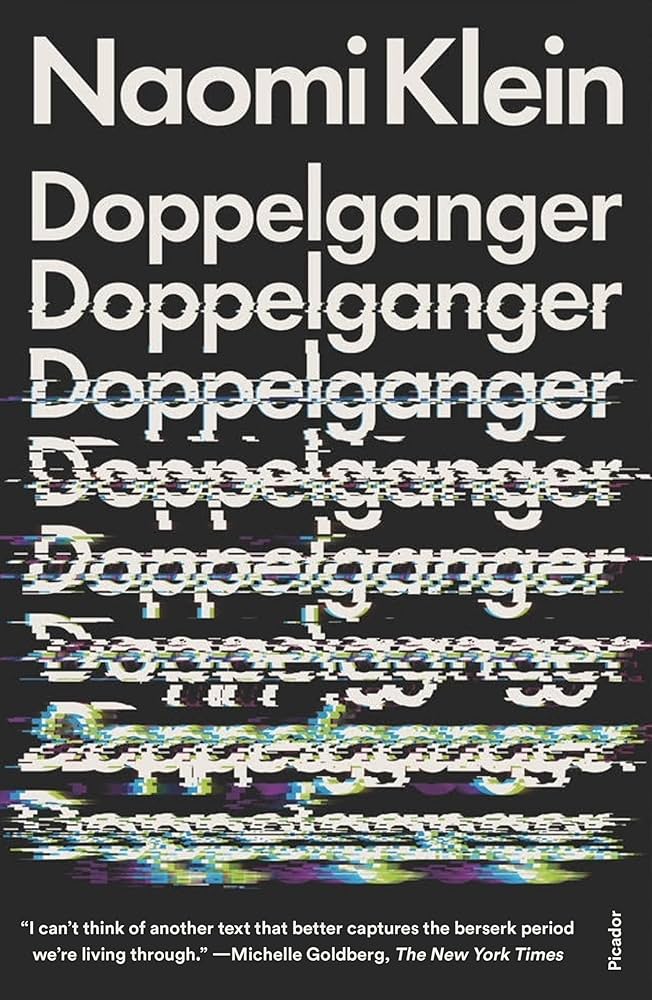
Highlights
her fellow travelers who are now in open warfare against objective reality
while ridiculous in the extreme, are nonetheless important, since the confusion they sow and the oxygen they absorb increasingly stand in the way of pretty much anything helpful or healthful that humans might, at some point, decide to accomplish together
Uncanny, a feeling Sigmund Freud described as “that species of the frightening that goes back to what was once well known and had long been familiar”—but is suddenly alien
post-shock states of discombobulation have been opportunistically exploited in many different contexts: 9/11, the collapse of the Soviet Union, the invasion of Iraq, Hurricane Katrina, and events significantly further back in time
A Spanish word for existential anxiety and deep gloom, zozobra also evokes generalized wobbliness: “a mode of being that incessantly oscillates between two possibilities, between two affects, without knowing which one of those to depend on”—absurdity and gravity, danger and safety, death and life. Uranga writes, “In this to and fro the soul suffers, it feels torn and wounded.”
disposability with which we treat people who mess up
This is classic “conspiracy without the theory,” as described by Russell Muirhead and Nancy L. Rosenblum in their 2020 book, A Lot of People Are Saying, part of the growing body of literature attempting to make sense of the surge in belief in a wide range of off-the-wall, unproven claims
She continually called Covid’s severity into question, describing it as “a much-hyped medical crisis,” even when it had already killed hundreds of thousands in the United States alone
Zadie Smith saw all this coming more than a decade ago. Writing about the rise of Facebook, and by extension all the other social media platforms, she observed, “When a human being becomes a set of data on a website like Facebook, he or she is reduced. Everything shrinks. Individual character. Friendships. Language. Sensibility. In a way it’s a transcendent experience: we lose our bodies, our messy feelings, our desires, our fears.” But we aren’t transcending to something higher, just less ourselves
hooks cautioned readers to “avoid using the phrase ‘I am a feminist’” and opt instead for “I advocate feminism,” explaining that unlike the “I am” label, which triggers the listener’s prior beliefs about what and who is a feminist, the latter is far more likely to begin a conversation about what concrete changes feminism is trying to achieve and “does not engage us in the either/or dualistic thinking that is the central ideological component of all systems of domination in Western society.”
We can have legitimate debates about the decisions of governments to put so much of the burden of controlling a surging virus on vaccines and smartphone apps—as opposed to, say, maintaining indoor masking requirements and making greater investments in public health-care systems, including hiring many more nurses and giving them pay raises, to prevent hospitals from being overrun. Not to mention providing a steady supply of free at-home rapid tests, proper protective gear at work, and, critically, adequate sick leave for all workers so that no one feels obliged to show up to work in an infectious state
Like so much else in our culture, from abusive labor practices to climate breakdown, the burden of pandemic response was shifted from the collective to the individual, all in the name of getting back to business as usual
By far the most significant measure governments of wealthy nations could have taken to stop the spread of new variants would have been to make vaccines free and available to the entire global population at the same time as they were rolled out domestically; the suspension of pharmaceutical company patents would have been more than justified, since public money so heavily subsidized the development and rollout of the vaccines. And the cost would have been relatively low: the chief economist at the Organisation for Economic Co-operation and Development estimated that the entire world could have been vaccinated for $50 billion, just a little more than Elon Musk paid to turn Twitter into his personal plaything
These formations bring together many disparate political and cultural strains: the traditional right; the QAnon conspiratorial hard right; alternative health subcultures usually associated with the green left; a smattering of neo-Nazis; parents (mainly white mothers) angry about a range of things happening and not happening in schools (masks, jabs, all-gender bathrooms, anti-racist books); small-business owners enraged by the often-devastating impacts of Covid controls on their bottom lines, which gave way to rage at everything from inflation to induction stove tops
the claims are coming from the far right, the covert plan is for a green/socialist/Venezuelan/Soros/forced-vaccine dictatorship, while the New Agers warn of a Big Pharma/GMO/biometric-implant/5G/robot-dog/forced-vaccine dictatorship
What’s new is the force of the magnetic pull with which they are finding one another, self-assembling into what the Vice reporter Anna Merlan has termed a “conspiracy singularity.”
Inspired by the term Querdenken, but taking it beyond Germany, William Callison and Quinn Slobodian, both scholars of European politics, describe these emergent political alliances as “diagonalism.” They explain: “Born in part from transformations in technology and communication, diagonalists tend to contest conventional monikers of left and right (while generally arcing toward far-right beliefs), to express ambivalence if not cynicism toward parliamentary politics, and to blend convictions about holism and even spirituality with a dogged discourse of individual liberties. At the extreme end, diagonal movements share a conviction that all power is conspiracy
On the contrary, they must continue to identify as proud members of the left, or devoted liberals, while claiming that it is the movements and tendencies of which they were once part that have betrayed their own ideals, leaving these uniquely courageous individuals politically homeless and in search of new alliances. These exiles from progressivism package themselves not as defectors, but as loyalists—it’s their former comrades and colleagues, they claim, who are the imposters, the fakes
That is the key message we are meant to take away from diagonalist politics: the very fact that these unlikely alliances are even occurring, that the people involved are willing to unite in common purpose despite their past differences, is meant to serve as proof that their cause is both urgent and necessary. How else could Wolf rationalize teaming up with Bannon who, along with Trump, normalized a political discourse that dehumanized migrants as monstrous others—rapists, gang members, and disease carriers? This is also why Wolf leans so heavily and continuously on extreme historical analogies—comparing Covid health measures with Nazi rule, with apartheid, with slavery. This kind of rhetorical escalation is required to rationalize her new alliances. If you are fighting “slavery forever” or a modern-day Hitler, everything—including the companion you find yourself in bed with—is a minor detail
And nothing had ever been nearly so hot, so potentially clout-rich as Covid-19. We all know why. It was global. It was synchronous. We were digitally connected, talking about the same thing for weeks, months, years, and on the same global platforms
this is disaster capitalism mining our attention, at a time when attention is arguably our culture’s most valuable commodity
When looking at the Mirror World, it can seem obvious that millions of people have given themselves over to fantasy, to make-believe, to playacting. The trickier thing, the uncanny thing, really, is that’s what they see when they look at us. They say we live in a “clown world,” are stuck in “the matrix” of “groupthink,” are suffering from a form of collective hysteria called “mass formation psychosis” (a made-up term). The point is that on either side of the reflective glass, we are not having disagreements about differing interpretations of reality—we are having disagreements about who is in reality and who is in a simulation
Faced with the torrent of lies coming from the conspiratorial right, many liberals and progressives opted to simply defend status quo measures, despite the fact that we could, and should, have demanded far more.
Still, you can’t blame a strategist for being strategic. And it’s highly strategic to pick up the resonant issues that your opponents have carelessly left unattended
But it’s not a great secret that plenty of people routinely go too far, turning minor language infractions into major crimes, while adopting a discourse that is so complex and jargon-laden that people outside university settings often find it off-putting—or straight-up absurd
Moreover, when entire categories of people are reduced to their race and gender, and labeled “privileged,” there is little room to confront the myriad ways that working-class white men and women are abused under our predatory capitalist order, with left-wing movements losing many opportunities for alliances that would make us stronger and more powerful. All of this is highly unstrategic, because whichever groups and individuals we kick to the curb, the Mirror World is there, waiting to catch them, praise their courage, and offer a sympathetic ear
identity absolutism
Last time, Bannon railed against Wall Street and the globalists who had fleeced the Everyman; now he rails against that plus Big Pharma, Big Tech, and “woke capitalism,” all of which are tormenting the Everymom by poisoning the minds and bodies of her kids
he is sure now that pissed-off, mostly white suburban moms—nerves frayed from those years of yo-yo remote schooling and closed gyms; still revved up about vaccine mandates and getting shadow banned on Instagram; genuinely worried about the well-being of their kids and their small businesses; done being dismissed and mocked as “Karens” by mean liberals—are the path to the next right-wing resurgence
Or—and this possibility worried me more—was the trouble that I, and many others on the left, had been too timid and obedient during the Covid era? Had we gone along too readily with pandemic measures that offloaded so much onto individuals? And had we failed to forcefully take on the corporate greed that has run rampant in this period?
I have been writing about how Bannon and Wolf are pipiking words, making a mockery of concepts that matter, and that is deeply
This was something else: a poisonous compound enmeshed with powerful notions of natural living, bodily strength, fitness, purity, and divinity—alongside their opposites: unnaturalness, bodily weakness, slothfulness, contamination, and damnation.
fascist/fitness/New Age alliance
But that is to confuse the far left—which is where the socialists and revolutionaries reside—with the far-out, which is where the wellness and New Age spiritualists hang out
All of this and more have pushed millions of people to try to heal, cure, and control themselves through an ever-expanding array of self-help directives and wellness concoctions, plenty of which have real benefits. This is the trouble with the Mirror World: there is always some truth mixed in with the lies; always some devastating collective failure it has identified and is opportunistically exploiting.
instead of trying to fix the system, they profit from its abandonments.
advocate for collective and structural responses to our collective health crises during the pandemic. That is what happened during the Great Depression in the United States, when New Deal programs created millions of jobs building public swimming pools as well as hundreds of state and national parks.
Rather than attack nurses and teachers, experts in wellness could have joined with them and fought for kids to have more outdoor education and access to nature, and for their parents to have shorter workweeks with better pay and union protections—all of which make it easier to lead an active life, and to choose and prepare healthier food.
Then came Covid—and this booming, unregulated industry of self-styled health experts collided with a global health crisis that scared the hell out of pretty much everyone, including the professionally well. After all, their yoga studios, CrossFit boxes, and massage clinics were, for the first time, locked tight, and their incomes and futures were suddenly highly uncertain. As Ehrenreich taught us, we turn toward the body when life feels out of control. It was in this period that so many of those fit and beautiful influencers stopped merely cooing soothingly and offering encouraging words to motivate our home workouts and green juicing and started whispering to us alarmingly, about dark forces coming to poison us, and eventually, to gag, jab, and dominate us. It was then that the diagonal lines started to race toward one another.
What unites the far right and the far-out is the hustle on the one hand, and a faith in hyper-individualism on the other. In the alternative-health world, everyone is selling something: classes, retreats, sound baths, essential oils, anti-metal-toxin sprays, Himalayan salt rock lamps, coffee enemas. Supplements alone were worth an estimated $155 billion worldwide in 2022. It’s much the same on Bannon’s War Room or Alex Jones’s Infowars, with their manly supplements, survivalist supplies, Freedom Fests, precious metal offers, colloidal silver toothpaste, and weapons training—and let us not forget Tucker Carlson’s 2022 documentary in which he recommended that men regularly tan their testicles with a special infrared light in order to increase testosterone levels in preparation for the “hard times” ahead.
In many ways, the most successful influencers in the wellness and fitness worlds—the people who make fortunes from selling idealized versions of themselves and the idea that you, too, can attain nirvana through a project of perpetual self-improvement—are a perfect fit with far-right economic libertarians and anarcho-capitalists, who also fetishize the individual as the only relevant social actor. In neither worldview is there any mention of collective solutions or structural changes that would make a healthy life possible for all.
The former feared the precedent of a functional, caring state (and a political win for their rivals); the latter feared losing explosive growth in their sector
The core Covid-era public health message—that we all needed to undergo some individual inconveniences for the sake of our collective health—enjoyed majority support. Yet it simply could not be reconciled with the wellness industry’s own overarching message: that individuals must take charge over their own bodies as their primary sites of influence, control, and competitive edge. And that those who don’t exercise that control deserve what they get. Neoliberalism of the body, in distilled form.
many of the same people in the wellness world who railed against the unnaturalness of Covid vaccines have begun to speak more openly about the supposed naturalness of the gender binary, and of traditional family roles
the idea that we should think and function as communities of enmeshed bodies with different needs and vulnerabilities flies in the face of a core message of neoliberal capitalism: that you are on your own and deserve your lot in life, for better or worse
The very idea that humans can and should be “optimized” lends itself to a fascistic worldview—because if your food is extra-clean, it can easily mean other people’s food is extra-dirty. If you are safe because your immune system is strong, it can flip to mean others are unsafe because they are weak. If you are optimized, others are, by definition, suboptimal. Defective. Next door to disposable. This is also the context in which some prominent anti-vaxxers have taken to calling themselves “purebloods,” since their blood is supposedly untainted by the jabs, never mind the term’s chilling supremacist overtones
So many of the battles waged in the Mirror World—the “anti-woke” laws, the “don’t say gay” bills, the blanket bans on gender-affirming medical care, the school board wars over vaccines and masks—come down to the same question: What are children for? Are they their own people, and our job, as parents, is to support and protect them as they find their paths? Or are they our appendages, our extensions, our spin-offs, our doubles, to shape and mold and ultimately benefit from? So many of these parents seem convinced that they have a right to exert absolute control over their children without any interference or input: control over their bodies (by casting masks and vaccines as a kind of child rape or poisoning); control over their minds (by casting anti-racist education as the injection of foreign ideas into the minds of their offspring); control over their gender and sexuality (by casting any attempt to discuss the range of possible gender expressions and sexual orientations as “grooming”).
Our culture lavishly credits parents for their children’s successes and judges them harshly for their children’s challenges; I am certainly not immune. What has helped me, strangely, is the ambivalence I had toward motherhood for much of my life. I never was one of those people with a fixed image in my head of who I would be as a parent and who my children would be to me; it just wasn’t a feature of my fantasy life. That probably made me a less instinctual parent, but it also may have made me more genuinely curious to meet whoever showed up
The argument is now a ubiquitous one from the Covid era: I would rather have a virus that, despite its potential lethality to many, I have determined is nothing more than a bad cold for me and my healthy family.
how, precisely, a society tips into its fascist double
the line between unsupported conspiracy claims and reliable investigative research is neither as firm nor as stable as many of us would like to believe. It’s clear that some people consume investigative journalism, fact-based analysis, and fact-free conspiracy interchangeably, drawing their own connections and mixing and matching between the three
The most meaningful response in my writing life came from the loveliest of literary mapmakers, John Berger, when I sent him The Shock Doctrine in galleys. Many people have said they found the book enraging, but his response was very different. He wrote that, for him, the book “provokes and instills a calm.” When people and societies enter into a state of shock, they lose their identities and their footing, he observed. “Hence, calm is a form of resistance.”
That same imperative set the rules (or lack thereof) that allowed a group of profoundly underwhelming tech bros to take over our entire information ecology and build a new economy off our attention and outrage
plain old capitalism doing its thing, finding new and novel ways to commodify every aspect of life.
This flip from hero to villain narratives goes some way toward explaining how so many seemingly apolitical people could have become obsessed with terrifying Covid conspiracy theories. Many, like Wolf, were people who had followed the rules of getting ahead in this broken system, and it had worked for them. They started their own business, saved some money, took out loans, maybe earned a little money on the side as a small-time landlord. They accepted the proposition that their job was to take care of themselves and their families and that nothing more would be asked of them (even as soaring housing, tuition, medical, and energy costs put the bare logistics of this kind of care increasingly out of reach). They had bought the story that their comforts and successes were the product of their ingenuity and hard work alone (not their workers, not their caregivers, not the trade policies that favor rich nations, and certainly not their race or class). And then, suddenly, we were all confronted with a crisis that required us to act as more than individuals, more than families, more than nations, because we are actually entangled with one another. And that was a shock bigger than Covid itself.
This impoverished way of seeing the world and one another has gone on for so long, expressed itself in so many dialects (union busting, border cruelty, crumbling public hospitals and schools, etc.), that the very concept of a public good has now become foreign. Literally foreign, in the sense that policies that ask anything of individuals—whether in the face of Covid or the climate crisis or the inequality crisis—are now cast in the Mirror World as part of a Chinese plot to impose CCP values on the West.
We are now reaping the rotted harvest of decades of deliberately sown mistrust—mistrust of the very idea that we are members of communities and societies, mistrust of any expectation that governments can and should do anything positive for us. “There is no such thing as society,” Margaret Thatcher once declared.
This was a crisis that could only be met if we chose to truly see one another, even those laboring and living in the shadows, a crisis that could only be addressed with collective action and a willingness to make some individual sacrifices for the greater good.
the legacy of generations of messages that pitted members of society against one another does not disappear overnight simply because there is a pandemic. And yet, strangely enough, when Covid hit, that was precisely the expectation among most centrist politicians. Which was itself a form of magical thinking
It was, in a way, a revolt against connectedness, a howl against the lessons the virus had taught us all so jarringly: that we share the same air with people we don’t know, the same hospitals, the same biome. That we are enmeshed with one another, like it or not. No, the demonstrators were saying, we are individual islands, shaped with our own hands alone; we answer to no one. We are “sovereign citizens” they declared, and you cannot force us to be in community or society
As Baldwin wrote, only when we confront the terrors of the past can history become something we can all use, perhaps even to forge a new basis for unity
whatever the Mirror World is on about this week is neither the biggest lie nor the one with the highest stakes
Is that part of what we are seeing? Are increasingly violent conspiracy theorists in the Mirror World afraid of being rounded up, treated as second-class, occupied, and culled because on some level they know that these are the genocidal behaviors that created and sustain their relative but increasingly precarious privileges
In the Mirror World, conspiracy theories detract attention from the billionaires who fund the networks of misinformation and away from the economic policies—deregulation, privatization, austerity—that have stratified wealth so cataclysmically in the neoliberal era. They rile up anger about the Davos elites, at Big Tech and Big Pharma—but the rage never seems to reach those targets. Instead it gets diverted into culture wars about anti-racist education, all-gender bathrooms, and Great Replacement panic directed at Black people, nonwhite immigrants, and Jews. Meanwhile, the billionaires who bankroll the whole charade are safe in the knowledge that the fury coursing through our culture isn’t coming for them
No one makes themselves; we all make and unmake one another. Reject that truth for long enough, and you will end up in the Mirror World, shouting “FREEDOM” into the freezing winter air while you honk an airhorn and declare yourself a “sovereign citizen,” accountable to no one and nothing
We can be hard and critical on structures, but soft on people,” says the civil rights scholar john a. powell. That is the opposite of the discourse that dominates today, the one that is so very hard on people and far too soft on structures
And it’s surging along the diagonal lines that connect the people with ideas about the supremacy of their race to the people with fixations about the supremacy of their immune systems and the perfection of their kids.
we want more people to make better choices—not to shop for useless stuff as a source of solace, not to spread disinformation for clicks and clout, not to see other people’s vulnerability and need as a threat to our own interests—we need better structures and systems.
explaining how racist conspiracies change the subject from capitalism to cabals
We are told that the way things are is the only way they can be, because every other model has supposedly already been tried, and all have failed. But these ideas about different ways of being and thinking and living did not all fail; rather, many of them fell, crushed by political violence and racial terror
If there is one thing I admire about the diagonalists and other denizens of the Mirror World, it’s that they still believe in the idea of changing reality, an ambition that I fear too many on this side of the glass have lost